How Many Days Will There Be In February 2027? The Definitive Answer & Why It Matters
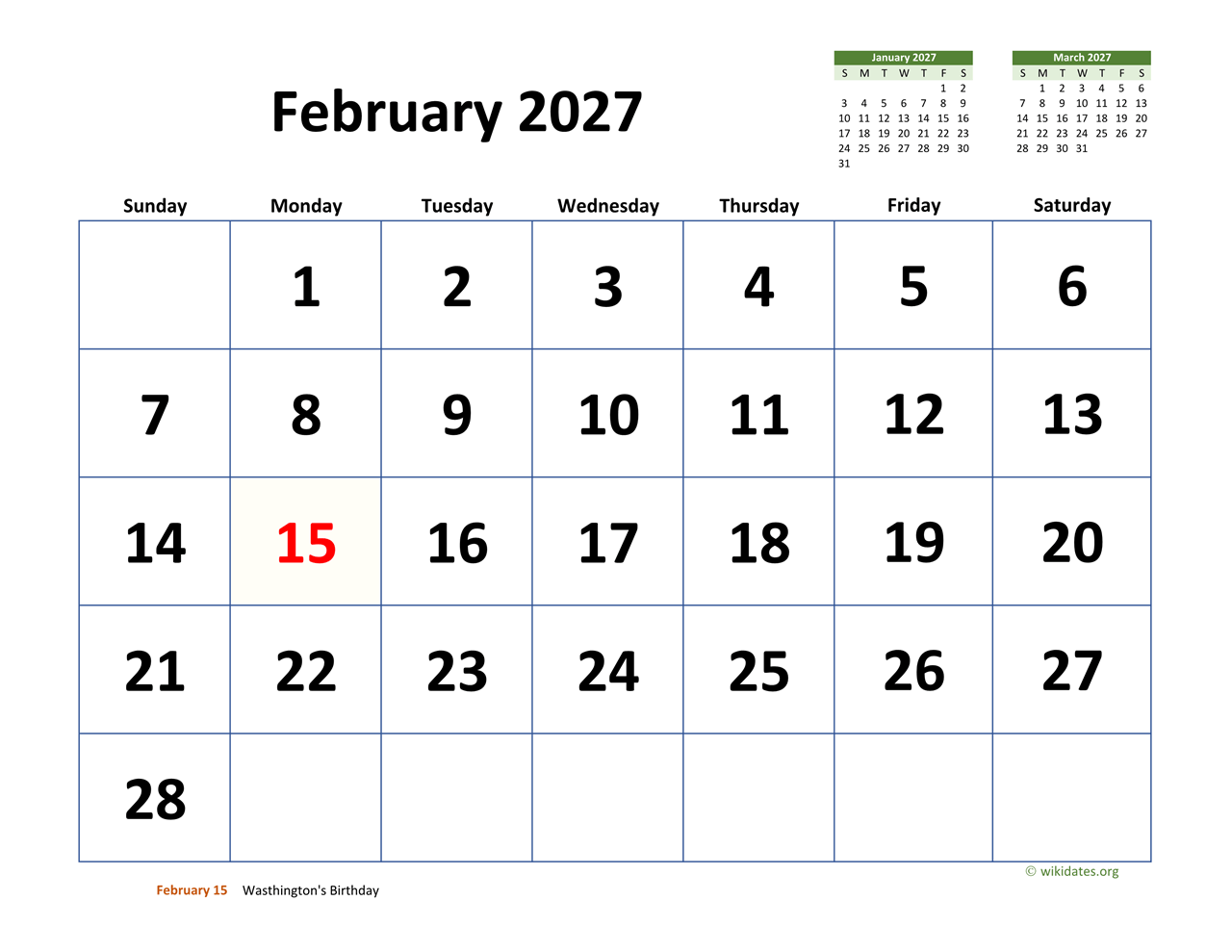
Quick question: How many days will February 2027 have? The answer, straight to the point, is 28 days. If you’re looking to plan ahead, confirm a date, or simply curious about the calendar, you’ve come to the right place. February 2027 will be a common year, meaning no extra ‘leap day’ to extend your shortest month.
Whether you’re scheduling meetings, booking travel, or just marking down significant life events, knowing the exact number of days in a month is crucial. Especially for February, which notoriously dances between 28 and 29 days, getting it right can save you a headache. Let’s break down everything you need to know about February 2027 and the fascinating science behind its length.

The Straight Answer: February 2027 Has 28 Days
Yes, you read it right. February 2027 will consist of 28 days. It begins on a Monday and concludes on a Sunday. This makes it a standard February, free from the once-every-four-years addition of a 29th day.
Here’s a quick overview of what February 2027 will look like:
| Detail | Information for February 2027 |
|---|---|
| Total Days | 28 days |
| Start Day | Monday, February 1st |
| End Day | Sunday, February 28th |
| Number of Weekdays | 20 days |
| Number of Weekend Days | 8 days |
| Is it a Leap Year? | No |
This means your plans can proceed with the certainty of a regular, 28-day month. No surprises, just straightforward calendar math.
Understanding Leap Years: The Science Behind February’s Length
Why does February occasionally get an extra day? It all comes down to the Earth’s orbit around the Sun, a delicate cosmic dance that our calendars strive to accurately represent.
What is a Leap Year?
A leap year is a calendar year containing an additional day compared to a common year. This extra day, February 29th, is added to keep our modern Gregorian calendar synchronized with the astronomical or seasonal year. Without leap years, our calendar would drift by about a quarter of a day each year, leading to significant seasonal misalignment over centuries. Imagine celebrating summer festivals in the dead of winter!
The actual time it takes for the Earth to orbit the Sun is approximately 365.2422 days. Our calendar simplifies this to 365 days. That seemingly small fraction – about a quarter of a day – accumulates over time. To compensate for this accumulated time, we add an extra day every four years, making that year 366 days long.
The Gregorian Calendar Rules for Leap Years
The rules for determining a leap year under the Gregorian calendar system are precise and were refined to ensure even greater accuracy:
- Rule 1: A year is a leap year if it is evenly divisible by 4. (e.g., 2024, 2028, 2032 are leap years).
- Rule 2: However, if a year is evenly divisible by 100, it is NOT a leap year, UNLESS…
- Rule 3: …it is also evenly divisible by 400. (e.g., 2000 was a leap year because it’s divisible by 400, but 1900 was not a leap year because it’s divisible by 100 but not 400).
These sophisticated rules, developed under the guidance of Pope Gregory XIII, help minimize the calendar’s drift, ensuring our seasons remain aligned with their assigned months.
Why 2027 Is Not a Leap Year
Let’s apply these rules to 2027:
- Is 2027 evenly divisible by 4? No, 2027 ÷ 4 = 506.75.
Since 2027 fails the first rule, it immediately disqualifies it as a leap year. There’s no need to check the 100-year or 400-year rules. This simple check confirms that February 2027 will stick to its traditional 28 days.
Accuracy in tracking time is paramount, and organizations like the United States Naval Observatory (USNO) and the National Institute of Standards and Technology (NIST) play crucial roles in maintaining precision and providing astronomical data that informs our calendar systems and timekeeping standards.
A Historical Dive: How February Became the Shortest Month
February wasn’t always the odd one out with fewer days. Its unique length is a fascinating tale woven through the history of ancient Rome and ambitious calendar reforms.
Ancient Roman Calendar & Numa Pompilius
The earliest Roman calendar was a mess. It had only 10 months, starting in March and ending in December, leaving a gap of unassigned winter days. Around 700 BCE, Rome’s second king, Numa Pompilius, is credited with adding two new months: January and February. He placed them at the end of the year, after December. His goal was to make the calendar more accurate by adding days to reach 355, a lunar year. To accommodate 12 months, and as Roman superstition dictated even numbers were unlucky, Numa opted to make one month 28 days long. February, being the last month and associated with purification rites (februa), drew the short straw.
Julian Calendar & Julius Caesar’s Reforms
By the time of Julius Caesar, the Roman calendar had again fallen into disarray, drifting significantly out of sync with the seasons. In 45 BCE, Caesar, with the help of astronomer Sosigenes of Alexandria, introduced the Julian calendar. This solar calendar set the year at 365 days, with an extra day added every four years to February. This created the familiar 365-day common year and 366-day leap year. February remained at 28 days in common years, receiving the 29th day during a leap year.
Gregorian Calendar & Pope Gregory XIII
Even the Julian calendar wasn’t perfect. It slightly overestimated the length of the year, causing a drift of about 11 minutes per year. By the 16th century, this accumulated error meant the calendar was off by about 10 days, affecting the date of Easter. To correct this, Pope Gregory XIII introduced the Gregorian calendar in 1582. This new calendar kept the basic leap year structure but added the two corrective rules for century years (divisible by 100 but not 400) to fine-tune its accuracy. February retained its role as the month that absorbs the leap day, cementing its status as the shortest and most variable month.
February’s Length: A Look at Recent & Upcoming Years
To help you visualize the pattern of February’s length, here’s a table showing the number of days in February for recent and upcoming years:
| Year | Days in February | Is it a Leap Year? |
|---|---|---|
| 2020 | 29 | Yes |
| 2021 | 28 | No |
| 2022 | 28 | No |
| 2023 | 28 | No |
| 2024 | 29 | Yes |
| 2025 | 28 | No |
| 2026 | 28 | No |
| 2027 | 28 | No |
| 2028 | 29 | Yes |
| 2029 | 28 | No |
| 2030 | 28 | No |
This pattern clearly shows 2027 falling into the ‘common year’ category, nestled between two leap years (2024 and 2028).
Practical Implications: Why Knowing February’s Length Matters
While it might seem like a trivial detail, knowing exactly how many days are in February can have real-world impacts on your personal and professional life.
- Personal Planning: For personal events like birthdays, anniversaries, or vacations, a 28-day February means less time. If you’re planning a short trip, a few days can make a big difference.
- Financial Implications: Many monthly payments, interest calculations, and billing cycles don’t adjust for February’s shorter length. If you’re paid bi-weekly, a 28-day month could mean one less paycheck in some scenarios compared to a three-paycheck month that sometimes occurs. Interest calculations on loans or credit cards are often based on actual days, so a shorter month might slightly reduce accrued interest, or conversely, a longer period could accrue more.
- Business & Project Management: For businesses, payroll, invoicing, and project deadlines are all affected. A 28-day month means fewer workdays (20 in 2027) than a typical 30 or 31-day month, which usually has 21-23 workdays. Project managers must factor this into their timelines to avoid delays.
- Academic Calendars: School terms, exam schedules, and holiday breaks are carefully planned. Educators and students need accurate calendar information to prepare for the academic year.
Even organizations like NASA (National Aeronautics and Space Administration) rely on incredibly precise calendrical and astronomical data for mission planning, trajectory calculations, and understanding celestial events, where even a single day’s discrepancy can have significant consequences.
Key Dates and Events in February 2027 (USA Focus)
Beyond the number of days, February 2027 in the USA comes with its own set of important dates and observances. While it’s a short month, it’s packed with cultural significance.
| Date | Day of Week | Event / Holiday |
|---|---|---|
| February 1 | Monday | Black History Month begins |
| February 2 | Tuesday | Groundhog Day |
| February 9 | Tuesday | Mardi Gras / Fat Tuesday |
| February 10 | Wednesday | Ash Wednesday (Beginning of Lent) |
| February 12 | Friday | Lincoln’s Birthday |
| February 14 | Sunday | Valentine’s Day |
| February 15 | Monday | Presidents’ Day (Federal Holiday) |
| February 22 | Monday | Washington’s Birthday (observed) |
Remember that while Presidents’ Day is a federal holiday, many businesses and schools may observe either Lincoln’s Birthday (Feb 12) or Washington’s Birthday (Feb 22) or a combined Presidents’ Day (the third Monday). Always check local schedules!
Planning Ahead: Maximizing Your 28-Day February
With only 28 days, February is your shortest month to get things done. Here are some quick tips to make the most of it:
- Review Monthly Goals Early: Start the month by reviewing your personal and professional goals. Since the month is shorter, you’ll want to prioritize effectively.
- Schedule Quick Wins: February is an excellent time for tackling those smaller projects or tasks that you’ve been putting off. The satisfaction of quick completion can boost your morale.
- Focus on Self-Care: Don’t let the shorter month lead to burnout. Schedule regular breaks, exercise, and social activities. It’s a great time to recharge before spring kicks into full gear.
- Plan for Federal Holidays: With Presidents’ Day (a federal holiday) falling on Monday, February 15th, 2027, many will have a long weekend. Use this extra time wisely for rest, travel, or catching up on personal tasks.
Conclusion
February 2027 will have a standard 28 days. This is because 2027 is not a leap year, adhering to the intricate rules of the Gregorian calendar designed to keep our lives in sync with the Earth’s celestial journey. Understanding these calendar mechanics isn’t just for astronomers; it’s a practical skill for anyone planning their future, managing finances, or simply appreciating the structure of time itself.
So go forth, plan your 28-day February 2027 with confidence, and make every one of those days count!
Frequently Asked Questions
How many days are in February 2027?
February 2027 will have 28 days. It is a common year, not a leap year, meaning it does not include the extra 29th day.
Is 2027 a leap year?
No, 2027 is not a leap year. Leap years occur every four years, with the nearest ones being 2024 and 2028.
What are the rules for a leap year?
According to the Gregorian calendar, a year is a leap year if it is divisible by 4, unless it is divisible by 100 but not by 400. For example, 2000 was a leap year, but 1900 was not.
When does February 2027 start and end?
February 2027 will start on a Monday, February 1st, and end on a Sunday, February 28th.
How many weekdays will there be in February 2027?
February 2027 will have 20 weekdays (Monday through Friday), assuming no federal holidays fall on a weekday that you observe as a day off.
What significant holidays or events are in February 2027 in the USA?
Key events in February 2027 include Black History Month (begins Feb 1), Groundhog Day (Feb 2), Mardi Gras (Feb 9), Ash Wednesday (Feb 10), Valentine’s Day (Feb 14), and Presidents’ Day (observed Feb 15, a federal holiday).