February’s Full Moon in Australia 2026: Your Definitive Guide to the Snow Moon Down Under
Are you a celestial enthusiast in the USA, looking to track the moon’s majestic dance across the globe? Perhaps you have family or friends in Australia, or you’re simply fascinated by how lunar events unfold differently depending on your longitude. Whatever your reason, if you’re curious about the Full Moon in February 2026 in Australia, you’ve landed in the right place.
Table of Contents
- February’s Full Moon in Australia 2026: Your Definitive Guide to the Snow Moon Down Under
- Pinpointing the February 2026 Full Moon: Australian & US Times
- Exact Date and Time for Australia
- What That Means for Viewers in the USA
- The Snow Moon: Unpacking February’s Lunar Lore
- Origins of the “Snow Moon” Name
- Why We Still Use These Names Today
- Your 2026 Full Moon Calendar for Australia (and US Conversions)
- Observing the Full Moon in Australia: Tips for Stargazers
- Best Viewing Conditions
- Photography Tips for Lunar Enthusiasts
- Unique Australian Viewing Experiences
- Beyond February: A Look at Australia’s Lunar Year in 2026
- Will 2026 Have a “Blue Moon” in Australia?
- Lunar Eclipses and Supermoons in 2026
- The Full Moon’s Enduring Influence: From Tides to Traditions
- The Moon’s Impact on Earth’s Tides in Australia
- Cultural Significance and Indigenous Perspectives (General)
- Why You Should Mark Your Calendar for February 2026
Forget the vague calendars and confusing time zone calculations. We’re here to give you the precise details, break down the cultural significance, and arm you with everything you need to know about the February 2026 Full Moon, affectionately known as the Snow Moon, as it graces the skies over Australia.
Let’s cut right to the chase:
| Lunar Event | Date | Peak Time (Sydney, AEDT) | Popular Name | Peak Time (NYC, EST) | Peak Time (LA, PST) |
|---|---|---|---|---|---|
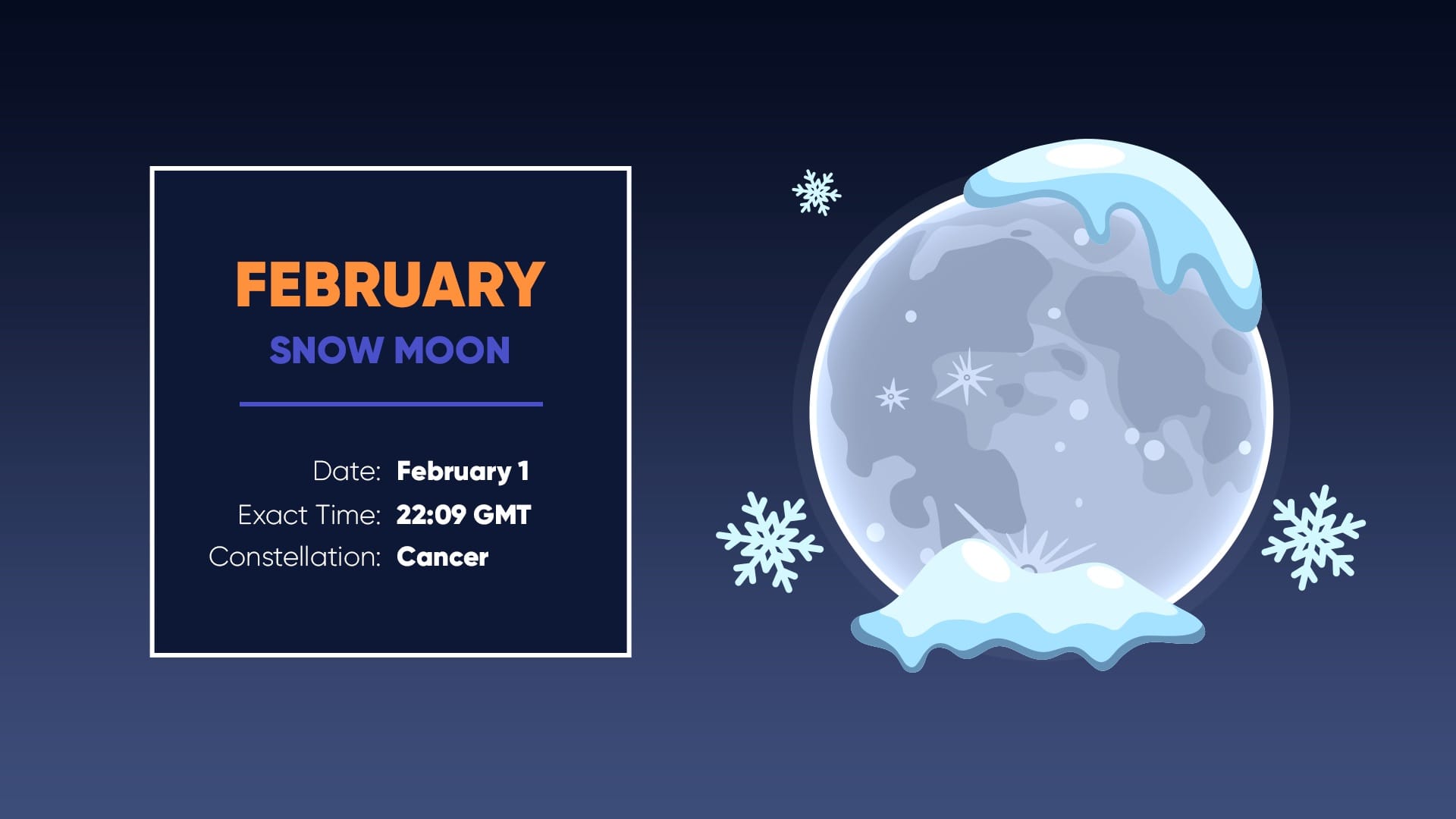
| February Full Moon | Monday, February 2, 2026 | 9:09 AM AEDT | The Snow Moon | Sunday, February 1, 2026, 5:09 PM EST | Sunday, February 1, 2026, 2:09 PM PST |
Yes, you read that right. While the full moon peaks in Australia on the morning of February 2nd, the magic actually unfolds for our friends in the USA on the afternoon of February 1st, due to the significant time difference. Let’s break this down further.
Pinpointing the February 2026 Full Moon: Australian & US Times
Accuracy is key when it comes to observing celestial events. The moon doesn’t operate on national borders, but our clocks certainly do! Here’s the precise timing you need.
Exact Date and Time for Australia
The February Full Moon in 2026 will reach its fullest illumination over Australia on Monday, February 2, 2026. However, Australia is a vast continent spanning multiple time zones, so the exact peak time will vary slightly depending on your location:
- Sydney, Melbourne, Hobart (AEDT – Australian Eastern Daylight Time): 9:09 AM AEDT
- Brisbane (AEST – Australian Eastern Standard Time): 8:09 AM AEST (Queensland does not observe Daylight Saving)
- Adelaide (ACDT – Australian Central Daylight Time): 8:39 AM ACDT
- Darwin (ACST – Australian Central Standard Time): 7:39 AM ACST (Northern Territory does not observe Daylight Saving)
- Perth (AWST – Australian Western Standard Time): 6:09 AM AWST (Western Australia does not observe Daylight Saving)
For most eastern states participating in Daylight Saving, it will be a daytime full moon. This means the moon will be below the horizon during its peak luminosity. Don’t worry, it will still appear spectacular on the evening before (Sunday, Feb 1st) and the evening of (Monday, Feb 2nd).
What That Means for Viewers in the USA
For our US audience, the timing is crucial. Due to the significant time difference, the February Full Moon actually peaks for you on the *previous day*. Here’s the conversion:
| Australian Peak (Sydney – AEDT) | Corresponding US Time (Date & Time) | US Time Zone |
|---|---|---|
| Monday, Feb 2, 2026, 9:09 AM | Sunday, Feb 1, 2026, 5:09 PM | EST (Eastern Standard Time) |
| Monday, Feb 2, 2026, 9:09 AM | Sunday, Feb 1, 2026, 4:09 PM | CST (Central Standard Time) |
| Monday, Feb 2, 2026, 9:09 AM | Sunday, Feb 1, 2026, 3:09 PM | MST (Mountain Standard Time) |
| Monday, Feb 2, 2026, 9:09 AM | Sunday, Feb 1, 2026, 2:09 PM | PST (Pacific Standard Time) |
This means if you’re in the USA, you can look forward to seeing a nearly-full moon rising on Sunday evening, February 1st, which will be the closest you’ll get to its absolute peak. So, if you’re planning an observation party, mark your US calendars for the evening of February 1, 2026!
The Snow Moon: Unpacking February’s Lunar Lore
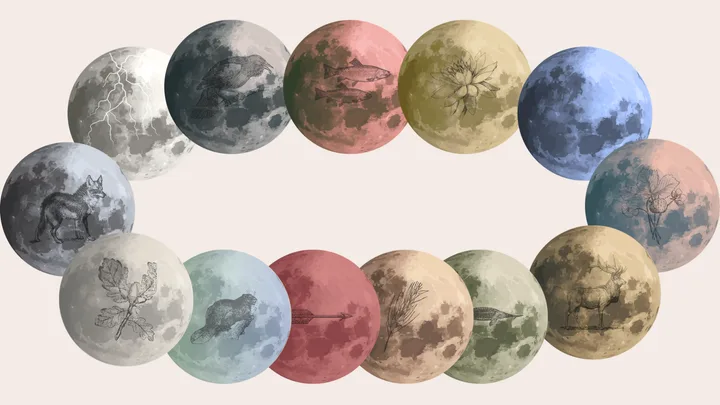
Every full moon carries a unique popular name, often rooted in ancient agricultural cycles, meteorological patterns, or cultural observations. February’s full moon is no exception.
Origins of the “Snow Moon” Name
The most widely recognized name for the February Full Moon is the Snow Moon. This moniker primarily originates from the Native American tribes of the Northern Hemisphere, particularly those in what is now the northeastern United States. February historically brings the heaviest snowfalls in these regions, making hunting difficult and life challenging.
Other names associated with this moon reflect similar struggles or observations of early spring: the Hunger Moon, the Trapper’s Moon, the Bone Moon (due to scarcity of food), or the Famine Moon. These names paint a vivid picture of winter’s grip and the anticipation of spring’s arrival.
Why We Still Use These Names Today
While many of us no longer rely on these names for survival, they’ve been preserved through almanacs and astronomical interest. They offer a beautiful, poetic way to connect with the natural world and the rhythms our ancestors lived by. For many, they add a layer of mystique and tradition to our modern stargazing, reminding us that the moon has always been a constant in human history, guiding narratives and influencing culture across millennia. Even in Australia, where February is deep in summer, the traditional name is acknowledged globally, connecting us all to the lunar cycle.
Your 2026 Full Moon Calendar for Australia (and US Conversions)
2026 is set to be a special year for moon gazers, with a rare 13 full moons instead of the usual 12. This means one month will host two full moons, leading to a “Blue Moon.” Here’s your comprehensive guide to every full moon in 2026, with key Australian and US time zone conversions:

| Month | Date | Full Moon Name | Peak Time (Sydney, AEDT/AEST) | Peak Time (New York, EST/EDT) |
|---|---|---|---|---|
| January | Saturday, Jan 3 | Wolf Moon | 12:28 AM AEDT | Friday, Jan 2, 8:28 AM EST |
| February | Monday, Feb 2 | Snow Moon | 9:09 AM AEDT | Sunday, Feb 1, 5:09 PM EST |
| March | Tuesday, Mar 3 | Worm Moon | 1:33 AM AEDT | Monday, Mar 2, 9:33 AM EST |
| April | Wednesday, Apr 2 | Pink Moon | 2:17 PM AEST | Wednesday, Apr 2, 12:17 AM EDT |
| May 1 | Friday, May 1 | Flower Moon | 3:37 AM AEST | Thursday, Apr 30, 1:37 PM EDT |
| May 2 | Sunday, May 31 | Blue Moon | 11:03 PM AEST | Sunday, May 31, 9:03 AM EDT |
| June | Tuesday, Jun 30 | Strawberry Moon | 12:08 PM AEST | Monday, Jun 29, 10:08 PM EDT |
| July | Thursday, Jul 30 | Buck Moon | 2:15 AM AEST | Wednesday, Jul 29, 12:15 PM EDT |
| August | Friday, Aug 28 | Sturgeon Moon | 4:06 PM AEST | Friday, Aug 28, 2:06 AM EDT |
| September | Sunday, Sep 27 | Harvest Moon | 6:20 AM AEST | Saturday, Sep 26, 4:20 PM EDT |
| October | Monday, Oct 26 | Hunter’s Moon | 8:31 PM AEDT | Monday, Oct 26, 5:31 AM EDT |
| November | Wednesday, Nov 25 | Beaver Moon | 11:03 AM AEDT | Tuesday, Nov 24, 7:03 PM EST |
| December | Friday, Dec 25 | Cold Moon | 1:16 AM AEDT | Thursday, Dec 24, 9:16 AM EST |
Remember, these times are for the exact moment of full illumination. The moon will appear full to the naked eye for approximately a day before and a day after these peak times. So, don’t worry if you miss the precise moment!
Observing the Full Moon in Australia: Tips for Stargazers
Whether you’re in Australia or planning to follow a live stream from the USA, there’s nothing quite like experiencing the full moon. Here’s how to make the most of it.
Best Viewing Conditions
- Clear Skies: This is obvious, but essential. Check local weather forecasts for cloud cover.
- Minimize Light Pollution: City lights can drastically reduce the moon’s visibility and brilliance. If possible, head to a rural area, a national park, or even a backyard with minimal artificial light. Australia boasts some of the darkest skies on Earth, particularly in its vast outback regions.
- Elevation: A slightly elevated viewing spot can give you a clearer horizon, which is often where the moon appears largest and most dramatic due to the ‘moon illusion’.
- Time Your Viewing: While the moon peaks in the morning for many Australian locations in February 2026, the best visual experience will be when the moon is higher in the sky during the evening. Plan to observe on the evening of Sunday, February 1st and Monday, February 2nd (Australian local times) for maximum impact.
Photography Tips for Lunar Enthusiasts
Capturing the full moon can be challenging, but incredibly rewarding. Here are some basic tips:
- Use a Tripod: Essential for sharp, blur-free shots, especially with longer exposures.
- Manual Focus: Autofocus can struggle with the moon. Switch to manual focus and zoom in on the moon’s surface to get it tack sharp.
- Experiment with Settings: Start with a low ISO (e.g., 100-400), a fast shutter speed (e.g., 1/125 to 1/500 sec depending on brightness), and a mid-range aperture (f/8 to f/11). Adjust as needed. The moon is brighter than you think!
- Telephoto Lens: While you can capture the moon with any lens, a telephoto lens (200mm+) will help bring out surface details.
- Bracket Your Shots: Take multiple photos at different exposures to ensure you capture details in both the bright lunar surface and the darker sky.
Unique Australian Viewing Experiences
Australia offers unparalleled opportunities for stargazing. Consider visiting:
- Dark Sky Parks: Areas like the Warrumbungle National Park in NSW (Australia’s first Dark Sky Park) or the OzSky Star Safari near Coonabarabran offer exceptional viewing.
- Coastal Views: The moon rising over the ocean can be a breathtaking sight. Find a beach with an easterly aspect for the best experience.
- Outback Observatories: Regional observatories in the outback often host public viewing nights, providing telescopes and expert guidance.
Beyond February: A Look at Australia’s Lunar Year in 2026
As we noted, 2026 is an exciting year for lunar enthusiasts due to its 13 full moons. But what else is in store?
Will 2026 Have a “Blue Moon” in Australia?
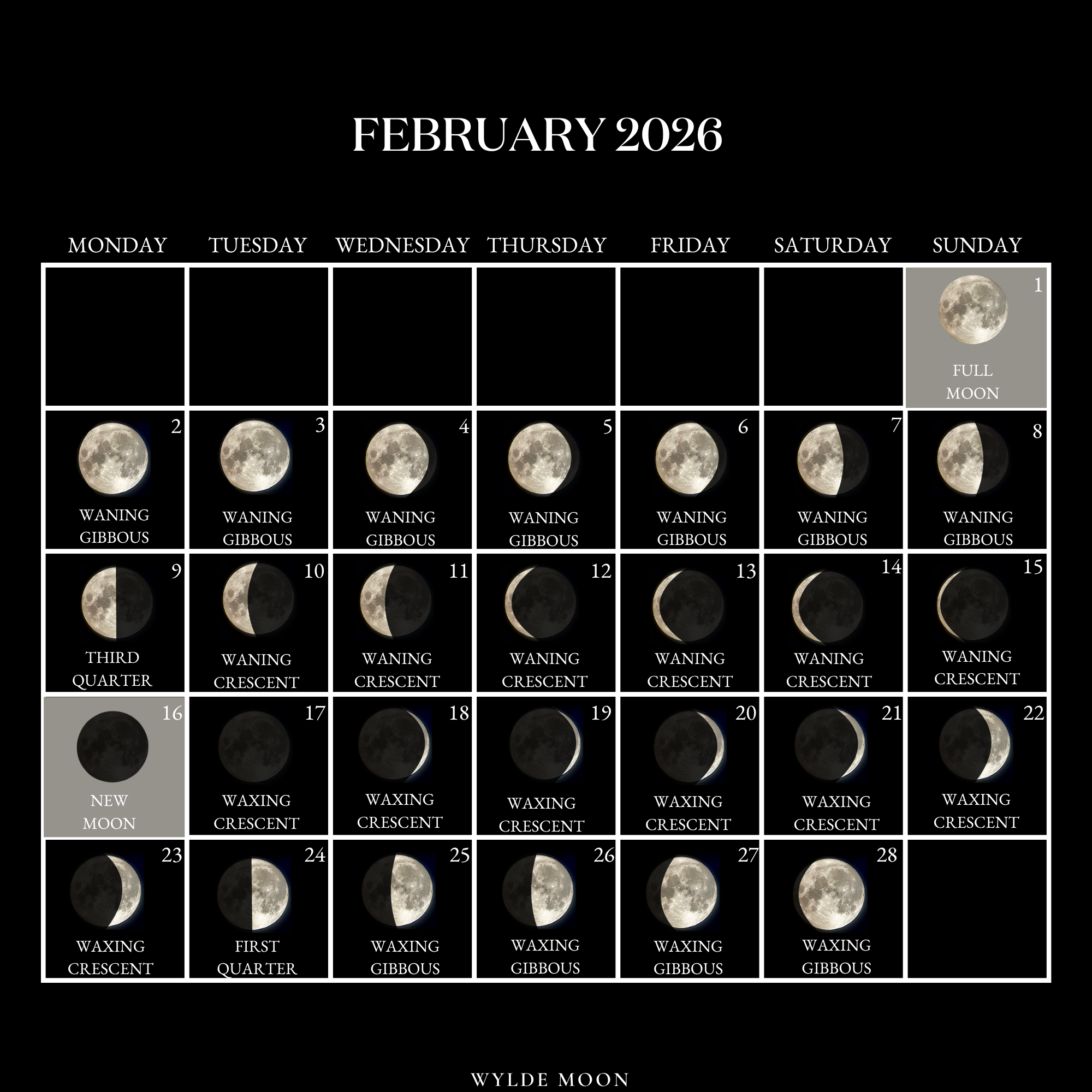
Yes! As seen in our full moon calendar above, May 2026 will feature two full moons. The first occurs on May 1st, and the second, the Blue Moon, falls on May 31st. A Blue Moon isn’t actually blue in color, but refers to the rare occurrence of having a second full moon within a single calendar month. It’s a fantastic astronomical event to mark on your calendar!
Lunar Eclipses and Supermoons in 2026
Keep an eye out for other spectacular lunar phenomena in 2026. While the February full moon itself isn’t a supermoon or part of an eclipse, the year might offer other opportunities. A Supermoon occurs when a full moon coincides with the Moon’s closest approach to Earth in its elliptical orbit, making it appear slightly larger and brighter. A Lunar Eclipse happens when the Earth passes directly between the sun and the moon, casting a shadow on the lunar surface. For specific dates and visibility from Australia, you’ll want to consult detailed astronomical calendars closer to the year 2026.
The Full Moon’s Enduring Influence: From Tides to Traditions
The moon is far more than just a pretty night light; it’s a powerful force with tangible impacts on our planet and a deep-seated place in human culture.
The Moon’s Impact on Earth’s Tides in Australia
One of the most profound and visible effects of the full moon is its influence on Earth’s tides. During a full moon (and new moon), the sun, Earth, and moon are aligned, combining their gravitational forces. This results in particularly high “spring tides” and unusually low “neap tides” around the globe, including along Australia’s extensive coastlines. This has significant implications for marine life, coastal communities, and anyone involved in boating or fishing.
Cultural Significance and Indigenous Perspectives (General)
Across human history, the moon has been a powerful symbol and a focal point for countless myths, rituals, and spiritual beliefs. For many cultures, the full moon is a time of heightened energy, reflection, and celebration. In Australia, Indigenous cultures have a profound and ancient connection to the land and sky, with the moon often playing a central role in their storytelling, navigation, and understanding of natural cycles. While specific Indigenous interpretations are complex and diverse, generally, the moon is often seen as a feminine entity, influencing tides, hunting, and life cycles. Observing the full moon can be a moment to reflect on these deep connections and the universal wonder inspired by our celestial neighbor.

Why You Should Mark Your Calendar for February 2026
The February 2026 Full Moon in Australia – the radiant Snow Moon – offers a fantastic opportunity for both casual observers and dedicated astronomers. Whether you’re planning a trip Down Under, connecting with Australian friends, or simply appreciating the moon’s global journey from your home in the USA, this lunar event is a reminder of the interconnectedness of our planet and the cosmos.
So, mark your calendars, prepare your viewing spots, and get ready to gaze upon the magnificent Full Moon in February 2026. It’s an experience that transcends borders and reminds us all of the enduring beauty above.
Frequently Asked Questions
When is the Full Moon in February 2026 in Australia?
The Full Moon in February 2026 will peak on Monday, February 2, 2026, at 9:09 AM AEDT (Sydney time). Times will vary slightly across other Australian time zones.
What is the traditional name for the February Full Moon?
The February Full Moon is widely known as the
How does the February 2026 Full Moon timing translate to USA time zones?
Due to the time difference, the peak of the February 2026 Full Moon in Australia (Monday, Feb 2, 9:09 AM AEDT) will correspond to Sunday, February 1, 2026, at 5:09 PM EST (Eastern Standard Time) in the USA.
Will the February 2026 Full Moon be visible at night in Australia?
While the moon peaks during daytime for many parts of Australia on Feb 2, it will appear full and spectacular on the evenings of Sunday, February 1st, and Monday, February 2nd (local Australian times).
How many full moons will there be in 2026?
2026 is a special year with 13 full moons, which means there will be one
What are some tips for observing the Full Moon in Australia?
For the best viewing experience in Australia, seek out locations with minimal light pollution, check local weather for clear skies, and consider visiting dedicated dark sky parks. The moon will be best observed on the evenings around the peak date.
Does the Full Moon have any impact on Australia?
Yes, the Full Moon significantly influences Earth’s tides, leading to higher