February 2026’s Full Snow Moon: Your Guide to Date, Time (EST), and Celestial Wonders
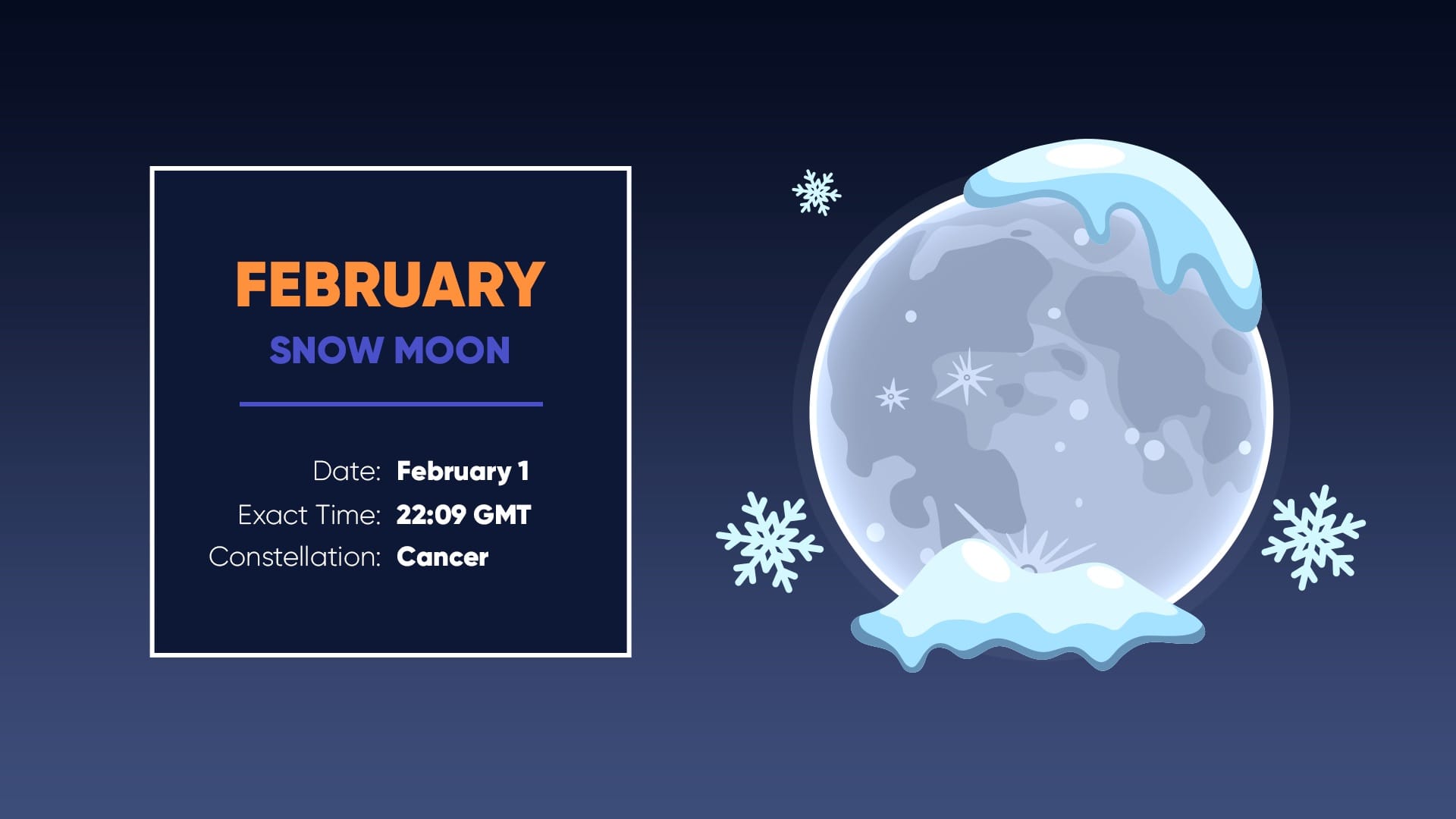
Ever feel a pull toward the night sky? There’s something undeniably mesmerizing about a full moon, and February’s offering for 2026, affectionately known as the Snow Moon, is no exception. If you’re wondering when exactly to gaze skyward, mark your calendars: the Full Snow Moon in February 2026 will reach its peak illumination on Sunday, February 1, 2026, at 5:09 PM Eastern Standard Time (EST). Yes, that’s right at the cusp of dusk for many on the East Coast, promising a truly spectacular sight!
Table of Contents
- February 2026’s Full Snow Moon: Your Guide to Date, Time (EST), and Celestial Wonders
- The February 2026 Snow Moon: Your Quick Reference Guide
- When is the Full Moon in February 2026? Pinpointing the Exact Moment
- The Peak Illumination: Date and Time for the Eastern Seaboard (EST)
- Understanding Time Zones: What it Means for You Beyond EST
- Why “Snow Moon”? Unpacking February’s Ethereal Name
- Indigenous Wisdom: The Origins of the Snow Moon
- Beyond Snow: Other Names for February’s Full Moon
- February’s Full Moon in Leo: A Celestial Roar
- Embracing Your Inner Lion: What the Leo Influence Means
- Setting Intentions Under the Snow Moon in Leo
- Experiencing the Snow Moon: Observation Tips & Best Practices
- Prime Time for Viewing: Catching the Full Moon
- Simple Stargazing Without a Telescope
- Capturing the Glow: Basic Moon Photography Tips
- The Full Moon Cycle: What Comes Before and After February 2026
- January 2026: The Full Wolf Moon
- March 2026: The Full Worm Moon
- Your Complete 2026 Full Moon Calendar (All EST Times)
- Beyond the Hype: Debunking Full Moon Myths
- Does the Full Moon Affect Behavior?
- The Truth About “Supermoons” and “Blue Moons” in 2026
- Final Thoughts: Connect with the Cosmos
This isn’t just about a date and time; it’s an invitation to connect with ancient rhythms, cultural stories, and even a bit of cosmic astrology. Ready to dive deep into what makes this particular full moon so special? Let’s get started.
The February 2026 Snow Moon: Your Quick Reference Guide
For those who just want the essential facts at a glance, here’s a handy summary of everything you need to know about the Full Snow Moon in February 2026. Keep this chart close for easy reference!
| Aspect | Detail |
|---|---|
| Full Moon Name | Snow Moon |
| Date of Peak Illumination | Sunday, February 1, 2026 |
| Exact Time (EST) | 5:09 PM EST |
| Exact Time (UTC) | 10:09 PM UTC |
| Astrological Sign | Leo |
| Key Theme | Reflection, releasing old patterns, personal power, warmth amidst winter. |
When is the Full Moon in February 2026? Pinpointing the Exact Moment
Getting the exact timing right is key to experiencing the full moon at its most magnificent. While you can certainly enjoy the moon for several nights around its peak, that precise moment of peak illumination offers a unique energy and visual spectacle.
The Peak Illumination: Date and Time for the Eastern Seaboard (EST)
For those of us in the Eastern Standard Time (EST) zone, the February 2026 Full Snow Moon will crest on Sunday, February 1, at 5:09 PM EST. This timing is particularly convenient, as it means the moon will be high in the sky shortly after sunset, making it accessible for evening viewing without having to stay up too late. Imagine stepping outside just as the sky darkens, and seeing the brilliant full moon rising – it’s a truly magical experience.
Understanding Time Zones: What it Means for You Beyond EST
It’s crucial to remember that moon times are based on specific time zones. While the 5:09 PM EST time is precise for the Eastern U.S., it will translate differently depending on your location. Here’s a quick conversion for common U.S. time zones:

- Central Standard Time (CST): Sunday, February 1, 2026, at 4:09 PM CST
- Mountain Standard Time (MST): Sunday, February 1, 2026, at 3:09 PM MST
- Pacific Standard Time (PST): Sunday, February 1, 2026, at 2:09 PM PST
For our friends across the globe, the universal coordinated time (UTC) for this full moon is Sunday, February 1, 2026, at 10:09 PM UTC. Always cross-reference with your local time to ensure you catch the exact moment!
Why “Snow Moon”? Unpacking February’s Ethereal Name
The name “Snow Moon” isn’t just a whimsical label; it’s deeply rooted in observations of nature and the changing seasons. These traditional full moon names, passed down through generations, often reflect environmental conditions, agricultural practices, or animal behaviors characteristic of that particular month.
Indigenous Wisdom: The Origins of the Snow Moon
The name Snow Moon primarily comes from several Native American tribes, particularly those in the northeastern United States. February was historically the month of the heaviest snowfall, making hunting incredibly difficult. The landscape would be blanketed in a deep, often persistent, layer of snow. Therefore, the moon that illuminated this cold, challenging period became known as the Snow Moon, a stark reminder of winter’s grip and the need for resilience and careful resource management.
It’s a name that evokes images of quiet, snow-covered forests, and crisp, clear nights where the moon’s light reflects brilliantly off the white landscape, making it seem even brighter.
Beyond Snow: Other Names for February’s Full Moon
While Snow Moon is the most recognized name, various cultures and tribes had their own unique names for February’s full moon, each telling a slightly different story about the month:
- Hunger Moon: Reflecting the scarcity of food and the harshness of winter.
- Storm Moon: Highlighting the intense winter storms common during this month.
- Little Famine Moon: Similar to Hunger Moon, emphasizing resourcefulness during tough times.
- Bear Moon: Some tribes noted that bear cubs were often born in February.
- Trapper’s Moon: Denoting the prime time for trapping animals whose furs were thickest in winter.
These names paint a vivid picture of life dictated by the seasons, offering us a glimpse into the wisdom and survival instincts of those who lived closer to the land.
February’s Full Moon in Leo: A Celestial Roar
Beyond its cultural name, every full moon also carries an astrological signature, depending on the zodiac sign it falls in. The Full Snow Moon of February 2026 will occur in the passionate and regal sign of Leo. If you’re into astrology, you know this isn’t just a minor detail – it colors the moon’s energy and influence!
Embracing Your Inner Lion: What the Leo Influence Means
Leo is a fire sign, ruled by the Sun, embodying confidence, creativity, leadership, and a dramatic flair. When the full moon lights up Leo, it brings these themes into sharp focus. Full moons are always about culmination, release, and shedding what no longer serves us. In Leo, this often translates to:
- Self-Expression: A powerful urge to express your authentic self, creativity, and unique talents.
- Confidence & Courage: An opportunity to step into your personal power, overcome fears, and lead with your heart.
- Romance & Drama: Emotions can run high, especially in relationships. It’s a time to celebrate love but also to address any ego clashes.
- Joy & Celebration: Leo loves to shine! This moon encourages you to find joy, celebrate your achievements, and appreciate life’s pleasures.
Think about what you’ve been working on or building since the New Moon. The Snow Moon in Leo is your chance to see the fruits of your labor, acknowledge your progress, and perhaps even perform a little celebratory dance!
Setting Intentions Under the Snow Moon in Leo
Full moons are potent times for releasing, rather than initiating. With the Snow Moon in Leo, consider what you need to let go of that’s preventing you from shining your brightest:
- Release self-doubt: Banish internal critics that dim your light.
- Let go of outdated creative blocks: Reclaim your artistic flow and passion.
- Heal ego wounds: Forgive yourself or others for past hurts that impact your self-esteem.
- Release the need for external validation: Find your confidence from within.
Journaling, meditation, or even a simple walk under the moonlight can be powerful ways to connect with this energy and facilitate your release.
Experiencing the Snow Moon: Observation Tips & Best Practices
Whether you’re a seasoned stargazer or just moon-curious, experiencing the Full Snow Moon can be a truly enriching moment. You don’t need fancy equipment; just your eyes and a clear sky!
Prime Time for Viewing: Catching the Full Moon
While the exact moment of peak illumination is 5:09 PM EST on February 1st, 2026, the moon will appear full to the naked eye for about three days around this time – roughly from Saturday evening, January 31st, through Monday evening, February 2nd. The best time to observe will be after sunset on February 1st, when the moon is rising and appears particularly large and bright near the horizon due to an optical illusion called the ‘moon illusion.’
Find a spot with an unobstructed view of the eastern horizon around sunset, and then track the moon as it climbs higher throughout the evening.
Simple Stargazing Without a Telescope
You don’t need a telescope to appreciate the majesty of the Snow Moon. Here are a few tips:
- Get Away from Light Pollution: If possible, find a location away from bright city lights. The darker the sky, the more defined the moon’s features will appear.
- Dress Warmly: It’s February! Bundle up in layers, grab a warm drink, and perhaps a comfortable chair or blanket.
- Allow Your Eyes to Adjust: Give your eyes at least 15-20 minutes to adjust to the darkness for optimal viewing.
- Use Binoculars: If you have them, binoculars (7×50 or 10×50 are great) can significantly enhance your view, revealing craters, seas (maria), and subtle textures on the lunar surface.
Capturing the Glow: Basic Moon Photography Tips
Want to capture that stunning Snow Moon? You don’t need professional gear, but a few pointers can help:
- Use a Tripod: Essential for sharp images, especially in low light.
- Telephoto Lens (if possible): A longer focal length lens will make the moon appear larger. Even a smartphone with a good zoom can work in a pinch.
- Manual Settings:
- ISO: Keep it low (100-400) to minimize noise.
- Aperture: Start around f/8 or f/11 for good sharpness.
- Shutter Speed: This will vary, but try faster speeds (e.g., 1/125 to 1/250 seconds) as the full moon is surprisingly bright.
- Focus Manually: Autofocus can struggle with the moon. Zoom in digitally and manually focus on a crater for crispness.
- Composition: Don’t just shoot the moon in isolation. Try to include a tree silhouette, a building, or a landscape element to add context and interest.
Practice makes perfect, so don’t be discouraged if your first attempts aren’t exactly Ansel Adams quality. The goal is to enjoy the process and the beautiful night sky!
The Full Moon Cycle: What Comes Before and After February 2026
The lunar cycle is a continuous dance, with each full moon leading to the next. Understanding February’s Snow Moon means knowing its place in the larger cosmic rhythm of 2026.
January 2026: The Full Wolf Moon
Just before the Snow Moon, we experienced the Full Wolf Moon on January 3, 2026. This moon, named for the howling of wolves heard more often in the depths of winter, often brings themes of community, primal instincts, and setting intentions for the year ahead. It sets the stage, so to speak, for the introspective yet powerful energy of February’s moon.
March 2026: The Full Worm Moon
Following the Snow Moon, we’ll anticipate the Full Worm Moon on March 3, 2026. This name signifies the thawing earth and the emergence of earthworms, hinting at spring’s return and the stirring of new life. It marks a shift from winter’s harshness to the promise of renewal, a perfect complement to the Leo themes of February’s moon which encourage powerful personal growth before new beginnings.
Your Complete 2026 Full Moon Calendar (All EST Times)
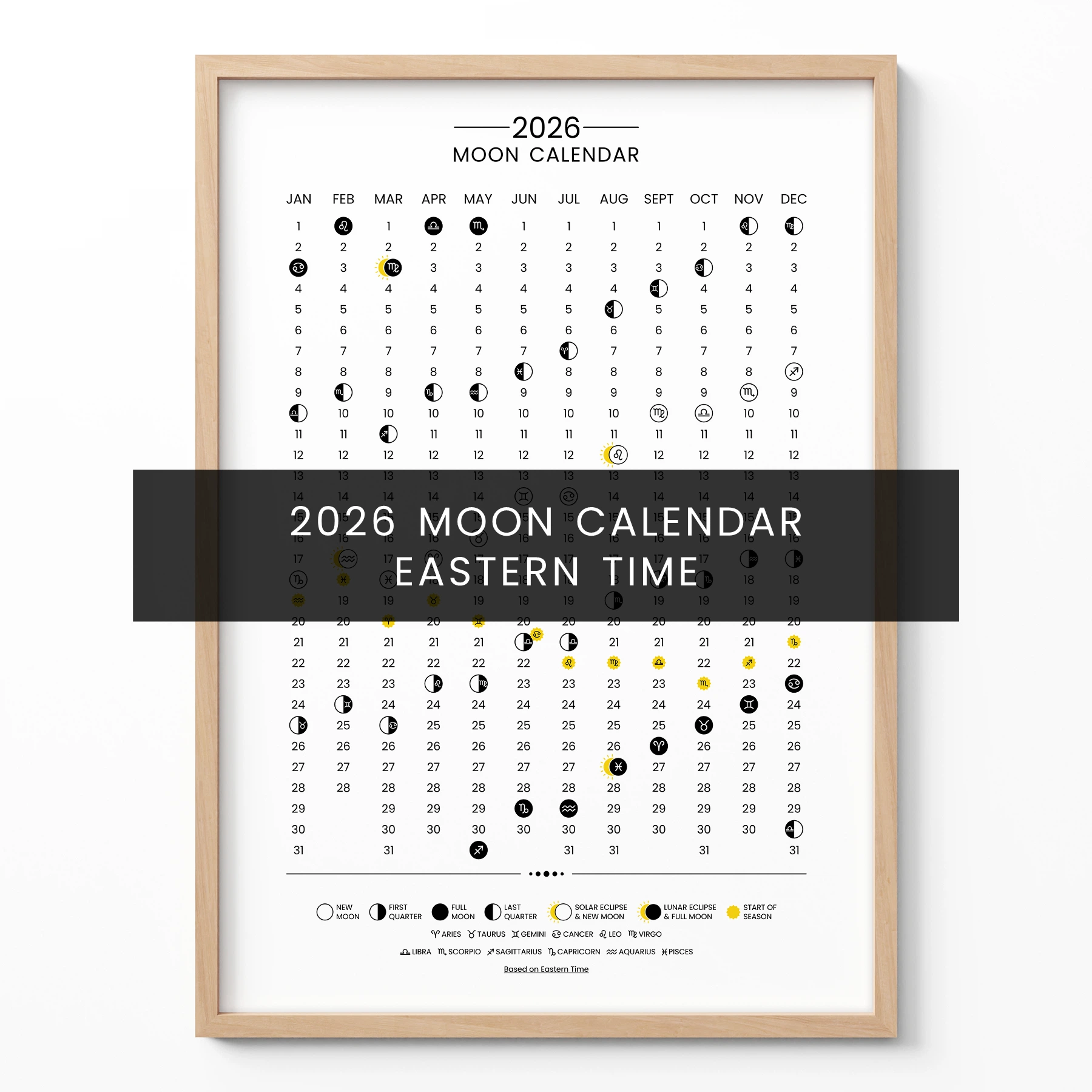
To help you plan your stargazing and intention-setting throughout the year, here is a comprehensive list of all the full moons in 2026, with their names and exact EST times. Keep this calendar handy!

| Month | Date | Time (EST) | Full Moon Name | Astrological Sign | Notes |
|---|---|---|---|---|---|
| January | Saturday, Jan 3 | 10:48 AM | Wolf Moon | Cancer | First full moon of 2026 |
| February | Sunday, Feb 1 | 5:09 PM | Snow Moon | Leo | |
| March | Tuesday, Mar 3 | 6:37 AM | Worm Moon | Virgo | Total Lunar Eclipse (Blood Moon) |
| April | Wednesday, Apr 1 | 7:22 PM | Pink Moon | Libra | |
| May | Friday, May 1 | 7:58 AM | Flower Moon | Scorpio | |
| May | Sunday, May 31 | 8:08 PM | Blue Moon | Sagittarius | Second full moon in a calendar month |
| June | Tuesday, Jun 29 | 6:59 AM | Strawberry Moon | Capricorn | |
| July | Thursday, Jul 29 | 4:52 PM | Buck Moon | Aquarius | |
| August | Saturday, Aug 28 | 1:16 AM | Sturgeon Moon | Pisces | |
| September | Sunday, Sep 26 | 8:48 AM | Harvest Moon | Aries | Closest full moon to autumnal equinox |
| October | Monday, Oct 26 | 5:47 AM | Hunter’s Moon | Taurus | |
| November | Wednesday, Nov 25 | 2:54 AM | Beaver Moon | Gemini | |
| December | Thursday, Dec 24 | 1:21 PM | Cold Moon | Cancer | Final full moon of 2026 |
Beyond the Hype: Debunking Full Moon Myths
Full moons inspire awe, but they also spark a lot of folklore and urban legends. Let’s separate fact from fiction when it comes to lunar influences.
Does the Full Moon Affect Behavior?
Many people believe that full moons cause everything from increased crime rates to erratic behavior, hospital admissions, or even changes in mental health. This concept is often called the “lunar effect.” While anecdotal evidence abounds, numerous scientific studies have generally failed to find a consistent, statistically significant correlation between the full moon and human behavior. Our bodies are mostly water, but the moon’s gravitational pull on a human is negligible compared to, say, the gravitational pull of a mountain or even another person standing nearby!
It’s more likely a form of confirmation bias: we remember unusual events that happen during a full moon because we’re already primed to look for them. That being said, the full moon’s brightness can indeed disrupt sleep patterns for some, which *could* indirectly lead to irritability or fatigue. But direct astrological or energetic influences are a different conversation entirely!
The Truth About “Supermoons” and “Blue Moons” in 2026
You’ll often hear terms like “Supermoon” and “Blue Moon” thrown around. Let’s clarify for 2026:
- Supermoon: This occurs when a full moon coincides with the moon’s closest approach to Earth in its elliptical orbit (perigee). The moon appears slightly larger and brighter than average, though the difference is often hard to discern without comparison. While February 2026’s Snow Moon isn’t a ‘Supermoon,’ we might see one or two throughout the year.
- Blue Moon: This term has two popular definitions. The most common is the second full moon within a single calendar month. We will have a Blue Moon in 2026, specifically on May 31st, making May a two-full-moon month! Less commonly, it refers to the third full moon in an astronomical season that has four full moons. Regardless of the definition, the moon itself does not actually turn blue!
These terms add a fun element to moon gazing, reminding us of the dynamic nature of our celestial neighbor.
Final Thoughts: Connect with the Cosmos
The Full Snow Moon of February 2026 is more than just a date and time; it’s a profound annual marker, steeped in natural history, cultural narrative, and astrological significance. It offers us a precious opportunity to pause, look up, and reconnect with something much larger than ourselves. Whether you’re releasing old patterns under its Leo influence, embracing the quiet beauty of winter, or simply enjoying a moment of celestial awe, make sure to step outside and experience its powerful glow.
Remember, the night sky is always there, waiting for you to look up. Enjoy the Snow Moon!

Frequently Asked Questions
When exactly is the Full Snow Moon in February 2026?
The Full Snow Moon in February 2026 will reach its peak illumination on Sunday, February 1, 2026, at precisely 5:09 PM Eastern Standard Time (EST).
Why is it called the ‘Snow Moon’?
The name ‘Snow Moon’ originates from several Native American tribes, particularly in the northeastern U.S. February historically brought the heaviest snowfall, making hunting challenging and food scarce, hence the name reflecting the cold and difficult conditions of the month.
What is the astrological significance of the February 2026 Full Moon?
This Full Snow Moon occurs in the zodiac sign of Leo. Astrologically, this brings themes of self-expression, confidence, courage, and creativity to the forefront, encouraging you to release self-doubt and embrace your authentic power.
Will the Full Snow Moon be visible clearly in the evening?
Yes, for those in the EST zone, the 5:09 PM peak illumination means the moon will be rising and visible shortly after sunset, making it an excellent time for evening observation. It will appear full to the naked eye for approximately three days around this date.
Are there any other notable full moons in 2026?
Yes, 2026 features a ‘Blue Moon’ on May 31st (the second full moon in May) and a Total Lunar Eclipse (Blood Moon) coinciding with the Full Worm Moon on March 3rd, making it a spectacular year for lunar events.
Do I need special equipment to see the Full Snow Moon?
No, you don’t need any special equipment to enjoy the Full Snow Moon. Your naked eyes are sufficient. However, a pair of binoculars can enhance the experience by revealing more surface details like craters and lunar seas.