February 2026 Full Moon: Your Complete Guide to the Snow Moon in Eastern Time
Ever gazed up at the night sky, mesmerized by the moon’s radiant glow, and wondered exactly when to catch its peak? If you’re planning ahead for February 2026 and call the Eastern Time Zone home, you’re in the right place. Mark your calendars, because the Full Snow Moon of February 2026 will reach its fullest illumination at 5:09 PM EST on Sunday, February 1st, 2026.
Table of Contents
- February 2026 Full Moon: Your Complete Guide to the Snow Moon in Eastern Time
- When to See the February 2026 Full Moon in Eastern Time
- The Exact Moment: Peak Illumination
- Why “Eastern Time” Matters: A US Perspective
- Full Moon February 2026: US Time Zone Conversion Table
- Unveiling the Snow Moon: Origins and Significance
- What is the Snow Moon? The Name’s Deep Roots
- Alternative Names for February’s Full Moon
- Experiencing the February 2026 Full Moon: Beyond Just Viewing
- Optimal Viewing Conditions & Tips
- Photographing the Full Snow Moon
- Embracing the Lunar Energy: Rituals & Reflection
- The Full Moon Calendar 2026: A Year of Lunar Wonders
- All Full Moons in 2026 by Eastern Time
That’s right, it’s an early one in the month! But there’s more to this celestial event than just a date and time. From its ancient names rooted in winter’s embrace to practical tips for observing its grandeur, we’re diving deep into everything you need to know to fully appreciate February’s luminous spectacle.
When to See the February 2026 Full Moon in Eastern Time
Let’s cut straight to the chase: You’re here for the specifics, especially if you’re in the Eastern Time Zone. Getting the exact time allows you to plan your evening, whether you’re hoping to snap a photo, share the view with loved ones, or simply take a moment of quiet contemplation under its glow.

The Exact Moment: Peak Illumination
While the moon appears full for about three days around its peak, there’s one precise moment when it’s 100% illuminated by the sun. For February 2026, this occurs at:
- Date: Sunday, February 1, 2026
- Time: 5:09 PM EST (Eastern Standard Time)
- Daylight Savings: Note that February 1st is before the start of Daylight Saving Time, so it will be EST, not EDT.
What does ‘peak illumination’ mean for you? It means that at this precise moment, the moon will appear at its most brilliant and roundest. However, don’t feel like you have to set an alarm to see it then. The moon will still look stunningly full for a day or so before and after this time. If you catch it rising just after sunset on February 1st, or setting early on February 2nd, it will be an incredible sight.
Why “Eastern Time” Matters: A US Perspective
When you’re dealing with celestial events, timing is everything, and time zones are a crucial piece of that puzzle. The United States spans multiple time zones, and a full moon‘s peak illumination happens simultaneously everywhere on Earth, but the local clock time will differ. Knowing the Eastern Time means you can accurately convert it for friends and family across the country, ensuring everyone can appreciate the full moon at their local peak moment.
For example, 5:09 PM EST is 4:09 PM CST (Central Standard Time), 3:09 PM MST (Mountain Standard Time), and 2:09 PM PST (Pacific Standard Time). This difference is important because depending on your location, the moon might be rising, already high in the sky, or even still below the horizon at its exact peak. In many parts of the Eastern Time Zone, 5:09 PM on February 1st will mean the sun is setting or has just set, offering a chance to see the full moon rise as twilight deepens – a truly magical experience!

Full Moon February 2026: US Time Zone Conversion Table
To help you and your fellow moon-gazers across the country, here’s a handy conversion table for the February 2026 Full Snow Moon’s peak illumination:
| Time Zone | Abbreviation | Date | Peak Illumination Time |
|---|---|---|---|
| Eastern Standard Time | EST | Sunday, February 1, 2026 | 5:09 PM |
| Central Standard Time | CST | Sunday, February 1, 2026 | 4:09 PM |
| Mountain Standard Time | MST | Sunday, February 1, 2026 | 3:09 PM |
| Pacific Standard Time | PST | Sunday, February 1, 2026 | 2:09 PM |
| Alaska Standard Time | AKST | Sunday, February 1, 2026 | 1:09 PM |
| Hawaii Standard Time | HST | Sunday, February 1, 2026 | 12:09 PM |
Unveiling the Snow Moon: Origins and Significance
Beyond its astronomical timing, each full moon carries rich cultural and historical significance, often reflected in the names given to them by various indigenous cultures and early settlers. February’s full moon is famously known as the Snow Moon, and its name paints a vivid picture of the harsh realities of winter.
What is the Snow Moon? The Name’s Deep Roots
The name Snow Moon is primarily attributed to Native American tribes, particularly those in the northeastern parts of North America. February was (and often still is) a month of significant snowfall, making hunting difficult and life challenging. The heavy snows made it hard to travel and find food, hence the moon became a beacon during this difficult period.
It wasn’t just about the snowfall itself, but the impact it had on daily life. For many tribes, February was a time of scarcity, where reliance on stored provisions was paramount. The Snow Moon served as a stark reminder of winter’s grip and the resilience required to endure until spring’s thaw.

Alternative Names for February’s Full Moon
While the Snow Moon is the most popular moniker, different cultures and tribes had their own names for February’s full lunar cycle, each reflecting their unique environment and experiences:
- Hunger Moon: Another common name, highlighting the severe food shortages faced during the depths of winter. Hunting was difficult, and stored supplies would be dwindling.
- Bear Moon: Some tribes noted this as the time when bear cubs were born in their dens, or when hungry bears might begin to emerge from hibernation.
- Storm Moon: Reflecting the intense winter storms common during this month.
- Little Famine Moon: Similar to the Hunger Moon, indicating a time of lean resources.
- Trapper’s Moon: For some northern European cultures, this was a key time for trapping animals for fur and food before the spring thaw.
These names are not just quaint historical footnotes; they connect us to a past where human survival was intimately linked to the cycles of nature and the celestial calendar. They remind us to appreciate the seasons and the enduring power of the moon.
Experiencing the February 2026 Full Moon: Beyond Just Viewing
Seeing the full moon is one thing; truly experiencing it is another. Whether you’re a casual observer or a dedicated enthusiast, there are many ways to connect with the February 2026 Snow Moon, especially from the Eastern Time Zone where its peak illumination occurs during a prime viewing window.
Optimal Viewing Conditions & Tips
To make the most of your full moon viewing:

- Find a Dark Sky Location: While the full moon is bright enough to be seen from anywhere, light pollution diminishes its grandeur. Seek out parks, rural areas, or even just your backyard away from streetlights.
- Check the Weather: February in the Eastern Time Zone can be notoriously cloudy. Keep an eye on the forecast a few days before February 1st. If clouds are expected, don’t despair; sometimes breaks in the clouds can offer dramatic, fleeting glimpses.
- Time Your Viewing: If possible, try to catch the moon as it rises above the horizon around sunset. When the moon is low, it appears larger due to an optical illusion (the ‘moon illusion’), and its light often takes on a beautiful orange or yellow hue as it passes through more of Earth’s atmosphere. For EST, the 5:09 PM peak could coincide beautifully with sunset, offering a chance to see it appear on the eastern horizon.
- Use Binoculars or a Telescope (Optional): Even a modest pair of binoculars can reveal incredible detail on the lunar surface – craters, maria (dark plains), and mountain ranges become much clearer. If you have a telescope, you’ll be amazed by the intricate textures.
- Dress Warmly: It’s February! Don’t let the cold cut your viewing short. Layer up, wear a hat, gloves, and warm boots. Bring a hot beverage to sip on.
- Let Your Eyes Adjust: Give your eyes at least 15-20 minutes to adjust to the darkness for the best night vision. Avoid looking at bright phone screens during this time.
Photographing the Full Snow Moon
Capturing the full moon can be a rewarding challenge. Here are some basic tips for both phone cameras and more advanced gear:
- For Phone Cameras:
- Stability is Key: Use a tripod or lean your phone against a stable surface.
- Zoom Smartly: Avoid digital zoom if possible, as it degrades image quality. Optical zoom is better if your phone has it.
- Manual Control: If your phone camera has a “Pro” or “Manual” mode, use it. Lower the ISO, reduce the shutter speed, and adjust the white balance for a more natural look. Tap on the moon to focus and adjust exposure.
- Don’t Forget the Foreground: A lone tree, a silhouette of a building, or a landscape feature can add depth and interest to your moon shot.
- For DSLR/Mirrorless Cameras:
- Lens Choice: A telephoto lens (200mm or more) is ideal for making the moon appear large in the frame.
- Tripod and Remote Shutter: Absolutely essential for sharp images. A remote shutter release (or timer) prevents camera shake.
- Manual Mode: Shoot in manual mode. Start with settings like ISO 100, aperture f/8 or f/11, and shutter speed around 1/125 to 1/250 second. Adjust as needed.
- Focus: Manual focus is often best. Use Live View to zoom in on the moon and achieve sharp focus.
- Exposure Bracketing: Take several photos at different exposures to ensure you capture detail in both the bright moon and any surrounding elements.
Embracing the Lunar Energy: Rituals & Reflection
For centuries, humans have looked to the full moon as a time for introspection, manifestation, and connection. While the Snow Moon brings themes of perseverance and scarcity, it’s also a powerful time for reflection and setting intentions.
- Journaling: Use the full moon’s energy to reflect on what you’ve accomplished since the last new moon. What challenges have you overcome? What are you ready to release?
- Meditation: Spend some quiet time meditating under the moonlight. Focus on gratitude for what you have and visualize your intentions for the coming lunar cycle.
- Moon Water: Some traditions involve placing a jar of water outside under the full moon to infuse it with lunar energy. This water can then be used for cleansing, watering plants, or drinking as a symbolic act.
- Connect with Nature: A simple walk under the full moon can be incredibly grounding and peaceful. Pay attention to the nocturnal sounds and the crisp winter air.
No matter how you choose to engage, the February 2026 Snow Moon offers a wonderful opportunity to pause, look up, and connect with the ancient rhythms of our universe.
The Full Moon Calendar 2026: A Year of Lunar Wonders
While our focus here is on the February 2026 Snow Moon in Eastern Time, it’s always helpful to have a broader view of the entire year’s lunar cycle. Each full moon has its own unique name and significance, offering a new opportunity for observation and reflection every month. Below is a comprehensive list of all full moons in 2026, with their names and peak illumination times specifically for the Eastern Time Zone (EST/EDT).
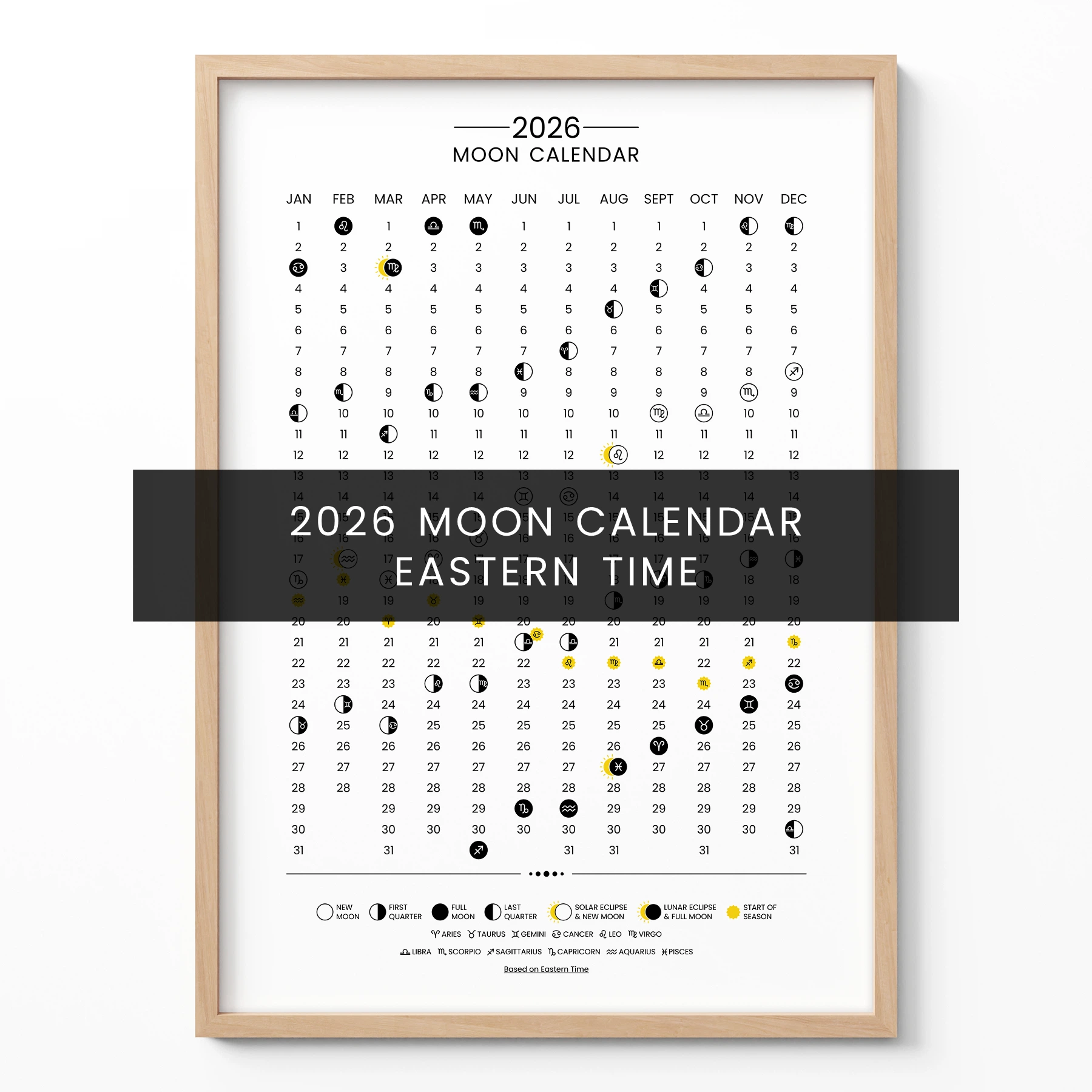
All Full Moons in 2026 by Eastern Time
Keep this table handy to plan your moon-gazing adventures throughout 2026! Remember that times will shift between EST and EDT as Daylight Saving Time begins in March and ends in November.
| Month | Full Moon Name | Date (Eastern Time) | Peak Time (Eastern Time) | Notes |
|---|---|---|---|---|
| January | Wolf Moon | Saturday, January 3, 2026 | 11:27 PM EST | |
| February | Snow Moon | Sunday, February 1, 2026 | 5:09 PM EST | |
| March | Worm Moon | Tuesday, March 3, 2026 | 1:29 PM EST | Total Lunar Eclipse (for some regions) |
| April | Pink Moon | Wednesday, April 1, 2026 | 9:22 AM EDT | Daylight Saving Time Begins |
| May | Flower Moon | Friday, May 1, 2026 | 3:11 AM EDT | |
| May (Second) | Blue Moon | Sunday, May 31, 2026 | 6:48 PM EDT | Seasonal Blue Moon (third of four in a season) |
| June | Strawberry Moon | Monday, June 29, 2026 | 8:55 AM EDT | |
| July | Buck Moon | Wednesday, July 29, 2026 | 9:50 PM EDT | |
| August | Sturgeon Moon | Friday, August 28, 2026 | 9:35 AM EDT | |
| September | Harvest Moon | Saturday, September 26, 2026 | 7:44 PM EDT | Closest to Autumnal Equinox |
| October | Hunter’s Moon | Monday, October 26, 2026 | 4:38 AM EDT | |
| November | Beaver Moon | Tuesday, November 24, 2026 | 1:45 PM EST | Daylight Saving Time Ends |
| December | Cold Moon | Thursday, December 24, 2026 | 1:21 AM EST |
By understanding the timing, cultural significance, and practical tips for viewing, you’re now fully equipped to connect with the February 2026 Snow Moon and all the other lunar wonders that 2026 has in store. Happy moon gazing!
Frequently Asked Questions
When is the Full Moon in February 2026 in Eastern Time?
The Full Snow Moon in February 2026 will reach its peak illumination at 5:09 PM EST on Sunday, February 1st, 2026.
Why is it called the Snow Moon?
The name ‘Snow Moon’ originates from Native American tribes, particularly in the northeastern US, due to the heavy snowfalls and harsh, food-scarce conditions typical of February. It reflects the challenging winter period.
What are some alternative names for February’s Full Moon?
Besides Snow Moon, it’s also known as the Hunger Moon (due to food scarcity), Bear Moon (as bear cubs are born), Storm Moon (referencing severe winter storms), and Little Famine Moon, among others, depending on the culture and region.
Will the February 2026 Full Moon be visible during the day in Eastern Time?
While its peak illumination is at 5:09 PM EST, which is late afternoon, the sun will be setting around this time. This means you have a great chance to see the full moon rising in the eastern sky as twilight deepens, creating a beautiful viewing opportunity.
How can I best view the Snow Moon in February 2026?
For optimal viewing, find a location away from city lights, check the weather forecast for clear skies, and dress warmly. Consider catching the moon as it rises around sunset. Binoculars or a telescope can enhance the experience, but it’s also stunning to the naked eye.
Are there any special astrological or spiritual meanings associated with the Snow Moon?
Historically, the Snow Moon symbolizes perseverance, resilience, and survival during challenging times. Spiritually, it’s often seen as a period for releasing what no longer serves you, reflecting on your strengths, and setting intentions for renewal as spring approaches. Many use it for journaling, meditation, or quiet reflection.