February 2026 Full Moon in the UK: Your Definitive Guide to the Snow Moon in Leo
Are you looking to mark your calendar for the February 2026 Full Moon in the UK? You’ve come to the right place. This isn’t just a celestial event; it’s a moment steeped in history, astrology, and natural wonder. Whether you’re an avid sky-watcher, an astrology enthusiast, or simply curious about our lunar companion, understanding this particular full moon offers a unique connection to the cosmos.
Table of Contents
- February 2026 Full Moon in the UK: Your Definitive Guide to the Snow Moon in Leo
- The February 2026 Full Moon: Your Quick Reference Guide
- The Snow Moon: Unpacking February’s Traditional Full Moon Name
- Origins and Meaning of “Snow Moon”
- Other Traditional Names for February’s Full Moon
- Astrological Insight: The Full Moon in Leo for February 2026
- What a Full Moon in Leo Means
- Reflecting and Releasing: Harnessing Leo’s Energy
- The Moon’s Dance: Cancer and Leo
- How to Observe the February 2026 Full Moon in the UK (and from the US)
- Prime Viewing Times and Conditions
- Simple Tips for Moon Gazing
- Capturing the Glow: Full Moon Photography Basics
- Overcoming Light Pollution: Urban Viewing Strategies
- The Full Moon Calendar for 2026: Every Lunar Event You Need to Know
- Special Lunar Events in 2026
- Understanding the Wider Lunar Cycle
- The Phases of the Moon: A Quick Refresher
- The Moon’s Influence on Tides and Life on Earth
- Why Tracking Full Moons Matters (Beyond Astronomy)
- Connecting with Nature and History
- Practical Applications: Planning and Reflection
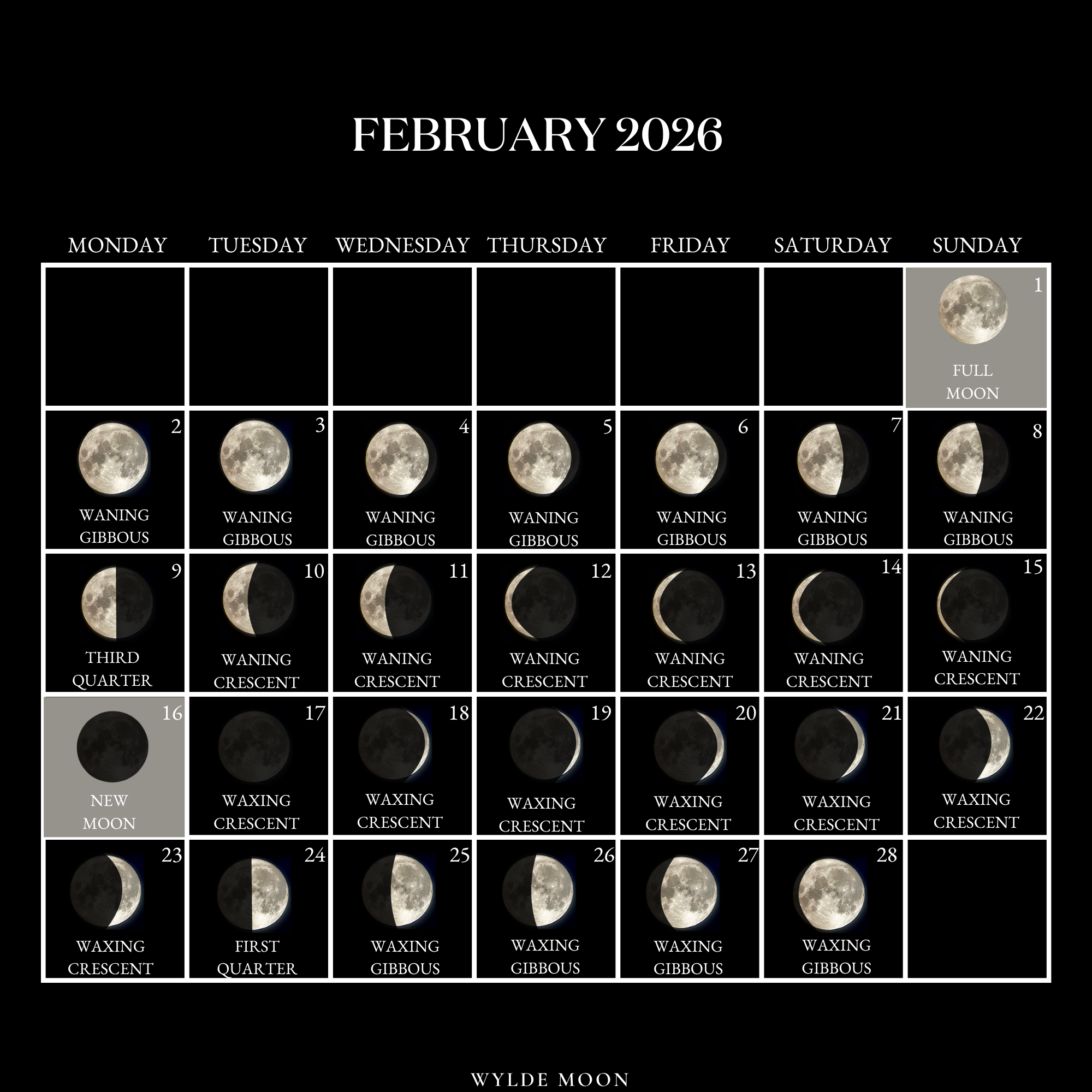
Mark your diaries: The Full Moon in February 2026, traditionally known as the Snow Moon, will grace the skies over the United Kingdom on Sunday, February 1st, 2026, at 10:09 PM GMT (Greenwich Mean Time). Astrologically, this powerful lunation occurs in the vibrant sign of Leo, promising a period of introspection, passion, and self-expression. While the UK is the primary focus of this search, we’ll also provide essential US time conversions so you can easily track this event from across the pond.
The February 2026 Full Moon: Your Quick Reference Guide
Let’s cut straight to the chase. Here are the precise details you need for the February 2026 Full Moon, serving as your immediate go-to resource. We’ve included key time zones to help you plan your observations, no matter where you are in the world, with a special emphasis on UK and major US times.
| Detail | Value |
|---|---|
| Date | Sunday, February 1, 2026 |
| Exact Time (UK Local) | 10:09 PM GMT |
| Exact Time (UTC) | 22:09 UTC |
| Equivalent Time (EST – USA) | 5:09 PM EST |
| Equivalent Time (PST – USA) | 2:09 PM PST |
| Traditional Name | The Snow Moon |
| Astrological Sign | Leo |
| Constellation | Cancer (due to precession) |
It’s fascinating to note that while astrologically the moon is in Leo, astronomically, it will appear in the constellation Cancer due to the precession of the equinoxes. Don’t worry, both interpretations offer rich layers of meaning for us to explore!
The Snow Moon: Unpacking February’s Traditional Full Moon Name
Why do we call February’s full moon the ‘Snow Moon’? The answer is rooted in history, nature, and the cycles of ancient civilizations. Long before standardized calendars, indigenous cultures and early European settlers relied on the moon’s phases to track the seasons, naming each full moon to reflect the natural occurrences of that specific time of year.
Origins and Meaning of “Snow Moon”
For cultures in the Northern Hemisphere, February is historically one of the coldest and snowiest months. The name “Snow Moon” was given by various Native American tribes, particularly those in the northeastern United States, to signify the heavy snowfall typically experienced during this period. The deep snows made hunting difficult, often leading to scarcity, which is why it’s also sometimes referred to as the “Hunger Moon.” It was a time of survival, resourcefulness, and waiting for the thaw.
In the UK, February also often brings significant snowfall, albeit sometimes less consistently than in parts of North America. The name resonates with the typical winter conditions experienced across many northern latitudes. Imagine ancient communities looking up at the bright, cold full moon, surrounded by a blanket of white – the Snow Moon was a beacon in the harshest part of winter.
Other Traditional Names for February’s Full Moon
While “Snow Moon” is the most widely recognized, different cultures had their own evocative names:
- Hunger Moon: Reflecting the difficulty of finding food due to harsh winter conditions.
- Storm Moon: Highlighting the intense storms often associated with late winter.
- Chaste Moon: In medieval Europe, this name symbolized purity and new beginnings, perhaps looking forward to spring.
- Bear Moon: Some cultures noted the time when bear cubs were born or when bears emerged from hibernation.
- Crust Moon: Referring to the crust that forms on top of deep snow as it freezes and thaws.
These names are more than just labels; they are historical markers, offering a window into how our ancestors perceived and interacted with the natural world around them.
Astrological Insight: The Full Moon in Leo for February 2026
Beyond its astronomical presence, a full moon carries significant astrological weight. The February 2026 Full Moon occurs in the fiery, dramatic sign of Leo. If you’re sensitive to lunar energies, this can be a potent time for self-awareness and transformation.
What a Full Moon in Leo Means
A Full Moon is always a culmination, a spotlight moment. It illuminates what has been building since the previous New Moon and asks us to release what no longer serves us. When this happens in Leo, the sign of the Lion, the energy is amplified around themes of:

- Self-Expression and Creativity: Leo rules our creative pursuits, hobbies, and how we express our unique essence. This full moon might bring a creative project to fruition or inspire you to embrace a new artistic outlet.
- Confidence and Leadership: Leo is inherently confident, regal, and loves to be in the spotlight. You might feel a surge of courage, a desire to lead, or a need to stand up for yourself.
- Love and Romance: As a fire sign, Leo is passionate and generous in love. Relationships might reach a peak, or you might gain clarity on romantic dynamics.
- Heart and Ego: Leo also governs the heart and our ego. This full moon could highlight issues related to self-worth, pride, or where you might be overly focused on external validation.
With the Sun in Aquarius (a sign focused on community and collective ideals) opposing the Moon in Leo (focused on individual expression and warmth), this lunation encourages a balance between personal needs and communal responsibility. It’s about shining your light without overshadowing others, finding your unique role within the group, and leading with heart.
Reflecting and Releasing: Harnessing Leo’s Energy
During the February 2026 Full Moon, consider these questions to harness its energy:
- Where do you need to express yourself more authentically?
- Are you allowing your inner child to play and create?
- What beliefs about your self-worth or need for approval are you ready to release?
- How can you lead with more heart and generosity, both for yourself and others?
This is a powerful time to let go of self-doubt, fear of judgment, or anything that dims your inner sparkle. Embrace your unique brilliance and allow yourself to shine, just as the full moon illuminates the night sky.
The Moon’s Dance: Cancer and Leo
As mentioned, astronomically, the Moon will be in the constellation Cancer at the time of the full moon. This creates an interesting energetic blend. Cancer, the crab, is a water sign associated with home, family, emotions, and nurturing. While the astrological sign is Leo, the backdrop of Cancer in the cosmos can add a layer of emotional depth and a pull towards comfort and security, which might initially feel at odds with Leo’s outgoing nature. This interplay invites us to find confidence (Leo) from a place of emotional security (Cancer).
How to Observe the February 2026 Full Moon in the UK (and from the US)
Observing a full moon is a simple yet profound experience. Here’s how to make the most of the February 2026 Snow Moon, whether you’re in the UK or tuning in from the USA.
Prime Viewing Times and Conditions
While the full moon technically peaks at a specific time (10:09 PM GMT), it will appear full to the naked eye for about three days around this peak – roughly from Saturday evening (Jan 31st) to Monday morning (Feb 2nd). The best time to observe is typically when the moon is rising or setting, as atmospheric distortion can give it a magnified, often reddish or yellowish hue, making it particularly striking. Check local moonrise and moonset times for your specific location in the UK or US.

Weather in the UK: February in the UK can be notoriously cloudy. Keep an eye on local weather forecasts. If skies are clear, bundle up! It will be cold. Look for a spot with an unobstructed view of the horizon, away from tall buildings or trees.
Simple Tips for Moon Gazing
- Find a Dark Spot: While a full moon is bright enough to cut through some light pollution, a darker location will enhance your experience, revealing more subtle details.
- No Equipment Needed: Your eyes are your best tools. A full moon is a magnificent sight on its own.
- Binoculars are a Bonus: If you have them, even a simple pair of binoculars can reveal incredible details like craters and maria (dark plains) on the lunar surface.
- Patience is Key: Give your eyes time to adjust to the darkness.
Capturing the Glow: Full Moon Photography Basics
Want to photograph the Snow Moon? It can be tricky due to its brightness. Here are a few pointers:
- Use a Tripod: Essential for sharp images, especially with longer exposures.
- Manual Settings: Move away from auto mode. Start with a low ISO (100-400), a fast shutter speed (e.g., 1/125 to 1/250 seconds), and an aperture around f/8 to f/11 for good depth of field. Adjust as needed.
- Telephoto Lens: If you have one, this will bring the moon closer. Otherwise, capture it as part of a wider landscape for context.
- Experiment: Photography is all about trial and error. Don’t be afraid to adjust your settings!
Overcoming Light Pollution: Urban Viewing Strategies
Living in a city like London, Manchester, or Glasgow? Don’t despair! A full moon is bright enough to be seen even in urban environments. Head to a park, an open field, or even your garden. Anywhere you can get a clear view of the sky without immediate obstructions. If you’re in the US and looking at the UK times, remember that sunset will have already occurred in the UK, making for prime viewing conditions.
The Full Moon Calendar for 2026: Every Lunar Event You Need to Know
The February Snow Moon is just one of many celestial spectacles in 2026. Here’s a comprehensive overview of all the full moons for the year, with their traditional names and UK local times, so you can plan your observations and reflections throughout the entire year.
| Month | Date | UK Local Time | Traditional Name | Astrological Sign | Notes |
|---|---|---|---|---|---|
| January | Saturday, Jan 3 | 1:27 AM GMT | Wolf Moon | Cancer | |
| February | Sunday, Feb 1 | 10:09 PM GMT | Snow Moon | Leo | The focus of our guide! |
| March | Tuesday, Mar 3 | 11:37 AM GMT | Worm Moon | Virgo | Total Lunar Eclipse |
| April | Wednesday, Apr 1 | 10:50 PM BST | Pink Moon | Libra | BST begins (March 29) |
| May | Friday, May 1 | 6:53 PM BST | Flower Moon | Scorpio | |
| May | Sunday, May 31 | 11:43 PM BST | Blue Moon | Sagittarius | Second full moon in a month |
| June | Tuesday, Jun 30 | 2:46 PM BST | Strawberry Moon | Capricorn | |
| July | Thursday, Jul 30 | 3:44 AM BST | Buck Moon | Aquarius | |
| August | Friday, Aug 28 | 1:21 PM BST | Sturgeon Moon | Pisces | |
| September | Sunday, Sep 27 | 9:50 PM BST | Harvest Moon | Aries | Supermoon & Partial Lunar Eclipse |
| October | Tuesday, Oct 27 | 5:47 AM BST | Hunter’s Moon | Taurus | |
| November | Wednesday, Nov 25 | 1:04 PM GMT | Beaver Moon | Gemini | GMT begins (Oct 25) |
| December | Friday, Dec 25 | 6:46 AM GMT | Cold Moon | Cancer |
Special Lunar Events in 2026
2026 is shaping up to be an exciting year for moon watchers! Beyond the regular full moons, mark your calendar for these significant events:
- Total Lunar Eclipse (March 3, 2026): The Worm Moon in March will be accompanied by a total lunar eclipse, offering a spectacular “Blood Moon” display. This will be visible from parts of North and South America, and Europe.
- Blue Moon (May 31, 2026): A “Blue Moon” occurs when there are two full moons in a single calendar month. This is a relatively rare occurrence, making May a special month for lunar observation.
- Supermoon & Partial Lunar Eclipse (September 27, 2026): The Harvest Moon in September will be both a Supermoon (appearing slightly larger and brighter due to its closer proximity to Earth) and a partial lunar eclipse, promising a dramatic visual.
Understanding the Wider Lunar Cycle
The full moon is just one stage in a continuous, beautiful cycle. Understanding the full lunar cycle enhances our appreciation for each phase, including the February Snow Moon.

The Phases of the Moon: A Quick Refresher
The Moon’s appearance changes throughout the month due to its orbit around Earth and the varying angles at which we see its sunlit surface. The main phases include:
- New Moon: The Moon is between the Earth and the Sun, making it invisible from Earth. A time for new beginnings and setting intentions.
- Waxing Crescent: A sliver of light appears and grows larger.
- First Quarter: Half of the Moon is illuminated; a time for action and decision.
- Waxing Gibbous: More than half of the Moon is lit, growing towards fullness.
- Full Moon: The entire face of the Moon is illuminated by the Sun, visible as a complete circle. A time of culmination, release, and high energy.
- Waning Gibbous: The illumination begins to decrease after the full moon.
- Last Quarter: The other half of the Moon is now lit; a time for re-evaluation and letting go.
- Waning Crescent: The final sliver before the New Moon, a period of rest and introspection.
Each phase offers unique energy, making the full moon a significant peak in this monthly rhythm.
The Moon’s Influence on Tides and Life on Earth
The Moon’s gravitational pull is a powerful force. It’s most famously responsible for Earth’s ocean tides, with full and new moons causing spring tides (higher highs and lower lows) due to the combined gravitational pull of the Sun and Moon. But its influence extends beyond the oceans.
Many traditions believe the lunar cycle affects everything from plant growth to human emotions and sleep patterns. While scientific evidence varies on some of these claims, the consistent rhythm of the moon has undoubtedly shaped human culture, agriculture, and spirituality for millennia. The February Snow Moon is a reminder of this ancient, enduring connection.
Why Tracking Full Moons Matters (Beyond Astronomy)
Why do so many of us feel drawn to tracking full moons, whether it’s the Snow Moon of February 2026 or any other?
Connecting with Nature and History
Following the lunar calendar is a way to reconnect with nature’s rhythms, much like our ancestors did. It offers a tangible link to ancient practices, cultural lore, and the simple beauty of the night sky. In our fast-paced modern world, taking a moment to observe the full moon can be a grounding, meditative experience, fostering a sense of wonder and perspective.