February 2026: Your Essential Guide to India’s Holidays and Festivals
Are you a US resident planning travel to India in February 2026? Perhaps you have family, friends, or business connections there, and you want to understand the cultural landscape. Maybe you’re simply curious about the vibrant tapestry of Indian celebrations. Whatever your reason, navigating India’s diverse calendar can be complex. That’s why I’ve put together this definitive guide.
Table of Contents
- February 2026: Your Essential Guide to India’s Holidays and Festivals
- February 2026 India Calendar at a Glance: Key Dates You Need to Know
- Dive Deeper: Understanding February 2026’s Major Indian Festivals and Holidays
- National & Regional Public Holidays in February 2026
- Shivaji Jayanti (February 19th): A Maharashtra Celebration
- Major Hindu Festivals and Observances in February 2026
- Guru Ravidas Jayanti (February 1st): Honoring a Saint
- Maha Shivaratri (February 15th): The Great Night of Shiva
- Holashtak Begins (February 24th – March 3rd): The Pre-Holi Period
- Amalaki Ekadashi (February 27th): The Power of the Amla Tree
- Other Noteworthy Hindu Observances in February 2026:
- Other Significant Religious & Cultural Observances in February 2026
- Ramadan Begins (February 18th): A Month of Reflection for Muslims
- World Radio Day (February 13th): A Global and Indian Celebration of Media
- Valentine’s Day (February 14th): Global Romance in an Indian Context
- Planning Your Calendar Around February 2026 India Events (For a US Audience)
- For Travelers: What to Expect and How to Prepare
- Connecting with Indian Culture from Afar
- Key Considerations for Business and Personal Planning
- The Indian Calendar System: A Brief Overview
- Final Thoughts: Embracing India’s Cultural Richness
February in India is a month of significant cultural and religious observances, ranging from national celebrations to deeply spiritual Hindu festivals and the beginning of a major Islamic holy month. Understanding these dates isn’t just about avoiding closures; it’s about appreciating the rich heritage and rhythms of life across the subcontinent.
This guide will equip you with a clear, easy-to-understand overview of all the major holidays and festivals falling in February 2026, offering crucial context and practical insights tailored for a US audience. Let’s dive in!
February 2026 India Calendar at a Glance: Key Dates You Need to Know
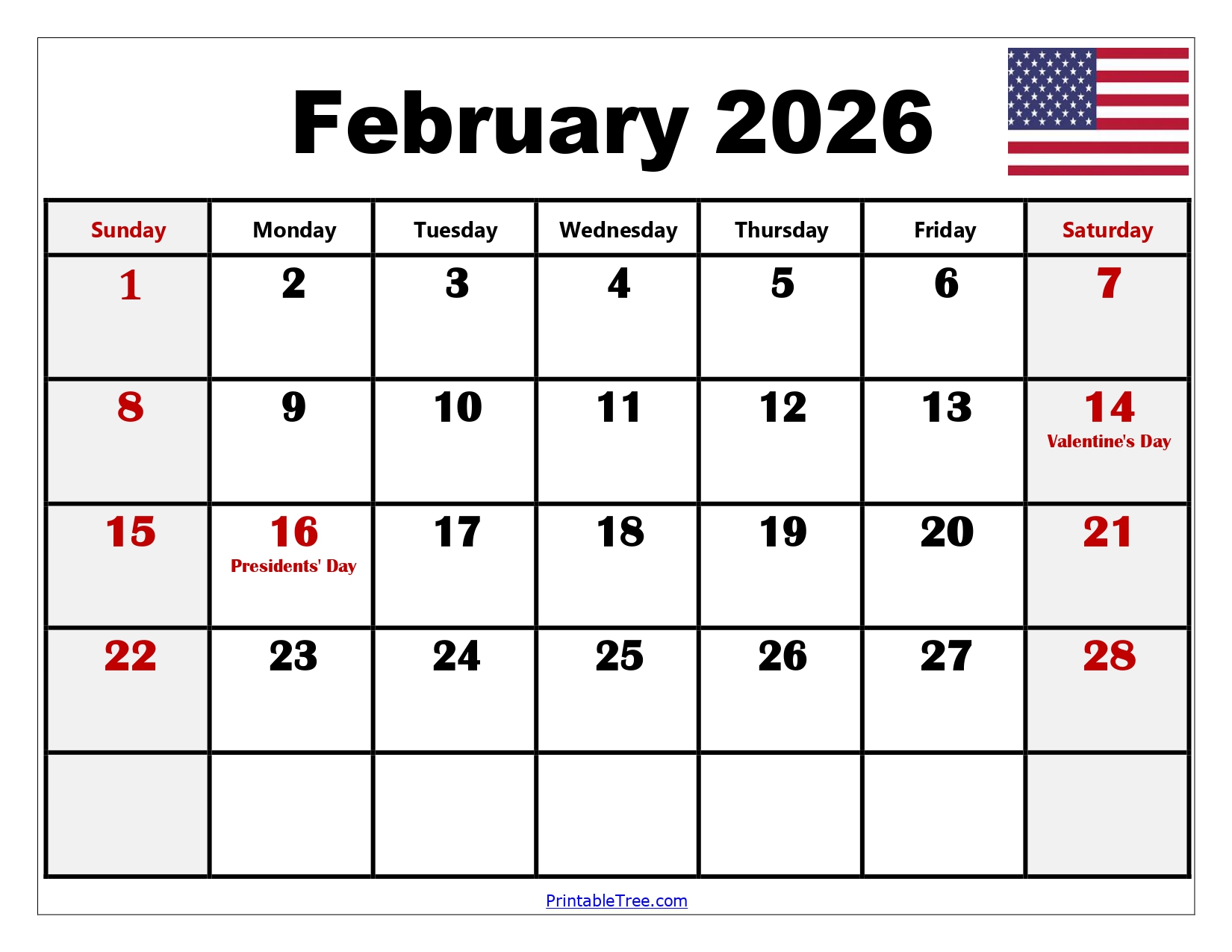
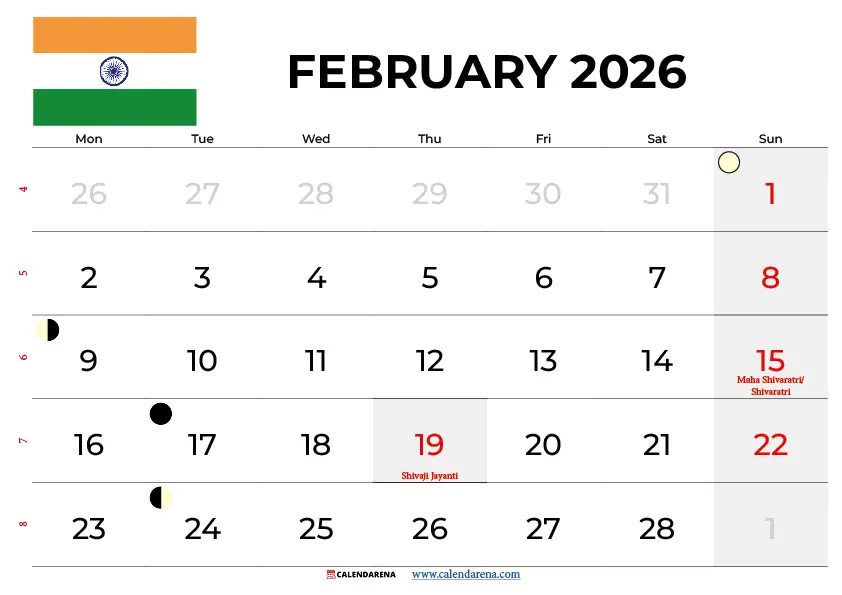
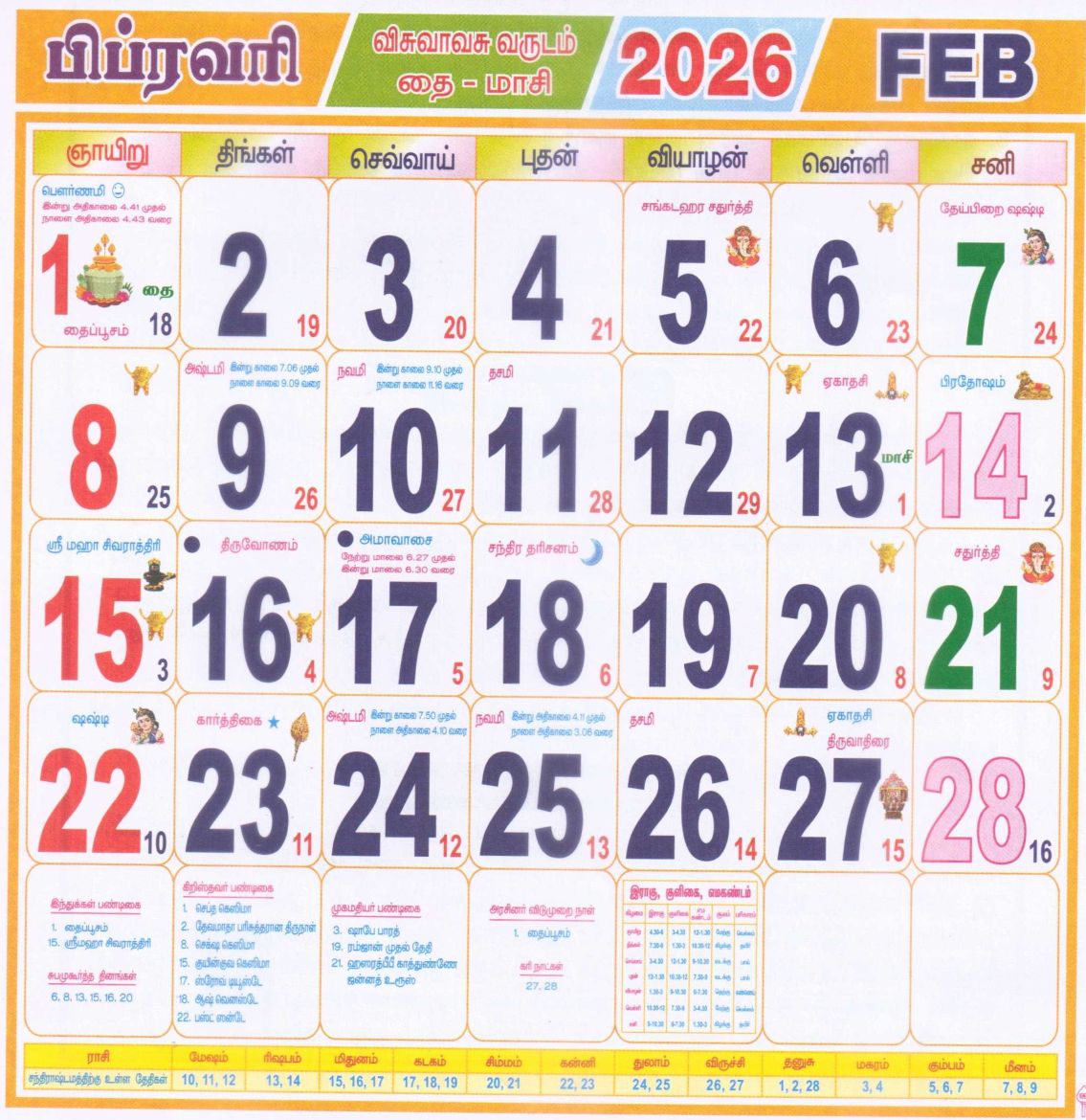
To give you an immediate overview, here’s a consolidated table of the most significant holidays and festivals in India for February 2026. This is your quick reference for planning and understanding the month’s events.
| Date | Day | Event Name | Type of Observance | Brief Significance |
|---|---|---|---|---|
| February 1 | Sunday | Guru Ravidas Jayanti | Hindu/Sikh Festival | Birthday of Guru Ravidas, a revered saint. |
| February 13 | Friday | World Radio Day | International Observance | Recognizing the power of radio as a medium. |
| February 14 | Saturday | Valentine’s Day | Global Cultural Day | Celebration of love and affection. |
| February 15 | Sunday | Maha Shivaratri | Major Hindu Festival | The ‘Great Night of Shiva’, devoted to Lord Shiva. |
| February 18 | Wednesday | Ramadan Begins | Islamic Holy Month | Start of fasting, prayer, and charity for Muslims. |
| February 19 | Thursday | Shivaji Jayanti | Regional Public Holiday (Maharashtra) | Birthday of Chhatrapati Shivaji Maharaj. |
| February 24 | Tuesday | Holashtak Begins | Hindu Observance Period | Inauspicious period before Holi (lasts 8 days). |
| February 27 | Friday | Amalaki Ekadashi | Hindu Fasting Day | Fast dedicated to Lord Vishnu and the Amla tree. |
Dive Deeper: Understanding February 2026’s Major Indian Festivals and Holidays
India is a land where every day can bring a new celebration. The month of February, though shorter, is packed with significant dates that reflect the nation’s spiritual depth and historical pride. Let’s explore these events with the cultural context you need to truly appreciate them.
National & Regional Public Holidays in February 2026
While February 2026 doesn’t feature many pan-India national holidays, there’s one significant regional observance that often captures the nation’s attention:

Shivaji Jayanti (February 19th): A Maharashtra Celebration
Observed primarily in the state of Maharashtra, Shivaji Jayanti commemorates the birth anniversary of Chhatrapati Shivaji Maharaj, the founder of the Maratha Empire. Shivaji is revered as a national hero for his military prowess, administrative skills, and vision for Swaraj (self-rule) against the Mughal Empire in the 17th century.
Significance: This day is a source of immense pride and cultural identity for Maharashtrians. It celebrates Shivaji’s ideals of justice, good governance, and religious tolerance.
How it’s Celebrated: Across Maharashtra, people enthusiastically participate in processions, cultural programs, and dramas depicting Shivaji’s life. Forts associated with him are often illuminated and become focal points for celebrations. Schools and colleges organize special events to educate younger generations about his legacy. If you’re in Maharashtra during this time, expect public gatherings and a palpable sense of historical reverence.
Major Hindu Festivals and Observances in February 2026
Hinduism, with its myriad deities and traditions, forms a rich spiritual backbone for many in India. February 2026 brings several important Hindu dates:
Guru Ravidas Jayanti (February 1st): Honoring a Saint
Guru Ravidas Jayanti marks the birth anniversary of Guru Ravidas, a revered saint and mystic of the 15th-century Bhakti movement. He advocated for equality, compassion, and spiritual unity, regardless of caste or social status.
Significance: Guru Ravidas’s teachings challenged traditional caste hierarchies and promoted a society based on love and spiritual liberation. His followers, particularly the Ravidassia community, hold him in high esteem.
How it’s Celebrated: Devotees gather in temples (especially Ravidassia temples) to offer prayers, recite hymns (Shabads), and engage in devotional singing (Kirtans). Large processions often take place, with followers carrying portraits of Guru Ravidas and spreading his message of universal brotherhood. Special meals (langar) are also served in many places.

Maha Shivaratri (February 15th): The Great Night of Shiva
Undoubtedly one of the most significant Hindu festivals in February, Maha Shivaratri is dedicated to Lord Shiva, one of the principal deities of Hinduism. The literal translation is ‘The Great Night of Shiva’, and it’s believed to be the night Shiva performs the cosmic dance (Tandava) of creation, preservation, and destruction.
Significance: Devotees believe that on this auspicious night, by worshipping Lord Shiva, one can attain liberation from sin and achieve moksha (salvation). It also commemorates the marriage of Shiva and Parvati, symbolizing the union of divine energy.
How it’s Celebrated: Observances typically begin in the evening and continue through the night. Many devotees observe a strict fast, some even abstaining from water (Nirjala Vrat). Temples dedicated to Shiva, known as Shiv Mandirs, are adorned and decorated, witnessing throngs of devotees. Offerings of milk, water, Bael leaves, fruits, and flowers are made to the Shiva Lingam. Continuous chanting of ‘Om Namah Shivaya’ and spiritual bhajans (devotional songs) fill the air. The night is spent in meditation and prayers, often staying awake (Jaagaran) in devotion. The festival’s intensity varies by region, but the spirit of devotion is universal.
Holashtak Begins (February 24th – March 3rd): The Pre-Holi Period
Leading up to the vibrant festival of Holi, the eight-day period known as Holashtak is observed. The word ‘Holashtak’ is a combination of ‘Holi’ and ‘Ashtak’ (meaning eight), referring to the eight days before Holi.
Significance: According to Hindu beliefs, this period is considered inauspicious for undertaking any new auspicious endeavors, such as weddings, housewarming ceremonies, or starting new businesses. This is often attributed to a mythological tale involving Kama Deva (the god of love) and Lord Shiva. It’s a time for prayer, meditation, and performing specific rituals to ward off negative energies, rather than initiating new beginnings.
How it’s Observed: While not a holiday in the traditional sense, many Hindus exercise caution during these eight days. The focus shifts towards spiritual cleansing and preparations for Holi. The lighting of a bonfire (Holika Dahan) marks the end of Holashtak and the beginning of Holi festivities.
Amalaki Ekadashi (February 27th): The Power of the Amla Tree
Ekadashi refers to the eleventh day of each of the two lunar phases in a Hindu calendar month, and it is considered highly auspicious for fasting and worshipping Lord Vishnu. Amalaki Ekadashi is particularly special as it’s dedicated to the Amla tree (Indian gooseberry), which is believed to be a dwelling place for Lord Vishnu.
Significance: Observing a fast and performing rituals on Amalaki Ekadashi is believed to grant immense blessings, prosperity, good health, and liberation from sins. It emphasizes the importance of nature and its sacred connection to the divine.
How it’s Celebrated: Devotees fast from sunrise on Ekadashi until sunrise the next day. They worship Lord Vishnu and the Amla tree, offering water, flowers, and fruits. Some also donate Amla fruits and other items to Brahmins. Reading religious texts and chanting Vishnu mantras are also common practices.
Other Noteworthy Hindu Observances in February 2026:
- Shasti (February 22nd): A fasting day observed for Lord Murugan (Kartikeya).
- Somvar Vrat (February 23rd): Monday fasts dedicated to Lord Shiva, observed by many for prosperity and happiness.
- Durga Ashtami Vrat (February 24th): Fasting day dedicated to Goddess Durga, seeking her blessings for strength and protection.
- Rohini Vrat (February 25th): A specific fast observed by followers of Jainism, dedicated to the Rohini Nakshatra. While primarily Jain, it’s often listed alongside Hindu observances due to calendar overlap.
Other Significant Religious & Cultural Observances in February 2026
India’s secular fabric means a multitude of faiths coexist, and global events also find their place in the cultural calendar:
Ramadan Begins (February 18th): A Month of Reflection for Muslims
For India’s significant Muslim population, Ramadan is the holiest month of the Islamic calendar. It begins with the sighting of the new moon and lasts for 29 or 30 days. In February 2026, it is projected to commence around the 18th.
Significance: Ramadan is a period of intense spiritual devotion, self-reflection, and self-improvement. Muslims observe a strict fast (Sawm) from dawn until sunset, abstaining from food, drink, and other physical needs. It’s a time for increased prayer, reading the Quran, charity (Zakat), and fostering community bonds.
How it’s Observed: Throughout India, Muslim communities will observe fasts, break them at sunset with an Iftar meal, and partake in pre-dawn meals (Suhoor). Mosques will be bustling with special Taraweeh prayers at night. Businesses in Muslim-majority areas might adjust their hours, and the overall atmosphere shifts towards piety and communal solidarity. It culminates in the joyous festival of Eid al-Fitr.
World Radio Day (February 13th): A Global and Indian Celebration of Media
While not a traditional holiday, World Radio Day, proclaimed by UNESCO, is observed globally, including in India. It highlights the power of radio as a medium for communication, education, and entertainment.
Significance: In a diverse country like India, radio remains a vital source of information, especially in remote areas and for different linguistic groups. This day celebrates its enduring relevance.
How it’s Observed: Radio stations often feature special programming, discussions on the role of radio, and interactive sessions with listeners. Educational institutions might organize events to raise awareness about the history and future of radio.
Valentine’s Day (February 14th): Global Romance in an Indian Context
Like many parts of the world, Valentine’s Day has gained significant popularity in urban and semi-urban India. Originally a Western tradition, it has been embraced by younger generations as a day to express love and affection.
Significance: While some conservative groups have historically opposed its celebration as a ‘Western import,’ it is widely recognized by commercial establishments and individuals as an occasion for romance and gift-giving.
How it’s Observed: You’ll see flower shops, gift stores, and restaurants promoting special deals. Couples exchange gifts, go out for meals, and spend time together. Social media is abuzz with messages of love and friendship. It’s a modern cultural phenomenon that coexists with traditional Indian celebrations.
Planning Your Calendar Around February 2026 India Events (For a US Audience)
Understanding India’s calendar is more than just knowing dates; it’s about navigating the practicalities and nuances of a culturally rich nation. Here’s how this information can be particularly useful for you as a US resident:
For Travelers: What to Expect and How to Prepare
- Impact on Travel and Accommodation: During major festivals like Maha Shivaratri or regional holidays like Shivaji Jayanti, popular pilgrimage sites, tourist destinations, and even major cities can experience increased crowds. Transportation (trains, buses, domestic flights) might be fully booked, and accommodation prices could surge. Plan and book well in advance if your travel coincides with these dates.
- Business Closures: While most public holidays are regional, some national observances might lead to closures of government offices, banks, and some businesses. During Ramadan, food establishments might have altered hours, particularly during fasting times.
- Cultural Immersion: Traveling during a festival offers an unparalleled opportunity for cultural immersion. Participate respectfully in local celebrations, observe traditions, and engage with the local community. It’s a chance to witness India’s vibrant spirituality firsthand.
- Food and Dining: During fasting periods like Maha Shivaratri or Ramadan, you might find specific dietary restrictions or special menus. Be mindful and respectful of these practices.
Connecting with Indian Culture from Afar
Even if you’re not in India, you can still engage with these cultural moments:
- Online Resources: Many temples and organizations stream live Aarti (prayer ceremonies) and festival events. Follow Indian news outlets and cultural organizations online for updates and insights.
- Local Diaspora Events: Check for local Indian cultural centers, temples, or community groups in your US city. They often organize events or gatherings to celebrate major festivals like Maha Shivaratri or Guru Ravidas Jayanti, offering a taste of India closer to home.
- Understanding Friends/Family Observances: If you have Indian friends, colleagues, or family members, understanding their holiday calendar can strengthen your connection. A simple ‘Happy Maha Shivaratri’ can go a long way in showing respect and appreciation for their traditions.
Key Considerations for Business and Personal Planning
- Workdays: Most of February will be regular working days, but be aware of regional holidays that might affect business operations in specific states.
- Communication: If you have business dealings in India, be mindful of holiday periods. Response times might be slower, and certain offices might be closed. Plan your communications accordingly.
- Respect for Observances: Whether you’re traveling or interacting remotely, always show respect for local customs and religious practices. This deepens cross-cultural understanding and ensures smooth interactions.
The Indian Calendar System: A Brief Overview
You might notice slight variations in festival dates depending on the source. This isn’t an error; it’s a reflection of India’s complex and diverse calendar systems. Unlike the Gregorian calendar, which is primarily solar, many Indian religious calendars are lunisolar. This means dates are determined by the positions of the moon and the sun, leading to variations year to year.
The most widely followed Hindu calendar is based on the Panchang, which calculates auspicious times, lunar days (Tithis), constellations (Nakshatras), and other astronomical factors. Different regions and sects within India also have their own interpretations and traditions, leading to minor date discrepancies. For major festivals, however, there’s usually a consensus.
For Muslim festivals like Ramadan, the dates are based on the sighting of the crescent moon, which can lead to slight variations globally depending on geographical location and observation. The dates provided here are generally accepted forecasts.
Final Thoughts: Embracing India’s Cultural Richness
February 2026 in India is a microcosm of its incredible diversity – a blend of ancient spiritual practices, regional pride, and global influences. Whether you’re planning a trip, engaged in business, or simply fostering a deeper appreciation for world cultures, understanding this calendar is invaluable.
By taking the time to learn about these holidays and festivals, you’re not just marking dates; you’re opening a window into the soul of a nation that celebrates life, spirituality, and community with unparalleled enthusiasm. Embrace the opportunity to learn, observe, and connect with the vibrant spirit of India.
Frequently Asked Questions
What are the major Indian holidays in February 2026?
The major Indian observances in February 2026 include Guru Ravidas Jayanti (Feb 1), World Radio Day (Feb 13), Valentine’s Day (Feb 14), Maha Shivaratri (Feb 15), the beginning of Ramadan (approx. Feb 18), Shivaji Jayanti (Feb 19), the start of Holashtak (Feb 24), and Amalaki Ekadashi (Feb 27).
Is February 2026 a good time to travel to India for festivals?
Yes, February can be an excellent time to experience spiritual festivals like Maha Shivaratri and understand the start of Ramadan. The weather is generally pleasant across much of India, making travel comfortable. However, expect larger crowds around pilgrimage sites and plan your bookings in advance.
What is Maha Shivaratri and how is it celebrated?
Maha Shivaratri, falling on February 15, 2026, is a major Hindu festival dedicated to Lord Shiva. Devotees observe fasts, offer prayers, water, and Bael leaves to Shiva Lingams in temples, and chant ‘Om Namah Shivaya’ through the night. It commemorates Shiva’s cosmic dance and his marriage to Parvati.
Will businesses and transportation be affected by these holidays?
Some regional public holidays, like Shivaji Jayanti in Maharashtra, may lead to local business and government office closures. During major festivals, transportation hubs and popular tourist areas can be very busy, potentially affecting travel times and availability. During Ramadan, some food establishments may adjust their operating hours.
Why do Indian festival dates sometimes vary?
Indian festival dates often vary because many religious calendars, particularly Hindu ones, are lunisolar, meaning they are based on the positions of both the moon and the sun, rather than solely on a solar calendar like the Gregorian calendar. Different regional interpretations of the Panchang (traditional Hindu calendar) and the sighting of the moon for Islamic festivals can also cause slight variations.
What is Holashtak and what is its significance?
Holashtak is an eight-day period in Hinduism, beginning on February 24, 2026, that precedes the festival of Holi. This period is considered inauspicious for starting new ventures, weddings, or other major auspicious ceremonies. It’s traditionally a time for spiritual practices and prayers, preparing devotees for the vibrant Holi celebrations that follow.