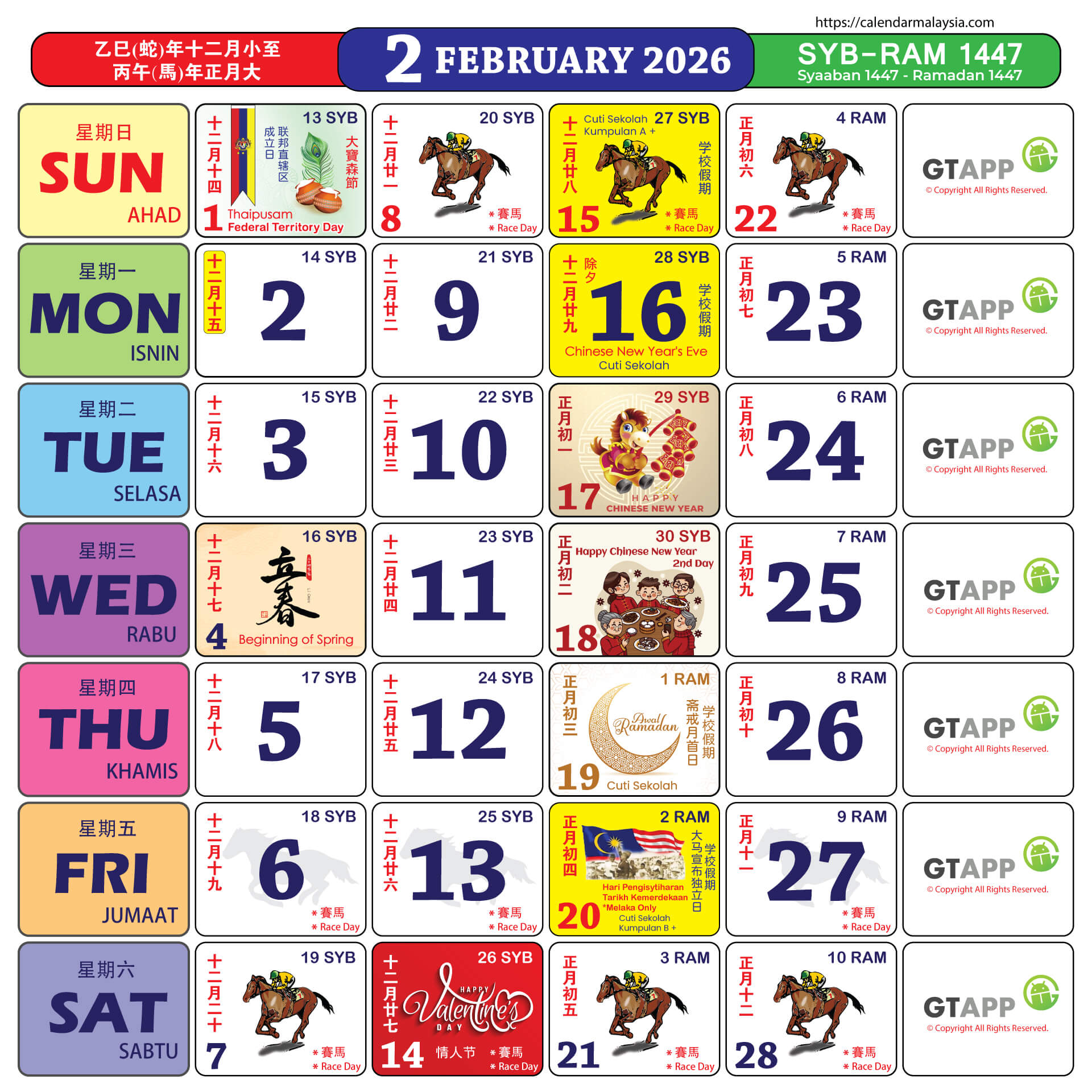
February 2026 Calendar with Malaysia Holidays: Your Definitive Planning Guide
Planning a trip to Malaysia or conducting business there in February 2026? You’ve landed in the right place. Understanding the local public holidays isn’t just a matter of marking dates on a calendar; it’s essential for a smooth, enjoyable, and productive experience. From vibrant cultural festivals to significant national observances, February 2026 in Malaysia promises a fascinating blend of celebrations that can impact everything from travel logistics to business operations.
As an expert in international travel and cultural planning, I’m here to cut through the confusion and provide you with a clear, comprehensive guide. Forget generic lists; we’re going to dive deep into what these holidays mean, where they’re observed, and crucially, how they’ll affect you as you navigate this incredible Southeast Asian nation.
Ready to unlock February 2026 in Malaysia? Let’s get started.
Understanding February 2026 in Malaysia: A Month of Vibrant Celebrations
February in Malaysia is often a bustling month, characterized by a mix of religious solemnity and exuberant cultural festivities. For 2026, it holds particular significance with two major holidays: Thaipusam and Federal Territory Day, both falling on the first day of the month, followed by the nationwide celebration of Chinese New Year later in the month. This means potential long weekends, regional closures, and opportunities for unique cultural immersion.
Whether you’re visiting Kuala Lumpur, exploring the cultural heartland, or engaging in business, knowing these dates and their implications is your first step to a successful journey.
Key Holidays at a Glance: February 2026 Malaysia
Here’s your quick reference for the primary holidays in Malaysia for February 2026. Remember, Malaysia has both national and state-specific holidays, which is crucial for planning.
| Date |
Holiday Name |
Type |
Regions Observed |
Brief Significance |
| Sunday, Feb 1 |
Thaipusam |
State |
Johor, Kuala Lumpur, Negeri Sembilan, Penang, Perak, Putrajaya, Selangor |
Hindu festival commemorating Lord Murugan’s victory over evil. Known for Kavadi processions. |
| Sunday, Feb 1 |
Federal Territory Day (Hari Wilayah Persekutuan) |
Federal Territory |
Kuala Lumpur, Labuan, Putrajaya |
Celebrates the formation of the Federal Territories. |
| Monday, Feb 2 |
Thaipusam (Observed Holiday) |
State |
Johor, Kuala Lumpur, Negeri Sembilan, Penang, Perak, Putrajaya, Selangor |
As Feb 1 is a Sunday, the holiday is observed on the following Monday. |
| Monday, Feb 2 |
Federal Territory Day (Observed Holiday) |
Federal Territory |
Kuala Lumpur, Labuan, Putrajaya |
As Feb 1 is a Sunday, the holiday is observed on the following Monday. |
| Tuesday, Feb 17 |
Chinese New Year (Day 1) |
National |
Nationwide |
Begins the Lunar New Year, celebrating family, prosperity, and good fortune. |
| Wednesday, Feb 18 |
Chinese New Year (Day 2) |
National |
Nationwide |
Continues the celebrations of the Lunar New Year. |
Deep Dive into February’s Major Malaysian Holidays
Now, let’s unpack the cultural and practical aspects of these significant days. Understanding the nuances will empower you to plan more effectively and even enhance your experience in Malaysia.
Thaipusam: A Spectacle of Devotion
If you’re in Malaysia during Thaipusam, prepare for an unforgettable cultural experience. This vibrant Hindu festival is a testament to faith and devotion, celebrated by the Tamil community. For 2026, the main festival day is Sunday, February 1st, with an observed holiday on Monday, February 2nd, in several states and Federal Territories.
- What it is: Thaipusam commemorates the occasion when Parvati, the goddess, gave her son Murugan a vel (spear) to vanquish the evil demon Soorapadman. Devotees often fulfill vows through elaborate Kavadi (burdens) carried during processions, sometimes involving piercings.
- Where to Experience it: The most iconic celebration takes place at the Batu Caves just outside Kuala Lumpur, where millions gather. Other significant celebrations occur in Penang (Waterfall Hill Temple) and Ipoh (Arulmigu Sri Subramaniar Temple).
- Cultural Significance: It’s a deeply spiritual event, symbolizing endurance, penance, and gratitude. The atmosphere is electric, filled with drumming, chanting, and a sense of collective spiritual energy.
- Impact on Travel/Services: Expect significant crowds, especially around the major temple sites like Batu Caves. Roads leading to these areas will likely be closed or experience heavy traffic. Public transport will be busy. While not a nationwide public holiday, the states observing it will see government offices, banks, and some businesses closed. Plan your travel accordingly if you intend to visit or avoid these areas. Book accommodations and transport well in advance.
Federal Territory Day (Hari Wilayah Persekutuan): A Capital Celebration
On the same dates as Thaipusam (Sunday, February 1st, with Monday, February 2nd as the observed holiday), Federal Territory Day is celebrated in Malaysia’s three Federal Territories: Kuala Lumpur, Labuan, and Putrajaya.
- What it is: This day commemorates the formation of these territories, highlighting their unique status and direct administration by the federal government. It’s a day for residents to celebrate their identity and achievements.
- Regions Observed: This holiday is strictly confined to Kuala Lumpur (the capital), Labuan (an offshore financial center), and Putrajaya (the federal administrative center). It is NOT a national holiday.
- Significance: Expect civic events, parades, and award ceremonies. It’s a day of local pride and celebration.
- Impact on Travel/Services: In these three Federal Territories, government offices, banks, and many private businesses will be closed. Public transportation will operate on holiday schedules. Tourist attractions generally remain open, but expect some local business closures. If you’re traveling to or through Kuala Lumpur, be aware of the combined impact of this holiday and Thaipusam crowds.
Chinese New Year (Lunar New Year): A Nationwide Extravaganza
Towards the middle of February, Malaysia lights up with the jubilant celebrations of Chinese New Year. In 2026, Chinese New Year falls on Tuesday, February 17th (Day 1) and Wednesday, February 18th (Day 2), both of which are nationwide public holidays.
- What it is: Also known as the Spring Festival, Chinese New Year is the most important traditional Chinese holiday. It marks the turn of the traditional lunisolar Chinese calendar and is a time for family reunions, honoring ancestors, spring cleaning, and ushering in good fortune.
- Dates and Duration: While only two days are official public holidays, the celebratory period typically extends for 15 days, culminating in the Lantern Festival (Chap Goh Mei). Many businesses, especially Chinese-owned ones, may close for longer periods (e.g., a week) for family visits.
- Cultural Significance: Expect vibrant decorations (red and gold!), lion and dragon dances, reunion dinners, exchanging of ‘ang pow’ (red packets with money), and fireworks. It’s a time of immense joy and cultural richness.
- Impact on Travel/Services: This is a major nationwide holiday. Expect significant domestic travel as people return to their hometowns. Flights, trains, and buses will be heavily booked and more expensive. Many businesses, particularly Chinese-owned shops, restaurants, and some services, will be closed for several days. Major shopping malls and tourist attractions generally remain open, but banks and government offices will be closed on Feb 17th and 18th. Planning your bookings far in advance is absolutely critical if you’re traveling during this period.
Navigating Malaysian Public Holidays: What You Need to Know for Your Trip
Understanding the intricacies of Malaysia’s holiday schedule is key to a stress-free experience, whether you’re a tourist or on a business trip.
National vs. State Holidays: Why It Matters
Malaysia operates with a dual system of public holidays:
- National Public Holidays: These are observed across the entire country. On these days, all federal government offices, banks, and many private sector businesses will be closed nationwide. Chinese New Year is a prime example.
- State Public Holidays: These are observed only in specific states or Federal Territories. On these days, businesses and government offices in the observing state/territory will be closed, but operations in other parts of the country will continue as usual. Thaipusam and Federal Territory Day are examples of state/federal territory holidays.
Why it matters: If you’re traveling across different states, a business or service might be open in one state but closed in an adjacent one. Always check the specific holiday schedule for your intended location.
Travel Planning During February Holidays: Tips and Tricks
Traveling during any major holiday period requires foresight, and February 2026 in Malaysia is no exception. Here’s my expert advice:
- Book Early, Early, Early! This cannot be stressed enough, especially for Chinese New Year. Flights, train tickets (KTM), and bus tickets, particularly for inter-state travel, sell out quickly and prices can surge. The same applies to popular accommodations in major cities or near festival sites like Batu Caves.
- Expect Crowds: Tourist hotspots, transport hubs, and festival locations will be significantly busier. If you thrive on vibrant atmospheres, you’ll love it. If you prefer quiet contemplation, plan your itinerary to avoid peak times or seek out less-trafficked areas.
- Transportation Logistics: Be prepared for potential traffic jams, especially on major highways leading out of cities during the Chinese New Year ‘balik kampung’ (return to village) exodus. Consider using ride-sharing apps (like Grab) but anticipate surge pricing and longer wait times.
- Restaurant & Shopping Closures: While major malls usually stay open (perhaps with reduced hours on Day 1 of CNY), many smaller, local, especially Chinese-owned, eateries and shops will be closed for extended periods during Chinese New Year. Thaipusam closures will be more localized to specific areas. Have a backup plan for meals, especially if you have dietary restrictions.
- Embrace the Festivities: If you’re lucky enough to be there, embrace the unique cultural experiences. Participate respectfully, observe local customs, and enjoy the incredible energy.
Business and Services Impact: What to Expect
For those on a business trip, the impact of these holidays is critical:
- Government Offices & Banks: Expect all federal government offices and banks to be closed on national public holidays (Feb 17-18). For state-specific holidays (Feb 1-2 for Thaipusam/Federal Territory Day), these will be closed only in the observing regions. Plan your appointments and transactions accordingly.
- Postal and Courier Services: These services will also be impacted, especially on national holidays. Factor in delays for deliveries and shipments.
- Healthcare: Essential services like hospitals and emergency clinics will remain open 24/7, but non-emergency clinics or specialist offices might be closed or operate on reduced hours.
- Manufacturing & Supply Chains: Industrial activity can slow down significantly, particularly during Chinese New Year, as many workers return home. If your business relies on local manufacturing or logistics, plan for potential disruptions.
Beyond February: A Glimpse at Malaysia’s Diverse Holiday Landscape
While February 2026 offers a rich tapestry of holidays, it’s just a snapshot of Malaysia’s incredible cultural diversity. The nation celebrates a plethora of holidays throughout the year, reflecting its multi-ethnic and multi-religious population. These include Eid al-Fitr (Hari Raya Aidilfitri), Diwali (Deepavali), Christmas, Hari Raya Haji, and various state-level celebrations. Each offers a unique window into the country’s heritage. Understanding this broader context highlights Malaysia’s harmonious blend of cultures, making any visit a deeply enriching experience.
Crafting Your Malaysia Experience: Making the Most of February 2026
Don’t let the holiday closures deter you; instead, see them as opportunities. With careful planning, you can transform potential inconveniences into memorable experiences.
Cultural Immersion Opportunities
February 2026 presents incredible chances for cultural immersion:
- Thaipusam: If you’re able to witness the Thaipusam festivities at Batu Caves, it’s an awe-inspiring, once-in-a-lifetime experience. Be prepared for crowds, dress respectfully, and be sensitive to the religious nature of the event.
- Chinese New Year: Many Chinese families hold ‘open house’ events where friends and even sometimes tourists are welcomed to share food and festivities. Look for local community events, temple celebrations, and, of course, enjoy the spectacular lion and dragon dances that pop up everywhere. Explore areas like Petaling Street in Kuala Lumpur or Jonker Street in Malacca for vibrant decorations and festive goods.
Regional Highlights and Considerations
- Kuala Lumpur: Experience Federal Territory Day parades and Thaipusam at Batu Caves, then soak in the nationwide Chinese New Year festivities. The capital is a hub of activity during this month.
- Penang: Known for its vibrant Thaipusam celebrations and strong Chinese heritage, Penang offers a fantastic blend of both holidays. Expect George Town to be particularly lively.
- Johor & Negeri Sembilan: These states observe Thaipusam, offering regional variations of the festival.
- East Malaysia (Sabah & Sarawak): While they observe Chinese New Year, the impact of Thaipusam and Federal Territory Day is minimal here, offering a potentially quieter experience if you wish to avoid the crowds of peninsular Malaysia during the first week of February.
By keeping these details in mind, you can strategically plan your itinerary to either participate in the festivities or navigate around them efficiently.
Your Essential Resource for Malaysian Holiday Planning
Navigating the calendar of a culturally rich country like Malaysia requires a little homework, but the rewards are immense. By understanding the significance and practical implications of February 2026’s holidays – Thaipusam, Federal Territory Day, and Chinese New Year – you’re not just looking at dates; you’re gaining insight into the heart of Malaysian life.
Whether your goal is to immerse yourself in the vibrant cultural tapestry or ensure your business operations run smoothly, this guide provides the clarity you need. Book early, plan strategically, and prepare to experience Malaysia at its most dynamic. Enjoy your journey!
Frequently Asked Questions
What are the major public holidays in Malaysia during February 2026?
February 2026 in Malaysia features three significant public holidays: Thaipusam (Sunday, Feb 1; observed Monday, Feb 2), Federal Territory Day (Sunday, Feb 1; observed Monday, Feb 2) and Chinese New Year (Tuesday, Feb 17 & Wednesday, Feb 18).
Is Thaipusam a national holiday in Malaysia?
No, Thaipusam is a state holiday, observed in specific states and Federal Territories including Johor, Kuala Lumpur, Negeri Sembilan, Penang, Perak, Putrajaya, and Selangor. It is not a nationwide public holiday.
Which regions observe Federal Territory Day in February 2026?
Federal Territory Day (Hari Wilayah Persekutuan) is observed only in Malaysia’s three Federal Territories: Kuala Lumpur, Labuan, and Putrajaya. It is not a national or state holiday in other parts of Malaysia.
How will Chinese New Year in February 2026 affect travel and businesses in Malaysia?
Chinese New Year (Feb 17-18, 2026) is a national public holiday, meaning government offices, banks, and many businesses nationwide will be closed. Expect heavy domestic travel, increased prices for flights/accommodations, and potential closures of shops and restaurants, especially those Chinese-owned. Plan all bookings well in advance.
What is the difference between a national and state holiday in Malaysia?
A national public holiday is observed across the entire country, leading to nationwide closures. A state public holiday is only observed in specific states or Federal Territories, meaning closures only apply to those particular regions, while other areas of the country operate normally.
What should I do if I plan to visit Malaysia during February 2026 holidays?
Book flights and accommodations extremely early, especially for Chinese New Year. Be prepared for crowds, particularly around festival sites like Batu Caves for Thaipusam. Check specific opening hours for businesses and attractions, and have backup plans for dining. Embrace the cultural festivities respectfully if you wish to participate.