February 2026 Full Moon: Unveiling the “Snow Moon” and Its Ancient Tales
Ever gazed at the full moon and wondered about its name? Many cultures across history have given these celestial events distinct monikers, often reflecting the natural cycles and challenges of their time. For February 2026, the full moon carries a name that perfectly encapsulates the heart of winter: the Snow Moon.
Table of Contents
- February 2026 Full Moon: Unveiling the “Snow Moon” and Its Ancient Tales
- The February 2026 Full Moon: The “Snow Moon” Takes Center Stage
- When and Where to Witness the February Full Moon?
- Why “Snow Moon”? Unpacking Its Traditional Name
- Beyond “Snow Moon”: A Tapestry of Alternative Names and Meanings
- The Rich Heritage of Native American Moon Names for February
- The Intriguing “Black Moon”: When February Has No Full Moon
- Observing the “Snow Moon”: Tips for Stargazers and Enthusiasts
- A Glimpse into the Cosmos: Understanding Full Moon Phenomena
- The Full Moon Calendar for 2026: Mark Your Dates!
- Connecting with the Cosmos: Your February 2026 Snow Moon Experience
On Sunday, February 1, 2026, at 5:09 PM Eastern Standard Time (EST), the night sky will be illuminated by the Full Snow Moon. It’s a moment steeped in tradition, natural phenomena, and a rich tapestry of alternative names from various indigenous cultures.
If you’re looking for the exact date, time, and fascinating stories behind February’s full moon, you’ve come to the right place. We’re going to dive deep into its origins, explore a wealth of alternative names, and give you the best tips for observing this spectacular winter spectacle.
The February 2026 Full Moon: The “Snow Moon” Takes Center Stage
Let’s get straight to the facts you’re looking for. The February 2026 full moon is a significant celestial event, primarily known as the Snow Moon.
When and Where to Witness the February Full Moon?
Mark your calendars and set your reminders! Here’s when the February 2026 Full Moon reaches its peak illumination:

- Date: Sunday, February 1, 2026
- Peak Illumination Time (EST): 5:09 PM EST
What does “peak illumination” mean for you? It’s the exact moment the Moon is precisely opposite the Sun in its orbit, appearing fully illuminated from Earth. While this specific time is when it’s at its most “full,” the Moon will appear nearly full to the naked eye for about a day before and after this peak. So, don’t worry if you miss the precise moment; the visual treat will last for a few nights!
For those living in other time zones across the United States, here’s a quick conversion:
| Time Zone | Peak Illumination Time (February 1, 2026) |
|---|---|
| Eastern Standard Time (EST) | 5:09 PM |
| Central Standard Time (CST) | 4:09 PM |
| Mountain Standard Time (MST) | 3:09 PM |
| Pacific Standard Time (PST) | 2:09 PM |
Why “Snow Moon”? Unpacking Its Traditional Name
The name Snow Moon has deep roots in ancient traditions, particularly among Native American tribes in the Northern and Eastern parts of the United States. This name directly reflects the harsh weather conditions prevalent in February.
February historically brings the heaviest snowfalls of the year in many regions, making hunting difficult and often leading to food scarcity. Hence, the name serves as a stark reminder of winter’s grip and the challenging conditions faced by communities relying on hunting and foraging.
It’s not just about the snow on the ground; it’s about the very essence of survival during the coldest, often leanest, part of winter. The full moon acted as a natural calendar, signaling these critical seasonal changes and reminding people to be prepared.
Beyond “Snow Moon”: A Tapestry of Alternative Names and Meanings
While “Snow Moon” is the most widely recognized name for February’s full moon, it’s far from the only one. Different cultures, tribes, and regions developed their own names, each reflecting their unique environment, spiritual beliefs, and seasonal observations.
These alternative names aren’t just poetic; they are historical records, giving us a glimpse into the daily lives, struggles, and triumphs of people who lived in tune with nature’s rhythms.
The Rich Heritage of Native American Moon Names for February
Native American tribes, with their profound connection to the land and cycles of nature, bestowed a variety of meaningful names upon the February full moon. These names often highlighted aspects of survival, the behavior of animals, or the state of the environment during this demanding month.
Let’s explore some of these fascinating alternative names:
| Alternative Name | Origin / Associated Culture | Meaning & Significance |
|---|---|---|
| Hunger Moon | Cherokee, Algonquin, Haida | Reflects the scarcity of food and the difficulty of hunting during the deep winter months when resources were dwindling. |
| Bone Moon | Omaha | Possibly refers to the dire situation where people might be reduced to chewing on bone marrow for sustenance, or the skeletal appearance of the winter landscape. |
| Great Moon | Cree | May signify the importance of the moon during the long, dark nights of winter, or perhaps its perceived size or brightness in cold, clear air. |
| Canada Goose Moon | Tlingit | Marks the time when Canada Geese begin their return migration, a hopeful sign of approaching spring after winter’s peak. |
| Spirit Moon | Ojibwe | A time for reflection, storytelling, and connecting with ancestral spirits during the quiet, introspective period of winter. |
| Little Famine Moon | Choctaw | Similar to Hunger Moon, highlighting the period of limited food resources. |
| Raccoon Moon | Dakota | Indicates when raccoons begin to emerge from their winter dens, a subtle sign of changing seasons. |
| Bear Moon | Various Eastern Woodland Tribes | References the time when bears are typically born in their dens, a quiet but vital event in the natural world. |
| Freezing Moon | Celtic (European influence) | While not Native American, this European name also speaks to the extreme cold and icy conditions of February. |
Each of these names provides a window into the wisdom and ecological knowledge of these cultures, emphasizing how deeply entwined human life was with the rhythms of the natural world.
The Intriguing “Black Moon”: When February Has No Full Moon
You might have heard the term “Black Moon” associated with February. It’s an interesting concept, but let’s clarify its meaning and relevance to February 2026.
A “Black Moon” typically refers to one of two astronomical occurrences:

- The second new moon in a single calendar month. (Similar to a “Blue Moon” being the second full moon in a month.)
- A month that has no full moon at all.
The second definition is particularly relevant for February, as it’s the only month short enough to potentially miss a full moon entirely, though this is quite rare, happening roughly every 19 years. When it occurs, it means January and March would both have two full moons!
However, for February 2026, we unequivocally have a full moon. So, the February 2026 full moon is most definitely the Snow Moon, not a “Black Moon.” It’s always good to clear up these celestial terminologies!
Observing the “Snow Moon”: Tips for Stargazers and Enthusiasts
Whether you’re a seasoned astronomer or just enjoy an occasional glance at the night sky, the Full Snow Moon is a magnificent sight. Here’s how you can make the most of your observation:
- Optimal Viewing Time: While the peak illumination is on February 1st at 5:09 PM EST, the moon will appear full and bright for the entire night of February 1st, and also on the nights leading up to and immediately following. The best viewing is usually after sunset when the moon is higher in the sky.
- Find a Clear View: Seek out a location away from significant light pollution. City lights can diminish the moon’s brilliance and obscure fainter stars. Your backyard, a local park, or a rural spot can be ideal.
- Bundle Up!: It’s February, so it will be cold! Dress in layers, wear a warm hat, gloves, and sturdy boots. Hot cocoa or tea can also enhance the experience.
- Naked Eye or Equipment?: The full moon is stunning with the naked eye. You’ll easily see its craters and maria (dark plains). For a more detailed view, a pair of binoculars or a small telescope will reveal incredible surface features. You might even spot the subtle shadows that define its contours.
- Look for Lunar Halos: On particularly cold, clear nights, sometimes ice crystals in the atmosphere can create a beautiful halo around the moon. Keep an eye out for this atmospheric phenomenon!
- Mind the Moon Illusion: When the moon is low on the horizon, it often appears much larger than when it’s high in the sky. This is an optical illusion, but it’s still a breathtaking sight.
Connecting with the moon is a timeless human activity. Take a moment to step outside and appreciate this natural wonder. It’s a chance to reflect on the cycles of nature and our place within the cosmos.
A Glimpse into the Cosmos: Understanding Full Moon Phenomena
Why do full moons even occur? It’s all about the dance between the Earth, Moon, and Sun. A full moon happens when the Moon is on the opposite side of Earth from the Sun. This alignment means the entire face of the Moon is illuminated by the Sun’s light, making it appear as a perfect, glowing disc in our sky.
The lunar cycle, from one new moon to the next, takes approximately 29.5 days. This is why we typically experience one full moon per calendar month. These cycles have governed human calendars, agriculture, and traditions for millennia.
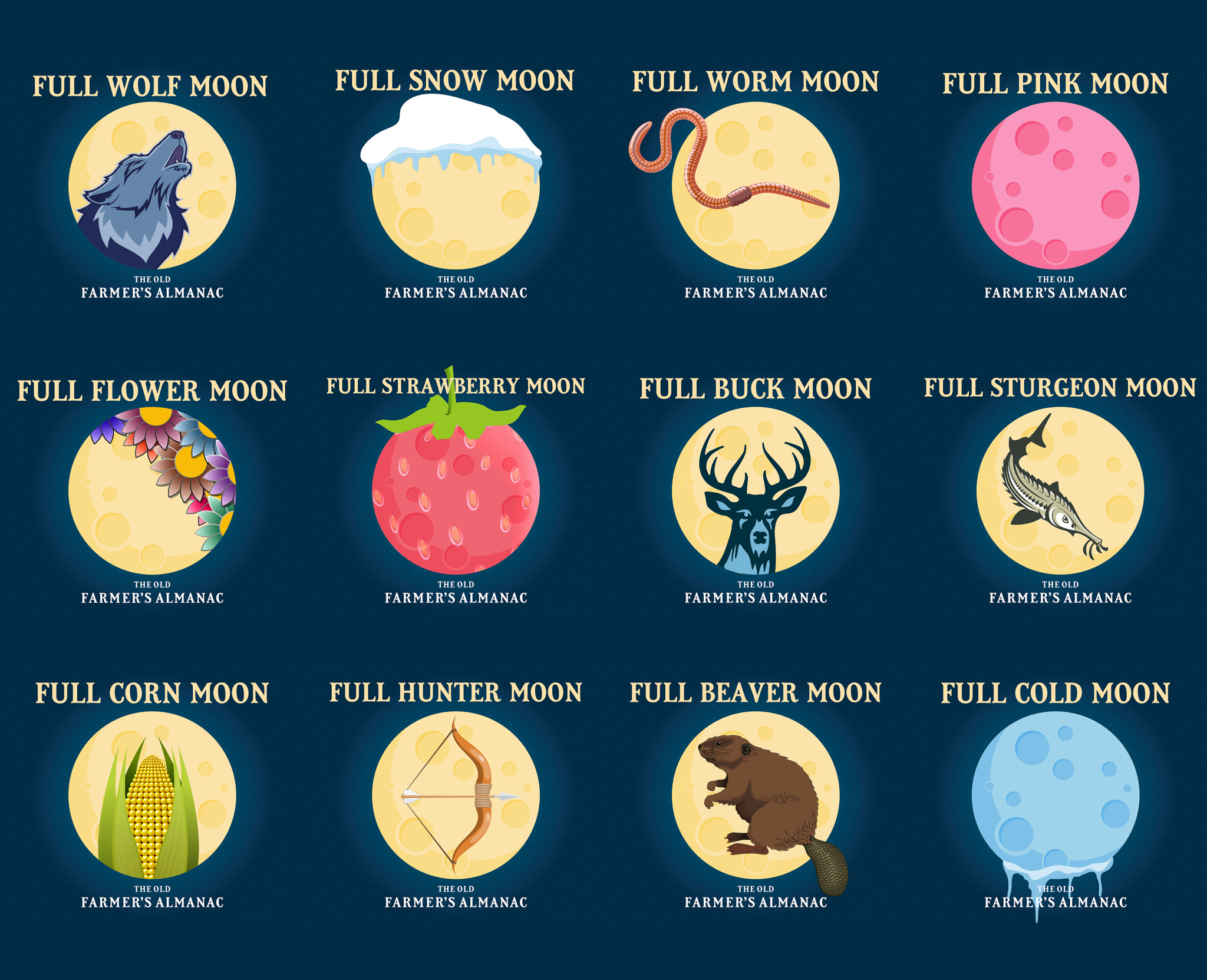
The practice of naming moons, as we’ve discussed with the Snow Moon, is a testament to humanity’s deep-seated need to understand, categorize, and honor the natural world. These names serve as cultural anchors, linking us to the wisdom of our ancestors and the enduring rhythms of the universe.
The Full Moon Calendar for 2026: Mark Your Dates!
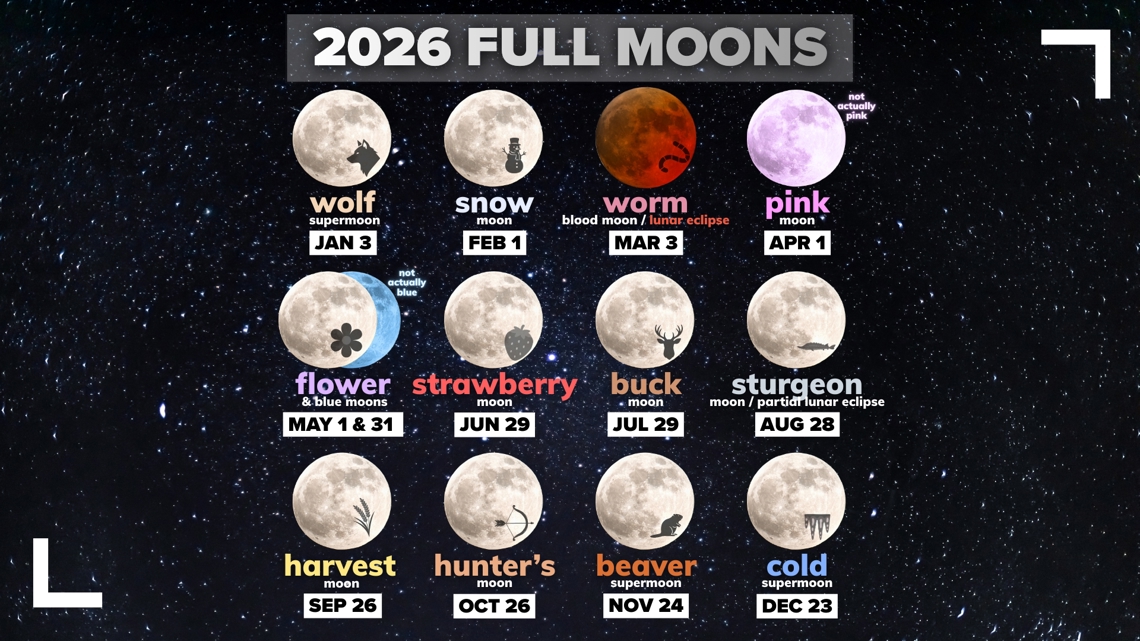
While February’s Snow Moon is our star, 2026 promises a full slate of other beautiful full moons, each with its own traditional name and significance. Here’s a full calendar for you to plan your lunar observations throughout the year:
| Month | Date | Primary Full Moon Name | Peak Time (EST) | Key Significance / Origin |
|---|---|---|---|---|
| January | January 3 | Wolf Moon | 7:13 PM | Named for the howling wolves audible outside villages in mid-winter. |
| February | February 1 | Snow Moon | 5:09 PM | Reflects the heaviest snowfalls of the year. |
| March | March 3 | Worm Moon | 1:45 PM | As the ground thaws, earthworms appear, signaling spring. |
| April | April 1 | Pink Moon | 7:22 AM | Named after the wild ground phlox, one of the first spring flowers. |
| May | May 1 | Flower Moon | 1:21 AM | When flowers are abundant and blooming across the landscape. |
| May | May 31 | Blue Moon | 1:53 PM | The second full moon in a single calendar month (a rare occurrence). |
| June | June 29 | Strawberry Moon | 10:50 PM | Coincides with the short strawberry harvesting season. |
| July | July 29 | Buck Moon | 4:38 PM | When new antlers begin to emerge on male deer (bucks). |
| August | August 28 | Sturgeon Moon | 1:20 AM | Refers to the time when large sturgeon fish were most easily caught. |
| September | September 26 | Harvest Moon | 9:53 AM | The full moon closest to the autumnal equinox, aiding late harvests. |
| October | October 26 | Hunter’s Moon | 10:04 PM | Signaled the time to hunt and store meat for the coming winter. |
| November | November 25 | Beaver Moon | 11:39 AM | When beavers are actively preparing for winter, or setting beaver traps. |
| December | December 24 | Cold Moon | 12:35 AM | Reflects the deep chill of winter. Also known as Long Night Moon. |
Connecting with the Cosmos: Your February 2026 Snow Moon Experience
The February 2026 Full Snow Moon offers more than just a beautiful sight in the night sky. It’s an invitation to connect with ancient traditions, understand the intricate relationship between humanity and the natural world, and appreciate the enduring rhythms of our planet.
As winter reaches its peak, take a moment on February 1st, 2026, to step outside and gaze upon the glowing Snow Moon. Reflect on its name, its meanings, and the generations who have looked up at the same celestial body, finding guidance and wonder in its light. It’s a powerful reminder that even in the modern world, the cosmos continues to inspire and inform our lives.
Frequently Asked Questions
What is the official name of the February 2026 Full Moon?
The official and most commonly recognized name for the February 2026 Full Moon is the Snow Moon. This name reflects the heavy snowfalls typically experienced in the Northern Hemisphere during this time of year.
When exactly is the February 2026 Full Moon?
The February 2026 Full Moon will reach its peak illumination on Sunday, February 1, 2026, at 5:09 PM Eastern Standard Time (EST). It will appear full to the naked eye for approximately a day before and after this peak.

Why is it called the “Snow Moon”?
It is called the “Snow Moon” because February is historically the month with the heaviest snowfall in many parts of the Northern Hemisphere. The name was traditionally used by Native American tribes to denote the challenging, often lean, winter conditions that made hunting difficult.
Are there other names for the February Full Moon?
Yes, many cultures and Native American tribes have alternative names for the February Full Moon. Some examples include the Hunger Moon (Cherokee, Algonquin), Spirit Moon (Ojibwe), Great Moon (Cree), Canada Goose Moon (Tlingit), and Bone Moon (Omaha), each reflecting unique regional observations and cultural significance.
What is a “Black Moon,” and is the February 2026 moon one?
A “Black Moon” typically refers to either the second new moon in a calendar month or a calendar month that has no full moon at all. February is the only month short enough for the latter to occur, but this is rare. The February 2026 full moon is definitively the Snow Moon, so it is not a “Black Moon.
How can I best observe the Full Snow Moon?
To best observe the Full Snow Moon, find a location away from city light pollution. Dress warmly in layers, as it will be cold. While visible to the naked eye, binoculars or a small telescope will enhance the view of craters and surface details. The moon will appear full for several nights around February 1st.
What are the dates for other full moons in 2026?
In 2026, other full moons include the Wolf Moon (Jan 3), Worm Moon (Mar 3), Pink Moon (Apr 1), Flower Moon (May 1), Blue Moon (May 31), Strawberry Moon (Jun 29), Buck Moon (Jul 29), Sturgeon Moon (Aug 28), Harvest Moon (Sep 26), Hunter’s Moon (Oct 26), Beaver Moon (Nov 25), and Cold Moon (Dec 24).