February 2026 Hindu Calendar Kannada: Your Definitive Guide to Festivals & Auspicious Timings
Are you looking for the exact dates of Hindu festivals, auspicious timings, or daily Panchang details for February 2026, specifically within the Kannada tradition? You’ve landed in the right place. Navigating the nuances of a Hindu calendar can feel like a complex journey, especially when cultural traditions vary by region and you’re seeking accurate information for a specific month.
Table of Contents
- February 2026 Hindu Calendar Kannada: Your Definitive Guide to Festivals & Auspicious Timings
- Key Festivals & Important Dates in February 2026 (Kannada Calendar)
- Understanding the Significance of February’s Festivals
- Maha Shivaratri: The Great Night of Shiva
- Ekadashi Fasting: Vijaya & Amalaki Ekadashi
- Other Significant Observances
- Unpacking the Panchang for February 2026
- Tithi: The Lunar Day Cycle
- Nakshatra: Cosmic Constellations and Their Influence
- Yoga & Karana: Astrological Combinations
- Auspicious & Inauspicious Timings (Muhurat & Rahu Kalam)
- The Essence of the Kannada Hindu Calendar
- Regional Nuances: How Kannada Calendars Differ
- Why Accuracy Matters: Aligning with Tradition
- Planning Your Month: Practical Uses of the February 2026 Kannada Calendar
- For Daily Spiritual Practice
- For Planning Auspicious Events (Weddings, Griha Pravesh, New Ventures)
- Observing Fasts (Vratas) and Rituals
- Your February 2026 Hindu Calendar Kannada: A Comprehensive Overview
- Embracing February 2026 with the Kannada Hindu Calendar
Whether you’re planning a religious ceremony, observing a fast (Vrata), or simply wish to align your spiritual practices with the lunar cycles, this guide provides a comprehensive, easy-to-understand breakdown of February 2026 according to the Kannada Hindu Calendar. Forget the guesswork and generic lists; here, you’ll find the precise information you need, along with the cultural context that makes it meaningful.
Key Festivals & Important Dates in February 2026 (Kannada Calendar)
Let’s kick things off with the most anticipated events. February 2026 holds several significant observances, primarily falling within the Magha and Phalguna lunar months. Here’s a quick overview of the major festivals and important days you’ll want to mark on your calendar:
| Date | Day | Festival/Event | Significance/Notes |
|---|---|---|---|
| February 1, 2026 | Sunday | Magha Purnima Vrat | The last day of the Magha month, sacred for holy dips, charity, and austerity. Marks the end of Magha Snan. |
| February 5, 2026 | Thursday | Sankashti Chaturthi (Dvija Priya Sankashti) | A day dedicated to Lord Ganesha, observed by fasting to overcome obstacles and gain wisdom. Fast broken after moon sighting. |
| February 13, 2026 | Friday | Vijaya Ekadashi | A significant fast observed to gain victory in all endeavors and attain liberation. Dedicated to Lord Vishnu. |
| February 14, 2026 | Saturday | Pradosh Vrat (Shani Pradosh) | Observed during the twilight period (Pradosh Kaal) to worship Lord Shiva and seek blessings for peace and fulfillment. |
| February 15, 2026 | Sunday | Maha Shivaratri | The Great Night of Shiva, one of the most important Hindu festivals. Devotees observe fasts, perform pujas, and chant mantras. |
| February 16, 2026 | Monday | Magha Amavasya | New Moon day, significant for performing ancestral rites (Tarpan) and charity. Marks the end of the Magha lunar month. |
| February 17, 2026 | Tuesday | Phalguna Masa Begins | The eleventh month in the Hindu lunar calendar commences with the Shukla Paksha (waxing phase) after Amavasya. |
| February 23, 2026 | Monday | Somvar Vrat | General day for fasting observed on Mondays dedicated to Lord Shiva. |
| February 24, 2026 | Tuesday | Durga Ashtami Vrat / Holashtak Begins | Durga Ashtami is observed to worship Goddess Durga. Holashtak is an inauspicious eight-day period leading up to Holi. |
| February 27, 2026 | Friday | Amalaki Ekadashi | Dedicated to Lord Vishnu and the Amla tree (Indian gooseberry). Fasting and worship bring good health and prosperity. |
| February 28, 2026 | Saturday | Pradosh Vrat (Shani Pradosh) | Another Pradosh Vrat, observed for Lord Shiva. Being on a Saturday, it holds special significance for mitigating Saturn’s influence. |
Understanding the Significance of February’s Festivals
These dates aren’t just entries on a calendar; they are vibrant threads woven into the fabric of Hindu spiritual life. Here’s a deeper look into a few:

Maha Shivaratri: The Great Night of Shiva
Arguably the most significant festival in February, Maha Shivaratri (February 15, 2026) is a night dedicated to Lord Shiva, the Destroyer and Transformer. Devotees observe a day-long fast, perform ‘Jaagaran’ (an all-night vigil), chant sacred mantras like ‘Om Namah Shivaya’, and offer prayers with milk, water, Bael leaves, and flowers to the Shiva Lingam. It’s believed that on this day, Shiva performs the heavenly dance of creation, preservation, and destruction. For many, it’s a profound opportunity for introspection, meditation, and seeking liberation from sins and worldly desires.
Ekadashi Fasting: Vijaya & Amalaki Ekadashi
The eleventh day of each lunar fortnight (Ekadashi) is considered highly auspicious for fasting and devotion to Lord Vishnu. February 2026 brings us Vijaya Ekadashi (February 13) and Amalaki Ekadashi (February 27). Observing an Ekadashi fast is believed to purify the body and mind, bestow spiritual merit, and fulfill desires. Vijaya Ekadashi, as its name suggests (‘Vijaya’ meaning victory), is observed to achieve success in battles and endeavors, while Amalaki Ekadashi involves worshipping the Amla (Indian gooseberry) tree, believed to be the abode of Vishnu, for health and prosperity.
Other Significant Observances
- Magha Purnima Vrat (February 1): This full moon day marks the culmination of the holy bathing period in the month of Magha. Taking a sacred dip in rivers like the Ganga is considered highly meritorious.
- Sankashti Chaturthi (February 5): Every Chaturthi (fourth day) of the Krishna Paksha is dedicated to Lord Ganesha, the remover of obstacles. Observing a fast on this day and worshipping Ganesha is believed to bring good fortune and overcome challenges.
- Pradosh Vrat (February 14 & 28): Observed twice a month on the 13th day of each lunar fortnight, this fast is dedicated to Lord Shiva and Goddess Parvati. It’s believed that worshipping Shiva during the ‘Pradosh Kaal’ (twilight period) fulfills desires and brings salvation. The February 14th Pradosh being on a Saturday (Shani Pradosh) holds extra significance for those seeking to appease Saturn.
Unpacking the Panchang for February 2026
The Hindu calendar is far more than just a list of festivals. It’s a ‘Panchang’ (literally ‘five limbs’), a detailed astrological almanac that provides five key elements for each day: Tithi (lunar day), Nakshatra (lunar mansion/constellation), Yoga (lunar day combinations), Karana (half a Tithi), and Vaar (day of the week). Understanding these elements helps you determine the auspiciousness of any given moment for specific activities.
Tithi: The Lunar Day Cycle
A Tithi is a lunar day, defined by the angular distance between the Sun and the Moon. There are 30 Tithis in a lunar month, divided into two fortnights: Shukla Paksha (waxing moon, from new moon to full moon) and Krishna Paksha (waning moon, from full moon to new moon). Each Tithi has its own energy and significance. In February 2026, we begin in the Krishna Paksha of Magha month, moving to Amavasya, and then into the Shukla Paksha of the Phalguna month.
Nakshatra: Cosmic Constellations and Their Influence
The Nakshatras are 27 lunar constellations or mansions through which the Moon travels. Each Nakshatra spans 13 degrees and 20 minutes of the ecliptic and has unique characteristics, deities, and influences. Knowing the prevailing Nakshatra can guide you on the best times for certain actions, from starting a journey to performing a ritual. For example, some Nakshatras are considered auspicious for marriage, while others are better for aggressive tasks. The Kannada calendar meticulously tracks these celestial movements.

Yoga & Karana: Astrological Combinations
Yoga is derived from the combined longitudes of the Sun and Moon, creating 27 different yogas, each with specific attributes. Karana is half of a Tithi, with 11 different Karanas recurring throughout the lunar month. While Tithi and Nakshatra are often primary, Yoga and Karana add finer astrological details, helping to determine the overall quality of a day or moment for various undertakings.
Auspicious & Inauspicious Timings (Muhurat & Rahu Kalam)
Hindu astrology places immense importance on selecting the right time (Muhurat) for starting any significant event to ensure its success and minimize obstacles. Conversely, certain periods are considered inauspicious and best avoided. The most well-known inauspicious period is Rahu Kalam, which occurs daily and rotates through the weekdays. Other such timings include Gulika Kalam and Yamaganda Kalam.
It’s crucial to understand that these timings are location-specific, as they depend on the local sunrise and sunset. If you’re using this calendar in the USA, you’ll need to calculate these timings for your specific city. While this guide provides the lunar dates, always consult a local Panchang or an astrologer for precise Muhurat calculations for your location, especially for major life events.
The Essence of the Kannada Hindu Calendar
The Hindu calendar system is primarily a lunisolar calendar, meaning it accounts for both the lunar cycles and the solar year. However, there are regional variations, and the Kannada Hindu Calendar (also known as Kannada Panchanga) is a prime example of this.
Regional Nuances: How Kannada Calendars Differ
While sharing commonalities with other South Indian calendars (like those used in Andhra Pradesh or Maharashtra), the Kannada calendar has its unique flavor. It generally follows the Chandramana (lunar month) system for festivals, similar to other South Indian traditions, where the month begins after the New Moon (Amavasya) with the Shukla Paksha. However, the naming of months and certain regional observances might differ slightly from North Indian calendars (which often start the month after the Full Moon) or even from other parts of South India.
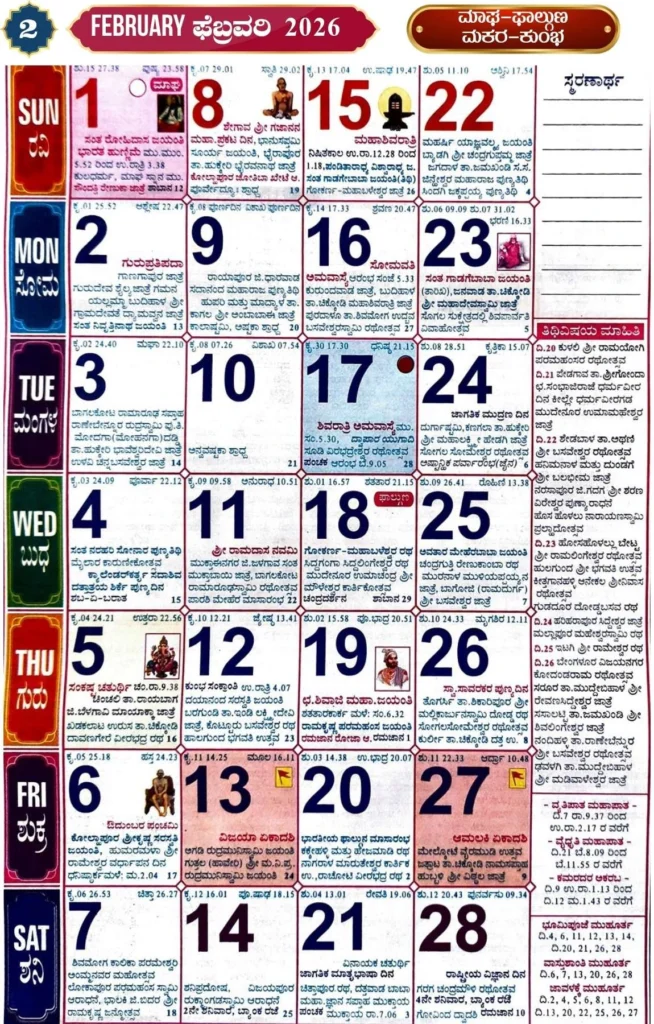
For individuals in the USA with roots in Karnataka, following a Kannada Panchanga provides a direct connection to their cultural heritage, ensuring they celebrate festivals on the exact days observed by their families and communities back home.
Why Accuracy Matters: Aligning with Tradition
For religious observances, the precise timing of Tithis, Nakshatras, and planetary positions is paramount. Performing rituals or observing fasts at the correct astrological moment is believed to maximize spiritual benefits. This is why a detailed and accurate calendar, tailored to a specific tradition like Kannada, is invaluable.
Planning Your Month: Practical Uses of the February 2026 Kannada Calendar
Having a detailed Hindu calendar isn’t just about knowing festival dates; it’s a powerful tool for planning your spiritual life and daily activities.
For Daily Spiritual Practice
- Fasting (Vratas): Know exactly when to observe Ekadashi, Pradosh, Sankashti Chaturthi, and other important fasts.
- Pujas & Prayers: Align your daily prayers and offerings with the ruling deity of the Tithi or Nakshatra for enhanced benefits.
- Meditation & Chanting: Use auspicious timings to deepen your spiritual practices.
For Planning Auspicious Events (Weddings, Griha Pravesh, New Ventures)
While the calendar provides general auspiciousness, planning major life events like weddings (Vivaha Muhurat), housewarming ceremonies (Griha Pravesh), or starting a new business venture requires meticulous astrological consultation. An astrologer will consider your birth chart (Janam Kundali) alongside the Panchang for February 2026 to pinpoint the most beneficial Muhurat for your specific needs and location. Remember, a generic calendar can offer guidance, but personalized advice is key for life-changing events.
Observing Fasts (Vratas) and Rituals
Many Hindu festivals involve specific Vratas and rituals. For example, on Maha Shivaratri, devotees often perform Rudrabhishekam (ritual bathing of the Shiva Lingam) and stay awake all night. For Ekadashis, the fast is typically broken on the Dwadashi (12th lunar day) during the Parana time. This calendar helps you prepare for these observances well in advance, ensuring you have everything ready for a meaningful practice.

Your February 2026 Hindu Calendar Kannada: A Comprehensive Overview
Here’s a day-by-day breakdown for February 2026, incorporating Tithi, Nakshatra, and key events according to the Kannada Hindu Calendar. This table is your go-to reference for planning your month.
| Date | Day | Lunar Month (Paksha) | Tithi | Nakshatra | Key Event/Notes |
|---|---|---|---|---|---|
| Feb 1 | Sunday | Magha (Shukla) | Purnima | Ashlesha | Magha Purnima Vrat |
| Feb 2 | Monday | Magha (Krishna) | Pratipada | Magha | Magha Krishna Paksha begins |
| Feb 3 | Tuesday | Magha (Krishna) | Dwitiya | Purva Phalguni | |
| Feb 4 | Wednesday | Magha (Krishna) | Tritiya | Uttara Phalguni | |
| Feb 5 | Thursday | Magha (Krishna) | Chaturthi | Hasta | Sankashti Chaturthi |
| Feb 6 | Friday | Magha (Krishna) | Panchami | Chitra | |
| Feb 7 | Saturday | Magha (Krishna) | Shashti | Swati | |
| Feb 8 | Sunday | Magha (Krishna) | Saptami | Vishakha | |
| Feb 9 | Monday | Magha (Krishna) | Ashtami | Anuradha | Kala Ashtami |
| Feb 10 | Tuesday | Magha (Krishna) | Navami | Jyeshtha | |
| Feb 11 | Wednesday | Magha (Krishna) | Dashami | Mula | |
| Feb 12 | Thursday | Magha (Krishna) | Ekadashi | Purva Ashadha | Ekadashi Tithi begins |
| Feb 13 | Friday | Magha (Krishna) | Ekadashi | Uttara Ashadha | Vijaya Ekadashi |
| Feb 14 | Saturday | Magha (Krishna) | Dwadashi / Trayodashi | Shravana | Pradosh Vrat (Shani Pradosh), Ekadashi Parana |
| Feb 15 | Sunday | Magha (Krishna) | Chaturdashi | Dhanishta | Maha Shivaratri |
| Feb 16 | Monday | Magha (Krishna) | Amavasya | Shatabhisha | Magha Amavasya |
| Feb 17 | Tuesday | Phalguna (Shukla) | Pratipada | Purva Bhadrapada | Phalguna Masa Begins |
| Feb 18 | Wednesday | Phalguna (Shukla) | Dwitiya | Uttara Bhadrapada | |
| Feb 19 | Thursday | Phalguna (Shukla) | Tritiya | Revati | |
| Feb 20 | Friday | Phalguna (Shukla) | Chaturthi | Ashwini | |
| Feb 21 | Saturday | Phalguna (Shukla) | Panchami | Bharani | |
| Feb 22 | Sunday | Phalguna (Shukla) | Shashti | Krittika | |
| Feb 23 | Monday | Phalguna (Shukla) | Saptami | Rohini | Somvar Vrat |
| Feb 24 | Tuesday | Phalguna (Shukla) | Ashtami | Mrigashira | Durga Ashtami Vrat / Holashtak Begins |
| Feb 25 | Wednesday | Phalguna (Shukla) | Navami | Ardra | |
| Feb 26 | Thursday | Phalguna (Shukla) | Dashami | Punarvasu | |
| Feb 27 | Friday | Phalguna (Shukla) | Ekadashi | Pushya | Amalaki Ekadashi |
| Feb 28 | Saturday | Phalguna (Shukla) | Dwadashi / Trayodashi | Ashlesha | Pradosh Vrat (Shani Pradosh), Ekadashi Parana |
Embracing February 2026 with the Kannada Hindu Calendar
As you can see, February 2026, guided by the Kannada Hindu Calendar, is a month rich with spiritual opportunities and cultural significance. From the solemn observance of Maha Shivaratri to the meritorious Ekadashi fasts and the ancestral reverence of Amavasya, each day offers a chance to connect with timeless traditions.
Using this comprehensive guide, you can confidently plan your spiritual practices, understand the astrological rhythms, and stay connected to your heritage, even from thousands of miles away in the USA. Remember to seek local astrological guidance for highly specific Muhurat calculations, but for a clear and detailed overview of your month, this resource is designed to be your trusted companion.
May your February 2026 be filled with blessings, spiritual growth, and cultural connection!
Frequently Asked Questions
What is the main difference between a Hindu calendar and a Gregorian calendar?
The Gregorian calendar is a solar calendar based on the Earth’s orbit around the Sun, while the Hindu calendar is primarily a lunisolar calendar that tracks both the solar year and lunar months. This means Hindu festival dates often vary year-to-year on the Gregorian calendar because they align with specific lunar phases and constellations rather than fixed solar dates.

How do regional variations, like the Kannada calendar, impact festival dates?
While many major Hindu festivals are universally celebrated, their exact dates and the start of lunar months can vary slightly due to regional calendar systems. The Kannada calendar typically follows the ‘Chandramana’ (lunar month) system, starting after the new moon (Amavasya), which can differ from North Indian calendars or even other South Indian traditions in month naming or specific calculations for Tithis and Nakshatras.
What is Panchang, and why is it important for February 2026?
Panchang refers to the five limbs of the Hindu calendar: Tithi (lunar day), Nakshatra (lunar mansion), Yoga (lunar day combination), Karana (half of Tithi), and Vaar (day of the week). For February 2026, understanding the daily Panchang helps individuals determine auspicious and inauspicious timings for various activities, guiding spiritual practices, planning ceremonies, and observing Vratas effectively.
Can I use this February 2026 Kannada calendar for planning events in the USA?
Yes, this calendar provides the correct lunar dates for festivals and general Panchang elements for February 2026 according to the Kannada tradition. However, specific auspicious timings (Muhurat) like Rahu Kalam, Gulika Kalam, and the precise duration of Tithis and Nakshatras are dependent on local sunrise and sunset. For critical events, it is always recommended to consult a local priest or astrologer who can calculate timings for your exact geographical location in the USA.
What are Ekadashi fasts, and when are they in February 2026?
Ekadashi is the eleventh lunar day of each fortnight, considered highly sacred for fasting and devotion to Lord Vishnu. Observing an Ekadashi fast is believed to cleanse sins and bestow spiritual merit. In February 2026, the two significant Ekadashis are Vijaya Ekadashi on February 13th and Amalaki Ekadashi on February 27th.
What is the significance of Maha Shivaratri in the Kannada tradition for 2026?
Maha Shivaratri, falling on February 15, 2026, is one of the most important festivals in the Kannada tradition (and pan-Hinduism). It’s the ‘Great Night of Shiva’ where devotees observe fasts, perform pujas, and offer prayers to Lord Shiva. It is believed to be the night Shiva performs the cosmic dance (Tandava) and marks the auspicious occasion of his marriage to Parvati. Observing it connects devotees to divine energy and seeks blessings for spiritual growth.
What does ‘Holashtak Begins’ mean on February 24, 2026?
Holashtak is an eight-day period leading up to the Holi festival, beginning on Phalguna Shukla Ashtami (February 24, 2026). During this time, it is traditionally considered inauspicious to perform new auspicious ceremonies like marriages, housewarmings, or starting new ventures. People often engage in acts of charity and devotion during Holashtak instead.