February 2026 Telugu Calendar Festivals: Your Definitive Guide to Cultural Celebrations
As the vibrant tapestry of Telugu culture unfolds each year, its festivals offer a profound connection to tradition, spirituality, and community. Even when living thousands of miles away from the heartland, the pull of these celebrations remains incredibly strong. If you’re looking to observe the significant Telugu festivals in February 2026, you’ve come to the right place. This guide isn’t just a list of dates; it’s your companion to understanding the rich heritage behind each event and how you can celebrate them meaningfully, no matter where you are in the USA.
Table of Contents
- February 2026 Telugu Calendar Festivals: Your Definitive Guide to Cultural Celebrations
- Navigating the Telugu Calendar: A Quick Primer for February 2026
- Understanding the Lunar Cycle: Magha Masam and Phalguna Masam
- What is a Panchangam and Why It Matters
- The Heart of the Matter: February 2026 Telugu Festivals List (Dates & Details)
- Key Festivals in February 2026: At a Glance
- Deep Dive: Understanding Each Major Festival
- Dwijapriya Sankashtahara Chaturthi (February 5, 2026)
- Vijaya Ekadashi (February 13, 2026)
- Shani Pradosh Vrat (February 14, 2026)
- Maha Shivaratri (February 15, 2026)
- Observing Telugu Festivals in the USA: Bridging the Distance
- Finding Community: Temples and Cultural Organizations
- Bringing the Traditions Home: DIY Celebrations
- Connecting the Generations: Passing on the Heritage
- Beyond the Dates: The Deeper Meaning of Telugu Festivals
- Spiritual Growth and Self-Reflection
- Cultural Preservation and Identity
- Don’t Miss a Moment: Planning Your February 2026 Observances
- Practical Tips for Festival Preparation
- Leveraging Digital Resources
- Final Thoughts
February 2026 holds a special place in the Telugu calendar, primarily spanning the latter part of Magha Masam and transitioning into Phalguna Masam. These months are steeped in spiritual significance, marked by devotion to various deities, opportunities for introspection, and the joyous observance of ancient rituals. From the auspicious fasting of Sankashtahara Chaturthi to the profound devotion of Maha Shivaratri, this month offers a spiritual journey you won’t want to miss.
I know firsthand the challenge of keeping traditions alive when removed from your native land. That’s why I’ve meticulously gathered the essential information, presented it clearly, and added insights specifically for our Telugu community in the USA. Let’s dive in and explore the beautiful festivals awaiting us in February 2026!
Navigating the Telugu Calendar: A Quick Primer for February 2026
Before we jump into the specific festivals, let’s quickly demystify the Telugu calendar system. Understanding its basics will not only help you appreciate the timings of these events but also connect you more deeply to the underlying astronomical and spiritual principles.
Understanding the Lunar Cycle: Magha Masam and Phalguna Masam
The Telugu calendar is a lunisolar calendar, meaning it accounts for both the moon’s phases and the sun’s position. Months are determined by the moon, while years are based on the sun. This sometimes means Telugu months don’t perfectly align with Gregorian months, leading to fascinating overlaps.
- Magha Masam: January/February is generally when Magha Masam occurs. It’s considered an extremely sacred month for spiritual practices, austerities, and bathing in holy rivers. Many important fasts and observances, particularly those related to Lord Shiva and Lord Vishnu, fall within this month. The festivals we’ll discuss early in February 2026 fall within Magha Masam.
- Phalguna Masam: As February progresses, the calendar typically transitions towards Phalguna Masam. This month is known for its joyous celebrations, including Holi (though that often falls in March, depending on the year’s lunar cycle). While most of our February festivals are in Magha, knowing the transition helps frame the calendar year.
The beauty of this system lies in its precision, guiding devotees to the most astrologically and spiritually potent times for worship and reflection.
What is a Panchangam and Why It Matters
When you hear about Telugu festivals, you’ll often encounter the term Panchangam. This isn’t just a calendar; it’s a comprehensive almanac that dissects time into five key elements:

- Tithi (Lunar Day): This is the most crucial element for festival dates. A tithi is the time it takes for the moon to increase its longitudinal distance from the sun by 12 degrees. There are 15 tithis in each lunar fortnight (Shukla Paksha – waxing moon, Krishna Paksha – waning moon).
- Nakshatram (Star Constellation): The position of the moon in one of the 27 lunar mansions or constellations. Each nakshatram has unique properties and influences.
- Varam (Day of the Week): Simply the day of the week (Sunday, Monday, etc.), each associated with a planet.
- Yogam (Planetary Combination): Calculated from the longitudes of the sun and moon, indicating auspicious or inauspicious periods.
- Karanam (Half-Tithi): There are 11 Karanams, each equal to half a tithi, further refining the auspiciousness of a moment.
For us, the Tithi is the primary determinant of festival dates. For instance, ‘Chaturthi’ means the fourth tithi, ‘Ekadashi’ the eleventh, and ‘Chaturdashi’ the fourteenth. Understanding these basics gives you a clearer picture of why certain festivals fall on specific lunar days, connecting you to ancient astronomical wisdom.
The Heart of the Matter: February 2026 Telugu Festivals List (Dates & Details)
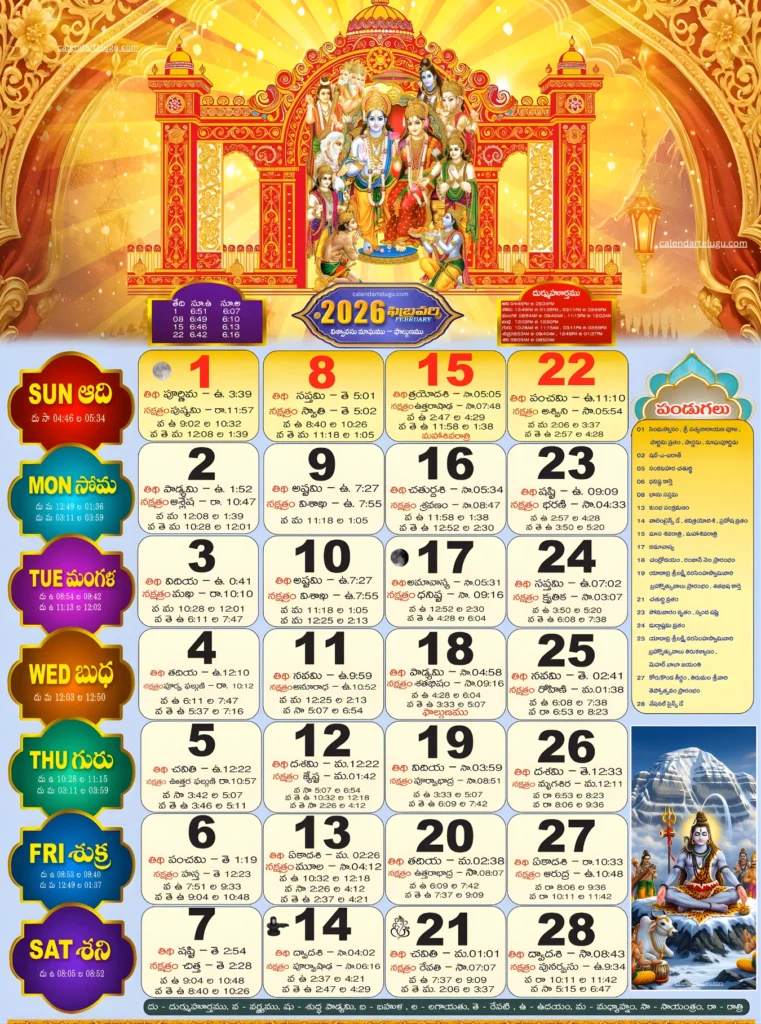
Now, let’s get to what you’ve been waiting for! February 2026 is rich with opportunities for spiritual growth and cultural connection. Here’s a clear overview, followed by a deeper dive into each significant observance.
Key Festivals in February 2026: At a Glance
This table provides a quick reference for the major Telugu festivals in February 2026. Keep it handy as you plan your month!
| Date (2026) | Telugu Tithi/Masam | Festival Name | Key Significance | Typical Observances |
|---|---|---|---|---|
| February 5, Thursday | Magha Krishna Chaturthi | Dwijapriya Sankashtahara Chaturthi | Worship of Lord Ganesha for removing obstacles and wish fulfillment. ‘Dwijapriya’ means dear to the twice-born (Brahmins). | Fasting, Ganesh Puja, moon sighting, offering Modak. |
| February 13, Friday | Magha Krishna Ekadashi | Vijaya Ekadashi | Dedicated to Lord Vishnu, observed for victory over adversaries, success, and spiritual liberation. ‘Vijaya’ means victory. | Strict fasting, Vishnu Puja, chanting Vishnu Sahasranamam, spiritual reflection. |
| February 14, Saturday | Magha Krishna Trayodashi | Shani Pradosh Vrat | Dedicated to Lord Shiva and Shani Dev (Saturn) for peace, prosperity, and relief from planetary afflictions, especially on a Saturday. | Fasting, Shiva Puja in the evening (Pradosh Kaal), offering Bilva Patra. |
| February 15, Sunday | Magha Krishna Chaturdashi | Maha Shivaratri | The ‘Great Night of Shiva’, celebrating the convergence of Shiva and Shakti, Shiva’s cosmic dance, and his marriage to Parvati. | Day-long fasting, Jagaran (staying awake all night), Shiva Lingam Abhishekam, chanting ‘Om Namah Shivaya’, offering Bilva Patra. |
Deep Dive: Understanding Each Major Festival
Let’s explore the spiritual essence and practical observance of each of these important days.
Dwijapriya Sankashtahara Chaturthi (February 5, 2026)
Significance: This particular Chaturthi, falling on the fourth day of the Krishna Paksha (waning phase) of Magha Masam, is dedicated to Lord Ganesha, the remover of obstacles. ‘Sankashtahara’ literally means ‘one who removes difficulties’. Worshipping Ganesha on this day is believed to clear hurdles, grant wisdom, and fulfill desires. ‘Dwijapriya’ refers to Ganesha being beloved by the twice-born (Brahmins) and is one of his many names.
Rituals: Devotees typically observe a day-long fast, which is broken only after sighting the moon in the evening. A special Ganesh Puja is performed, involving offerings of modak (sweet dumplings), laddus, grass (Durva), and flowers. Chanting Ganesha mantras like ‘Om Gam Ganapataye Namaha’ is common. The fast concludes with specific prayers to Chandra Dev (Moon God) and then to Ganesha.
Observation in USA: Even without a temple nearby, you can easily observe this at home. Set up a small altar with a Ganesha idol or picture. Prepare simple offerings. Use a reliable online panchangam app to know the precise moonrise time for your US location. It’s a beautiful way to bring Ganesh’s blessings into your home.
Vijaya Ekadashi (February 13, 2026)
Significance: Ekadashi, the eleventh lunar day, is highly sacred to Lord Vishnu. Vijaya Ekadashi, specifically, is observed for ‘vijaya’ meaning victory. It’s believed that observing this fast with sincerity grants victory over internal and external enemies, helps overcome challenges, and leads to spiritual liberation and merit. Legends say Lord Rama observed this Ekadashi before crossing the ocean to Lanka.
Rituals: A strict fast is observed from sunrise on Ekadashi until sunrise the following day (Dwadashi). Devotees abstain from grains, beans, and certain spices. Some may opt for a partial fast, consuming only fruits, milk, or water. The day is spent in prayer, meditation, chanting Vishnu mantras (like ‘Om Namo Narayanaya’), and reading Vishnu Sahasranamam. The fast is broken (Parana) on Dwadashi during a specific period, by consuming prescribed foods, often a simple meal of rice and legumes.
Observing Ekadashi: Use a dependable online panchangam to find the exact Parana time for your location in the USA. Missing this window can negate the fast’s benefits. Many temples in the US organize special Vishnu pujas or satsangs on Ekadashi, providing a communal way to observe.
Shani Pradosh Vrat (February 14, 2026)
Significance: The Pradosh Vrat is observed on the 13th lunar day (Trayodashi) of both the waxing and waning moon phases. It is dedicated to Lord Shiva and Goddess Parvati, observed specifically during the ‘Pradosh Kaal’ – the twilight period just before and after sunset. When Pradosh falls on a Saturday, it’s known as Shani Pradosh Vrat, making it exceptionally potent for mitigating the negative effects of Shani (Saturn) and seeking blessings for peace, wealth, and spiritual growth.
Rituals: Devotees fast throughout the day and break it after performing a special Shiva Puja during the Pradosh Kaal. The puja involves offering Bilva Patra (Bael leaves), milk, curd, ghee, honey, and sacred ash (Vibhuti) to a Shiva Lingam. Chanting the Maha Mrityunjaya Mantra and ‘Om Namah Shivaya’ is central to the observance. This particular Pradosh Vrat is especially beneficial for those facing challenges related to their Shani Dasha or Sade Sati.
Practical Tips: Identify your local sunset time precisely. Many Hindu temples in the USA hold special evening pujas for Pradosh. If at home, ensure your puja is performed during the Pradosh Kaal for maximum benefit.
Maha Shivaratri (February 15, 2026)
Significance: This is arguably one of the most significant and widely celebrated Hindu festivals in February. Maha Shivaratri, the ‘Great Night of Shiva’, is observed on the 14th lunar day (Chaturdashi) of the Krishna Paksha of Magha Masam. It commemorates several profound events: the wedding of Lord Shiva and Goddess Parvati, the night Shiva performed the ‘Tandava’ cosmic dance of creation, preservation, and destruction, and the day Shiva saved the world by consuming a deadly poison (Halahala). It’s a night of intense devotion, introspection, and spiritual awakening.
Rituals: Observances are rigorous: a day-long fast (often a Nirjala Vrat, without water), followed by a night-long vigil (Jagaran), where devotees stay awake, meditate, chant mantras (especially ‘Om Namah Shivaya’), and perform Abhishekam (ritual bathing) of the Shiva Lingam with milk, water, honey, curd, ghee, and various sacred ingredients. Offerings of Bilva Patra leaves are paramount, as they are believed to be Shiva’s favorite. Many temples conduct special four-kala pujas throughout the night.
Celebration in USA: Maha Shivaratri sees tremendous participation in the USA. Most Hindu temples, particularly Shiva temples, organize elaborate overnight pujas and events. This is an excellent opportunity to connect with your community. If you prefer to observe at home, prepare your puja items in advance. Many temples offer live streams of their pujas, allowing you to participate virtually. Ensure you have fresh Bilva Patra, which can sometimes be found at Indian grocery stores or online suppliers.
Observing Telugu Festivals in the USA: Bridging the Distance
Living away from India doesn’t mean you have to disconnect from your cultural roots. In fact, observing these festivals in the USA can strengthen your identity and connect you with a vibrant diaspora.
Finding Community: Temples and Cultural Organizations
The USA is home to a growing number of Hindu and Telugu temples, as well as cultural organizations. These institutions are invaluable resources for festival observances:
- Locate Temples: Search online for ‘Hindu temples near me’ or ‘Telugu temples in [your city/state]’. Many temples have websites with their festival calendars, puja schedules, and contact information.
- Join Cultural Groups: Many cities have Telugu associations or Indian cultural centers that organize community events, including festival celebrations. This is a fantastic way to meet like-minded individuals and participate collectively.
- Online Forums and Social Media: Facebook groups, WhatsApp groups, and other online communities for Telugus in the USA often share information about local events and resources.
The collective energy of a community celebration can be incredibly uplifting and help reinforce the spiritual significance of the day.
Bringing the Traditions Home: DIY Celebrations
If a temple isn’t accessible, or if you prefer a more intimate family celebration, observing festivals at home is always an option, and it can be profoundly personal.
- Home Altar: Set up a dedicated space for worship. A clean cloth, an idol or picture of the deity, a lamp, incense, and fresh flowers are key.
- Simple Puja: You don’t need an elaborate setup. Focus on sincerity. Light a lamp, offer water and flowers, chant mantras, and offer prayers. Many online resources provide simple puja procedures and mantras.
- Traditional Foods: Prepare the specific festival foods and offerings. This is a wonderful way to engage all your senses and make the celebration feel authentic.
Remember, devotion and intention are what truly matter. Even a small, heartfelt prayer can be as powerful as an elaborate ceremony.
Connecting the Generations: Passing on the Heritage
For many of us in the USA, a crucial part of celebrating is ensuring our children understand and appreciate their heritage. Festivals provide perfect opportunities:
- Share Stories: Narrate the mythological tales and historical significance behind each festival. Children often learn best through engaging stories.
- Involve Them: Let them help with puja preparations, decorate the altar, or make simple offerings.
- Explain the ‘Why’: Don’t just tell them what to do, explain *why* we do it. What are the values, lessons, and spiritual benefits?
These shared experiences create lasting memories and foster a strong sense of cultural identity, ensuring that these rich traditions continue for generations to come.
Beyond the Dates: The Deeper Meaning of Telugu Festivals
While dates and rituals are important, the true essence of Telugu festivals lies in their profound spiritual and cultural significance. They are more than just holidays; they are opportunities for growth, reflection, and community bonding.
Spiritual Growth and Self-Reflection
Every festival, with its prescribed fasts, prayers, and rituals, is designed to draw us closer to the divine and to our inner selves. These observances offer a valuable pause from our daily routines, prompting us to:
- Introspect: Reflect on our actions, thoughts, and intentions.
- Practice Discipline: Fasts and austerities help strengthen willpower and purify the body and mind.
- Cultivate Devotion: Focusing on a specific deity deepens our faith and connection to the spiritual realm.
- Seek Blessings: Praying for well-being, peace, and prosperity for ourselves and others.
It’s a chance to recharge our spiritual batteries and realign with our higher purpose.
Cultural Preservation and Identity
For Telugus living abroad, festivals are powerful anchors to our heritage. They are living traditions that help us preserve our unique identity and pass it on to future generations. They are vibrant expressions of:
- Language and Arts: Often, festivals involve traditional songs, dances, and artistic expressions.
- Cuisine: The preparation and sharing of traditional festival foods.
- Family Values: Bringing families together, reinforcing bonds, and teaching respect for elders and traditions.
- Shared History: Remembering the stories and legends that shape our cultural narrative.
By actively participating, we become custodians of a rich cultural legacy, ensuring its vibrancy for years to come.
Don’t Miss a Moment: Planning Your February 2026 Observances
To make the most of February 2026 and its spiritual offerings, a little planning goes a long way. This is especially true when juggling cultural observances with daily life in the USA.
Practical Tips for Festival Preparation
- Mark Your Calendar: Add all the festival dates to your personal calendar right away, and set reminders.
- Grocery List: Plan for any special groceries or puja items well in advance. Indian grocery stores might have specific ingredients, but popular items like fresh flowers or Bilva Patra can sometimes be a challenge.
- Time Management: If you plan to fast or attend temple events, consider informing your workplace or school if necessary. Balance your commitments so you can observe with peace of mind.
- Involve Family: Distribute tasks among family members. This makes preparation lighter and builds collective participation.
Leveraging Digital Resources
In today’s digital age, technology is a fantastic ally for cultural preservation:
- Reliable Online Panchangams: Use reputable websites or apps for accurate tithi, nakshatram, and panchangam details specific to your US location. This is crucial for timings like moon sighting for Chaturthi or Parana for Ekadashi.
- Virtual Satsangs & Temple Streams: Many temples now offer live streams of pujas and discourses, allowing you to participate from anywhere. This is a boon for those in remote areas or with limited mobility.
- Educational Content: YouTube channels and cultural websites offer a wealth of information on festival rituals, stories, and mantras.
Don’t let distance be a barrier. Embrace the tools available to stay connected and celebrate fully.
Final Thoughts
February 2026 is a month filled with spiritual opportunities for the Telugu community. Whether you choose to observe Dwijapriya Sankashtahara Chaturthi, attain victory through Vijaya Ekadashi, seek blessings from Shani Dev on Shani Pradosh Vrat, or immerse yourself in the divine energy of Maha Shivaratri, each festival offers a unique path to connect with your roots and deepen your spiritual journey.

I hope this comprehensive guide empowers you to celebrate these beautiful traditions with confidence and joy, wherever you are in the United States. May your February be filled with devotion, reflection, and abundant blessings!
Frequently Asked Questions
What are the major Telugu festivals in February 2026?
The primary Telugu festivals in February 2026 include Dwijapriya Sankashtahara Chaturthi on February 5th, Vijaya Ekadashi on February 13th, Shani Pradosh Vrat on February 14th, and the hugely significant Maha Shivaratri on February 15th.
How does the Telugu calendar (Panchangam) work?
The Telugu calendar, or Panchangam, is a lunisolar calendar based on the moon’s cycles and the sun’s position. It divides time into Tithi (lunar day), Nakshatram (star constellation), Varam (day of the week), Yogam (planetary combination), and Karanam (half-tithi). These elements determine auspicious times and festival dates, crucial for accurate observance.
Can I observe these festivals accurately in the USA?
Absolutely! Many Telugu communities in the USA observe these festivals with great devotion. You can find local Hindu or Telugu temples for community gatherings, use reliable online Panchangam apps for precise timings (like moonrise for Chaturthi), and perform home pujas with readily available ingredients. Connecting with local cultural organizations can also provide support and resources.
What is the significance of Maha Shivaratri?
Maha Shivaratri is one of the most important Hindu festivals, dedicated to Lord Shiva. It marks the convergence of Shiva and Shakti, the night Shiva performed the ‘Tandava’ dance, and the day Shiva married Goddess Parvati. Devotees observe fasts, perform Abhishekams, and stay awake all night chanting prayers to seek blessings, spiritual growth, and liberation from sins.
Are there specific foods or offerings for these festivals?
Yes, many festivals have specific food traditions. For Sankashtahara Chaturthi, devotees often offer modak or laddus to Lord Ganesha. For Ekadashi, a strict fast is observed, breaking with specific permitted foods. Maha Shivaratri fasts often involve fruits, milk, and non-grain items. Offerings like Bilva Patra leaves for Shiva and specific flowers are also common.
How can I teach my children about Telugu festivals while living in the USA?
Involve them in the preparations and rituals, even in simple ways. Share the mythological stories behind each festival. Attend temple events together. Cook traditional foods. Explain the values and meanings in an age-appropriate manner. Using engaging books, videos, and connecting with other Telugu families can also help instill cultural pride and understanding.
What is the Pradosh Vrat and why is it special on a Saturday?
The Pradosh Vrat is an observance dedicated to Lord Shiva and Goddess Parvati, performed during the twilight period (Pradosh Kaal) on the 13th lunar day (Trayodashi). When Pradosh falls on a Saturday, it’s known as Shani Pradosh Vrat, and is considered especially potent for alleviating the negative influences of Saturn (Shani Dev) and invoking blessings for overall well-being and prosperity.