Full Moon February 2026: Your Essential Guide to India Time & Global Observance
Are you tracking the moon‘s majestic dance across the sky? Specifically, are you wondering about the Full Moon in February 2026, particularly its timing in India? Whether you’re planning cultural observances, spiritual practices, or simply want to align with the lunar cycle, pinpointing the exact moment is key.
Table of Contents
- Full Moon February 2026: Your Essential Guide to India Time & Global Observance
- The Key Details At A Glance: February 2026 Full Moon
- What is the Full Moon in February 2026 Known As?
- The “Snow Moon” & Its Global Significance
- Magha Purnima: India’s Sacred February Full Moon
- Pinpointing the Full Moon: February 2026 India Time (IST)
- Understanding Indian Standard Time (IST) in Context
- From Mumbai to Manhattan: Converting India’s Full Moon to US Time Zones
- Your Full Moon Time Zone Conversion Chart
- The 2026 Full Moon Calendar for India: A Year at a Glance
- Special Lunar Events in 2026 (For India)
- Why Track the Full Moon in India from the USA?
- How to Observe & Connect with the February 2026 Full Moon
- The Science Behind the Full Moon
- Conclusion
For those in the USA, understanding India’s lunar calendar provides a unique bridge to cultural insights and astronomical connections. You’re in the right place for the definitive answer, complete with precise times for India and easy conversions for major US time zones. Let’s dive in!
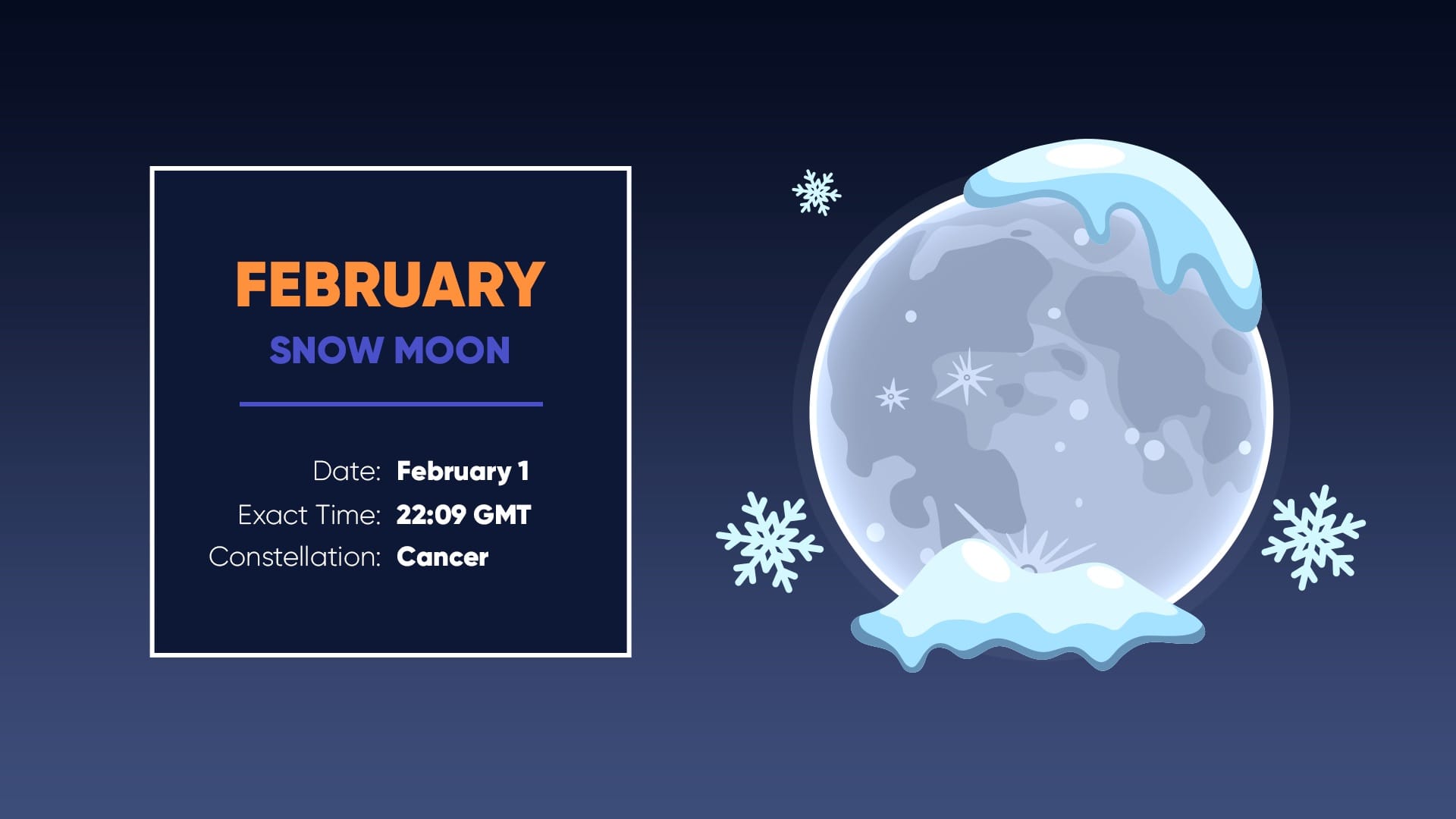
The February 2026 Full Moon in India will occur on Monday, February 2nd, 2026, at 3:39 AM Indian Standard Time (IST). This full moon carries rich significance, known as the “Snow Moon” in Western traditions and the sacred “Magha Purnima” in India.
The Key Details At A Glance: February 2026 Full Moon
Here’s a quick overview of the February 2026 Full Moon, providing the exact time in India and its corresponding times across the major US time zones:

| Location / Time Zone | Date | Time |
|---|---|---|
| India (IST) | Monday, February 2, 2026 | 3:39 AM |
| Eastern Standard Time (EST) | Sunday, February 1, 2026 | 5:09 PM |
| Central Standard Time (CST) | Sunday, February 1, 2026 | 4:09 PM |
| Mountain Standard Time (MST) | Sunday, February 1, 2026 | 3:09 PM |
| Pacific Standard Time (PST) | Sunday, February 1, 2026 | 2:09 PM |
What is the Full Moon in February 2026 Known As?
Every full moon has a story, often encapsulated in its traditional name. The February 2026 Full Moon is no exception, carrying different significances across cultures.
The “Snow Moon” & Its Global Significance
In many Western cultures, the February Full Moon is famously known as the “Snow Moon.” This name originates from Native American tribes and early European settlers who observed that February often brought the heaviest snowfall of the year. The name reflects the harsh, cold conditions and the scarcity of food that were typical during this mid-winter month.
Other traditional names for the February Full Moon include the Hunger Moon, Storm Moon, and Bone Moon, all echoing the challenges faced during the depths of winter. These names are not just poetic; they are historical markers of human survival and connection to nature’s rhythms.
Magha Purnima: India’s Sacred February Full Moon
In India, the February Full Moon holds profound spiritual significance and is known as Magha Purnima. “Purnima” simply means full moon in Sanskrit, and “Magha” refers to the Hindu calendar month in which it occurs. This day is considered exceptionally auspicious in Hinduism.
During Magha Purnima, devotees often take a holy dip in sacred rivers like the Ganges, Yamuna, and confluence points (Triveni Sangam) to purify their souls and seek blessings. It’s believed that performing charitable acts (Daan) and engaging in spiritual practices (Tapasya) on this day yields immense merit.
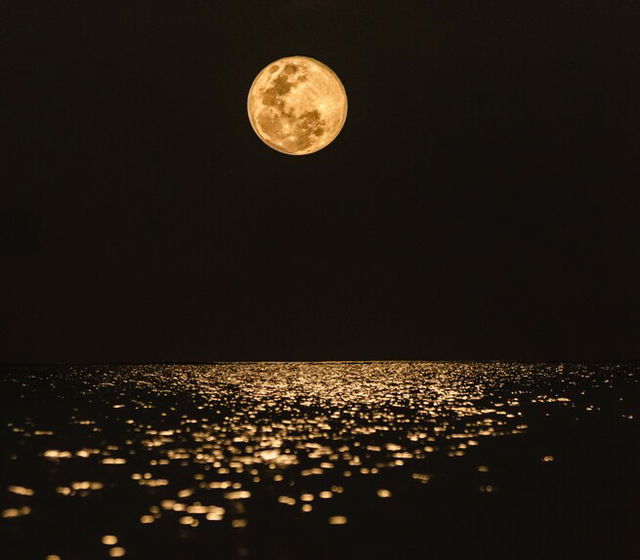
Many observe a full-day fast (Vrat) and perform Satyanarayan Puja, a ritual dedicated to Lord Vishnu, seeking prosperity and well-being. The month of Magha itself is dedicated to spiritual contemplation, and its full moon culminates these practices, marking a period of deep introspection and devotion.
Pinpointing the Full Moon: February 2026 India Time (IST)
To be precise, the Full Moon in February 2026 will occur on Monday, February 2, 2026, at 3:39 AM Indian Standard Time (IST). This is the exact astronomical moment when the Moon is fully illuminated by the Sun as seen from Earth.
If you’re in India, setting your alarms for the early morning hours of February 2nd will ensure you witness the peak of this lunar event or engage in early morning rituals.
Understanding Indian Standard Time (IST) in Context
Indian Standard Time (IST) is the time zone observed throughout India, with a UTC offset of UTC+5:30. This means it is five and a half hours ahead of Coordinated Universal Time. Unlike many Western countries, India does not observe Daylight Saving Time, so IST remains consistent year-round.
For those located outside India, particularly in the US, this offset is crucial for accurate time conversion. The fact that IST is ahead means that the full moon event, when converted to US time zones, will typically fall on the preceding calendar day.

From Mumbai to Manhattan: Converting India’s Full Moon to US Time Zones
Since India is significantly ahead in time, the full moon occurring early Monday morning in India will actually take place on Sunday afternoon/evening in the United States. This time difference requires careful calculation, but don’t worry, we’ve done the heavy lifting for you.
Here’s a detailed breakdown of how to convert 3:39 AM IST on February 2, 2026, to various US time zones:
- Eastern Standard Time (EST = UTC-5): IST is 10 hours and 30 minutes ahead of EST. So, 3:39 AM IST on Feb 2nd becomes 5:09 PM EST on Sunday, February 1st, 2026.
- Central Standard Time (CST = UTC-6): IST is 11 hours and 30 minutes ahead of CST. This means 3:39 AM IST on Feb 2nd converts to 4:09 PM CST on Sunday, February 1st, 2026.
- Mountain Standard Time (MST = UTC-7): IST is 12 hours and 30 minutes ahead of MST. Therefore, 3:39 AM IST on Feb 2nd is 3:09 PM MST on Sunday, February 1st, 2026.
- Pacific Standard Time (PST = UTC-8): IST is 13 hours and 30 minutes ahead of PST. So, 3:39 AM IST on Feb 2nd is 2:09 PM PST on Sunday, February 1st, 2026.
Your Full Moon Time Zone Conversion Chart
This comprehensive table provides the specific full moon times for February 2026 across various global and US time zones, making it easy to mark your calendar no matter where you are.
| City / Region | Time Zone | Full Moon Date | Full Moon Time |
|---|---|---|---|
| Delhi, India | IST (UTC+5:30) | Monday, Feb 2, 2026 | 3:39 AM |
| New York, USA | EST (UTC-5) | Sunday, Feb 1, 2026 | 5:09 PM |
| Chicago, USA | CST (UTC-6) | Sunday, Feb 1, 2026 | 4:09 PM |
| Denver, USA | MST (UTC-7) | Sunday, Feb 1, 2026 | 3:09 PM |
| Los Angeles, USA | PST (UTC-8) | Sunday, Feb 1, 2026 | 2:09 PM |
| London, UK | GMT (UTC+0) | Sunday, Feb 1, 2026 | 10:09 PM |
| Dubai, UAE | GST (UTC+4) | Monday, Feb 2, 2026 | 2:09 AM |
The 2026 Full Moon Calendar for India: A Year at a Glance
While our focus is on February 2026, it’s always helpful to see the bigger picture. Here’s a full moon calendar for India for the entire year 2026, including their traditional Western and Hindu names. This provides a valuable resource for planning your year, whether for spiritual observances, cultural events, or simply enjoying the night sky.
| Month | Date (IST) | Time (IST) | Western Name | Hindu Name |
|---|---|---|---|---|
| January | Saturday, Jan 3 | 3:33 PM | Wolf Moon | Pausha Purnima |
| February | Monday, Feb 2 | 3:39 AM | Snow Moon | Magha Purnima |
| March | Tuesday, Mar 3 | 5:08 PM | Worm Moon | Phalguna Purnima (Holi) |
| April | Thursday, Apr 2 | 4:44 AM | Pink Moon | Chaitra Purnima |
| May | Friday, May 1 | 1:49 PM | Flower Moon | Vaishakha Purnima |
| June | Monday, Jun 1 | 6:01 AM | Strawberry Moon | Jyeshta Purnima |
| July | Wednesday, Jul 1 | 4:05 PM | Buck Moon | Ashadha Purnima |
| July | Friday, Jul 31 | 4:06 AM | Sturgeon Moon (Blue Moon) | Shravana Purnima |
| August | Saturday, Aug 29 | 6:49 PM | Corn Moon | Bhadrapada Purnima |
| September | Monday, Sep 28 | 12:47 PM | Harvest Moon | Ashwin Purnima |
| October | Thursday, Oct 28 | 6:42 AM | Hunter’s Moon | Kartik Purnima |
| November | Saturday, Nov 26 | 12:05 AM | Beaver Moon | Margashirsha Purnima |
| December | Thursday, Dec 25 | 1:04 PM | Cold Moon | Pausha Purnima |
Special Lunar Events in 2026 (For India)
Beyond the monthly full moons, 2026 offers a few special celestial treats for observers in India (and globally). Keep an eye out for:
- July 31st, 2026: The Blue Moon: As noted in the calendar, July 2026 will feature two full moons. The second full moon in a single calendar month is popularly termed a “Blue Moon,” making the Sturgeon Moon on July 31st a rare and interesting event.
- Lunar Eclipses: While not directly coinciding with the February 2026 full moon, lunar eclipses are often associated with full moon phases. Always check updated astronomical calendars closer to the date for precise visibility in your region.
Why Track the Full Moon in India from the USA?
You might be asking, “Why should I care about the full moon in India if I’m in the USA?” That’s a great question, and there are several compelling reasons:
- Cultural & Spiritual Connection: For individuals with Indian heritage living in the USA, or for anyone interested in Hindu spirituality, tracking Magha Purnima offers a direct link to ancient traditions. It’s an opportunity to participate in or observe rituals virtually, or simply connect with a spiritual rhythm shared by millions.
- Travel Planning: If you’re considering a trip to India in 2026, knowing the full moon dates, especially significant ones like Magha Purnima, can be crucial. Many temples and holy sites hold special events and receive increased pilgrimage during these times, which could enhance or impact your travel experience.
- Astrology & Vedic Sciences: Vedic astrology places immense importance on lunar phases. Understanding the exact full moon times allows enthusiasts to align their astrological readings, meditations, or energy work with precision.
- Global Awareness & Astronomical Interest: For general astronomy enthusiasts, tracking lunar events across different time zones deepens your understanding of celestial mechanics and the global impact of astronomical phenomena.
- Connecting with the Indian Diaspora: The Indian diaspora is vast. Knowing when significant cultural events like Magha Purnima occur allows for shared moments of reflection and celebration with family and friends scattered across the globe.
How to Observe & Connect with the February 2026 Full Moon
Whether you’re in India or observing from afar in the USA, the February 2026 Full Moon offers several ways to connect with its energy and significance:
- Lunar Gazing: The most straightforward way is to simply step outside and admire the fully illuminated moon. In the USA, this will be Sunday evening, February 1st. Find a spot away from city lights if possible for the best view.
- Mindful Reflection: The full moon is a powerful time for reflection, gratitude, and setting intentions. Dedicate some quiet time for meditation, journaling, or simply being present under the moonlight.
- Learn About Magha Purnima: Explore the rich traditions associated with Magha Purnima. You can find resources on Hindu mythology, rituals, and the significance of bathing in sacred rivers. This cultural immersion can be a powerful experience even from a distance.
- Connect with Community: If you’re part of an Indian community or spiritual group in the USA, inquire about any virtual or in-person observances. Sharing the experience can amplify its impact.
- Plan Future Travel: If you’re inspired by the cultural significance, start planning a trip to India to experience a future Magha Purnima firsthand!
The Science Behind the Full Moon
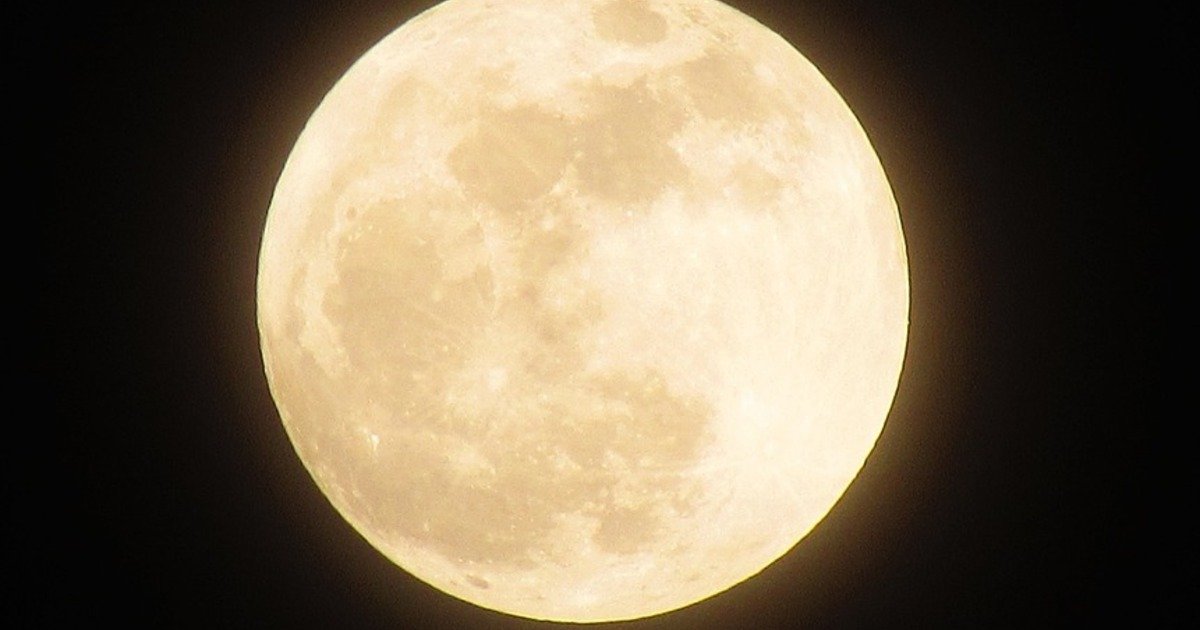
From a scientific perspective, a full moon occurs when the Moon is exactly opposite the Sun in its orbit around Earth. This alignment means the entire face of the Moon, as seen from Earth, is illuminated by sunlight. This phase occurs roughly once every 29.5 days, which is the duration of one lunar cycle (the synodic month).
While the full moon appears as a perfectly round disc for about three nights, the *exact* moment of full moon (when it’s 100% illuminated) is instantaneous. This is the precise time we’ve provided for February 2026. The changing angle of the Moon relative to the Earth and Sun is what creates the different lunar phases we observe throughout the month.
Understanding these astronomical mechanics helps us appreciate the consistent cycles that govern our sky and have fascinated humanity for millennia. The full moon isn’t just a beautiful sight; it’s a celestial marker deeply woven into cultural, spiritual, and scientific understanding across the globe.
Conclusion
The Full Moon in February 2026, known as the Snow Moon globally and the sacred Magha Purnima in India, is set to grace the skies on Monday, February 2, 2026, at 3:39 AM IST. For those in the United States, this translates to Sunday afternoon or evening, February 1, 2026, depending on your time zone.
Whether your interest lies in astronomy, cultural exploration, or spiritual observance, this guide provides you with all the necessary details to mark your calendars and connect with this powerful lunar event. Embrace the opportunity to reflect, celebrate, and observe the timeless beauty of our celestial companion.
Frequently Asked Questions
When is the Full Moon in February 2026 in India?
The Full Moon in February 2026 will occur on Monday, February 2, 2026, at 3:39 AM Indian Standard Time (IST).
What is the February 2026 Full Moon called in Western traditions and in India?
In Western traditions, the February Full Moon is commonly known as the ‘Snow Moon.’ In India, it is referred to as ‘Magha Purnima,’ a day of significant spiritual importance in the Hindu calendar.
How does 3:39 AM IST on February 2nd convert to US time zones?
For those in the USA, the full moon will occur on Sunday, February 1st, 2026: 5:09 PM EST, 4:09 PM CST, 3:09 PM MST, and 2:09 PM PST.
Why is Magha Purnima significant in India?
Magha Purnima is considered a highly auspicious day for spiritual activities in Hinduism. Devotees often take holy dips in sacred rivers, perform charity (Daan), observe fasts (Vrat), and engage in prayers (Satyanarayan Puja) to seek purification and blessings.
Are there any other special lunar events in 2026 for India?
Yes, July 2026 will feature a ‘Blue Moon’ on July 31st, which is the second full moon in that calendar month. For lunar eclipses, it’s best to consult updated astronomical calendars closer to the dates.
Why would someone in the USA track the full moon in India?
People in the USA track the full moon in India for several reasons: cultural and spiritual connection (especially for those with Indian heritage), planning future travel to coincide with festivals, interest in Vedic astrology, general astronomical observation, and connecting with the global Indian diaspora.