The February 2026 Full Moon: Your Complete Pacific Time Guide to the Snow Moon
Are you looking to mark your calendar for the February 2026 Full Moon, specifically for Pacific Time? You’ve come to the right place. Forget digging through confusing astronomical charts or converting time zones in your head. I’m here to give you the exact details and a whole lot more. This isn’t just about a date and time; it’s about understanding the celestial event that lights up our winter skies, often known as the ‘Snow Moon.’
Table of Contents
- The February 2026 Full Moon: Your Complete Pacific Time Guide to the Snow Moon
- When is the February 2026 Full Moon in Pacific Time? Get Ready for the Snow Moon!
- The Exact Moment: Date and Time for Pacific Standard Time (PST)
- A Quick Look: February 2026 Full Moon Across North American Time Zones & UTC
- Unpacking the “Snow Moon”: History, Lore, and Meaning
- Origins of the Name: Why “Snow Moon”?
- Beyond the Snow: Other Names for February’s Full Moon
- Spiritual and Astrological Significance
- Observing the February Snow Moon: Tips for Pacific Coast Skywatchers
- Best Viewing Conditions
- Photography Tips for the Lunar Spectacle
- Understanding the Moon’s Apparent Size and Brightness
- The Moon’s Cycle: What Happens Before and After the February Full Moon?
- The Waxing Gibbous Phase: Leading Up to Fullness
- The Waning Gibbous Phase: Retreating from Fullness
- Why Does the Moon Have Phases? A Quick Refresher
- Looking Ahead: Full Moons in 2026 (Pacific Time Highlights)
Whether you’re an avid skywatcher, a planner, or simply curious about the moon’s influence, knowing the precise moment of the full moon is key. For those of us on the Pacific Coast of North America, or anyone tracking events in this time zone, getting the details right is essential. So, let’s dive straight into the heart of it.
When is the February 2026 Full Moon in Pacific Time? Get Ready for the Snow Moon!
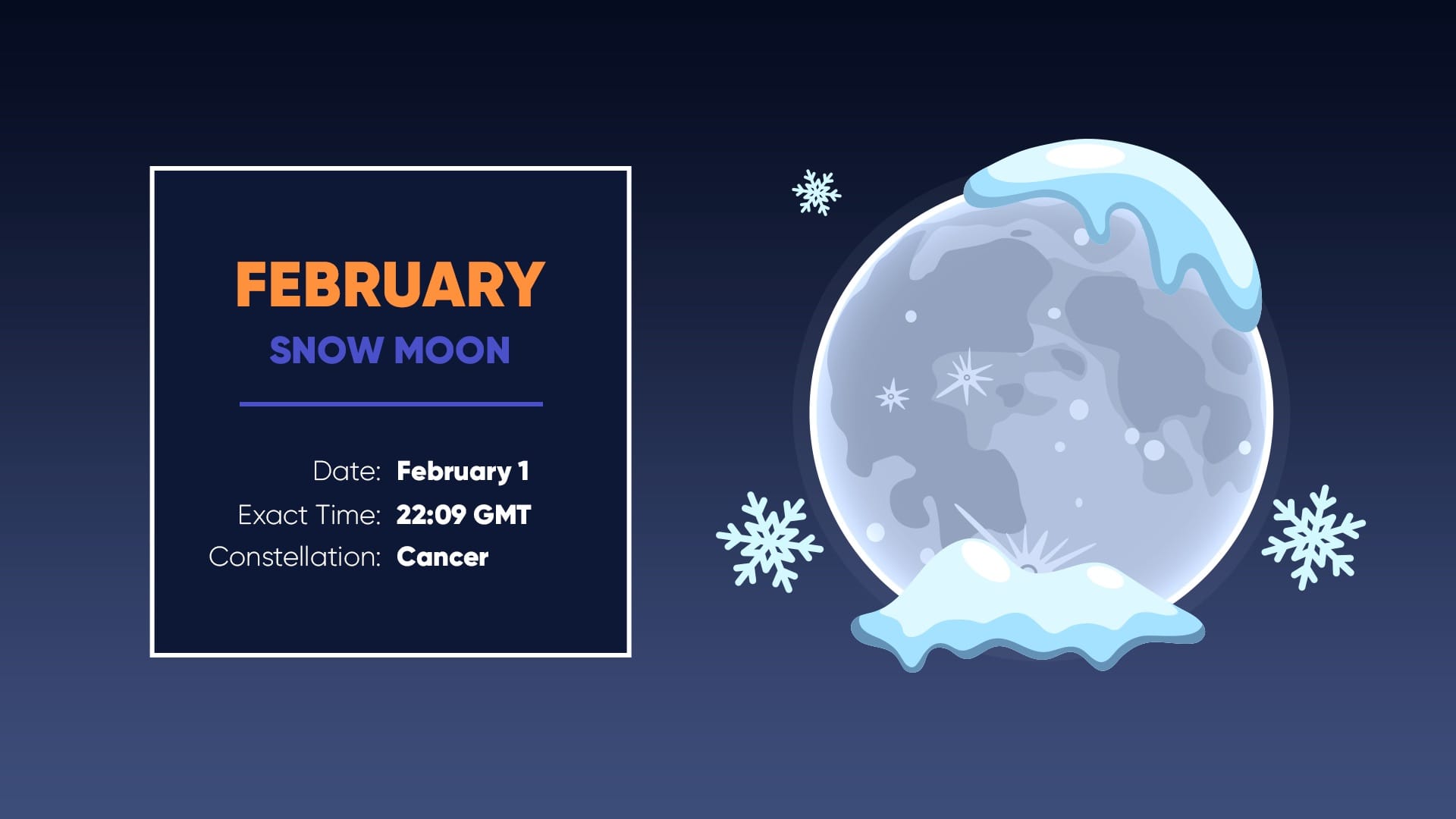
Let’s cut to the chase and give you the primary information you’re here for. The February 2026 Full Moon, affectionately known as the Snow Moon, will grace our skies at a specific moment. Mark your calendars, set your reminders, and prepare for a beautiful celestial display.
The Exact Moment: Date and Time for Pacific Standard Time (PST)
The Full Moon in February 2026 will officially occur on Sunday, February 1, 2026, at 2:09 PM Pacific Standard Time (PST). Yes, that’s right – it’s an afternoon full moon for the Pacific region! While it reaches its peak illumination in the afternoon, the moon will appear gloriously full in the night sky both leading up to, and immediately following, this exact moment.
Why an afternoon full moon? The precise moment of ‘fullness’ is when the moon is 180 degrees opposite the sun in its orbit around Earth. This can happen at any time of day or night. For February 1, 2026, the geometry aligns perfectly in the afternoon for PST. Don’t worry, you won’t miss it; the moon will rise in the evening looking just as magnificent.

A Quick Look: February 2026 Full Moon Across North American Time Zones & UTC
While our focus is Pacific Time, it’s incredibly helpful to see how this translates across other major time zones. This table provides a clear comparison, helping you coordinate with friends or family across the continent, or simply understand the global timing of this event.
| Event | Date | UTC (Coordinated Universal Time) | EST (Eastern Standard Time) | CST (Central Standard Time) | MST (Mountain Standard Time) | PST (Pacific Standard Time) |
|---|---|---|---|---|---|---|
| February 2026 Full Moon | Sunday, Feb 1, 2026 | 10:09 PM UTC | 5:09 PM EST | 4:09 PM CST | 3:09 PM MST | 2:09 PM PST |
As you can see, the event ripples across time zones, but its precise astronomical moment remains fixed. This table clarifies how that moment translates locally for observers across North America.
Unpacking the “Snow Moon”: History, Lore, and Meaning
A full moon is rarely just a full moon. Indigenous cultures and ancient civilizations often gave these celestial events names that reflected the natural cycles and conditions of their environment. February’s full moon is perhaps one of the most evocative: the Snow Moon.
Origins of the Name: Why “Snow Moon”?
The name “Snow Moon” traces its roots primarily to the Algonquin tribes of what is now the northeastern United States and southeastern Canada. For these communities, February was typically the month with the heaviest snowfall. Deep winter conditions made hunting difficult, and survival depended heavily on stored resources. The name wasn’t just descriptive; it was a reflection of the harsh realities of the season, a reminder of nature’s power and the resilience required to endure it.
Imagine looking up at that bright, cold orb in a sky often blanketed by snow, or illuminating a landscape covered in a fresh white layer. The name fits perfectly, grounding this astronomical event in the very real, earthly experience of winter.
Beyond the Snow: Other Names for February’s Full Moon
While “Snow Moon” is the most widely recognized name in North America, other cultures and even other Indigenous groups had their own names for February’s full moon, often reflecting similar themes:

- Hunger Moon: Another common name, highlighting the scarcity of food and the difficult hunting conditions during this time of year.
- Trapper’s Moon: For some, this moon signaled the peak time for trapping animals for furs, crucial for warmth and trade.
- Bear Moon: In regions where bears hibernate, this could refer to the time when bear cubs are born in their dens, or when hungry bears might begin to stir.
- Storm Moon: Reflecting the severe winter weather and blizzards common in February.
- Chaste Moon: In medieval Europe, this name symbolized purity and new beginnings, often associated with Lent.
Each name offers a glimpse into how different societies interpreted and interacted with the natural world, linking the celestial with the terrestrial in profound ways.
Spiritual and Astrological Significance
Beyond its historical context, the Snow Moon carries significant spiritual and astrological weight for many. Astrologically, the February Full Moon typically falls in the sign of Leo, though sometimes it can align with Virgo, depending on the year’s exact timing. In 2026, the February Full Moon occurs on February 1st, meaning it falls in the passionate, creative, and dramatic sign of Leo.
What does a Leo Full Moon mean for you? Full moons are generally seen as times of culmination, release, and heightened emotional energy. A Leo Full Moon amplifies themes of:
- Self-Expression and Authenticity: Leo rules the heart, creativity, and self. This is a powerful time to reflect on how authentically you are expressing yourself and if you are truly shining your light.
- Courage and Confidence: The bold energy of Leo encourages you to step into your power and confront any fears holding you back from leadership or creative pursuits.
- Love and Relationships: Leo is also associated with romance and passion. This full moon might bring climactic moments in relationships, encouraging honesty and vulnerability.
- Letting Go of Ego: While Leo celebrates the self, a full moon in Leo can also be a potent time to release ego-driven behaviors, self-doubt, or any need for external validation that hinders your true happiness.
Many use this time for meditation, journaling, or intention-setting rituals, focusing on what they need to release to make space for greater joy, creativity, and self-love. It’s an opportunity to shine your unique light, even in the depths of winter.
Observing the February Snow Moon: Tips for Pacific Coast Skywatchers
Even though the February 2026 Full Moon reaches its peak illumination in the afternoon for Pacific Time, it will still be a breathtaking sight as it rises in the evening sky. Here are some tips to make your observation experience on the Pacific Coast truly memorable.
Best Viewing Conditions
To truly appreciate the Snow Moon, consider these factors:

- Location, Location, Location: Seek out a spot with minimal light pollution. Coastal areas, national parks, or even just a backyard away from bright streetlights can make a huge difference. The darker your surroundings, the more details you’ll perceive on the moon’s surface.
- Clear Skies: While we can’t control the weather, check your local forecast. February can bring rain or clouds to the Pacific Northwest and parts of California. A clear, crisp winter night offers the best visibility.
- Elevated Vantage Points: If possible, find a location with a clear view of the eastern horizon. The moon will rise in the east shortly after sunset, and seeing it emerge can be a magical experience.
- Dress Warmly: February nights on the Pacific Coast can be chilly. Bundle up in layers, grab a warm drink, and bring a blanket if you plan to observe for an extended period.
Photography Tips for the Lunar Spectacle
Want to capture the beauty of the Snow Moon? Here are some simple photography tips:
- Use a Tripod: Essential for sharp images, especially when using longer exposure times or zoom lenses.
- Manual Mode is Your Friend: Don’t rely on auto settings. Set your ISO low (100-400), use a fast shutter speed (1/125 to 1/250 for a bright full moon), and a narrow aperture (f/8 to f/16) for sharpness.
- Telephoto Lens: If you want detailed shots of craters, a telephoto lens (200mm or more) will be invaluable. Without one, the moon will appear as a small dot.
- Focus Manually: Autofocus can struggle with the moon. Switch to manual focus and use ‘live view’ to zoom in and achieve critical sharpness.
- Bracket Your Shots: Take several photos at different exposures to ensure you capture details in both the bright lunar surface and the darker sky.
- Foreground Interest: For more artistic shots, include a recognizable landmark or silhouette in the foreground. This adds scale and context to your moon image.
Understanding the Moon’s Apparent Size and Brightness
Have you ever noticed how the moon appears enormous when it’s low on the horizon, only to shrink as it climbs higher in the sky? This is a phenomenon known as the Moon Illusion. It’s an optical illusion; the moon’s actual size in the sky doesn’t change, but our brains perceive it differently when it’s near objects on the horizon (like trees or buildings) compared to when it’s isolated against the vastness of the dark sky.
The full moon is also incredibly bright. While this makes it easy to spot, it can sometimes wash out fainter celestial objects nearby. If you plan to use binoculars or a telescope, be prepared for a bright view. For extended observation, a moon filter can reduce glare and enhance surface detail, making for a more comfortable experience.
The Moon’s Cycle: What Happens Before and After the February Full Moon?
The full moon is just one spectacular moment in the moon’s continuous journey around Earth. Understanding the phases leading up to and away from fullness helps us appreciate the intricate dance between our planet and its natural satellite.
The Waxing Gibbous Phase: Leading Up to Fullness
Before the full moon on February 1st, you’ll observe the moon growing larger and brighter each night. This is the Waxing Gibbous phase. “Waxing” means growing or increasing, and “gibbous” refers to the shape where more than half of the moon is illuminated but it’s not yet completely full. During this phase, you’ll see a prominent, rounded moon, steadily approaching its peak illumination. It’s a fantastic time for observing craters and surface features as the terminator (the line between light and shadow) shifts across the lunar landscape.
The Waning Gibbous Phase: Retreating from Fullness
Immediately after February 1st, the moon enters its Waning Gibbous phase. “Waning” means shrinking or decreasing. You’ll still see a large, bright moon, but each night a little less of its illuminated face will be visible from our perspective. This phase continues until the Last Quarter moon, about a week after the full moon. It’s a subtle change, but if you observe the moon nightly, you’ll notice the illumination receding from west to east across its face.
Why Does the Moon Have Phases? A Quick Refresher
The moon’s phases aren’t caused by Earth’s shadow (that’s an eclipse!). Instead, they’re a result of our changing perspective of the sunlit portion of the moon as it orbits our planet. The moon is always half-illuminated by the sun, just like Earth. As it travels around Earth, we see different amounts of that illuminated half. When the moon is between the Earth and the sun, we see the unlit side (New Moon). When Earth is between the moon and the sun, we see the fully lit side (Full Moon). All other phases are simply variations of how much of that lit half is visible to us.
Looking Ahead: Full Moons in 2026 (Pacific Time Highlights)
The February Snow Moon is just one of many opportunities to gaze at our celestial companion in 2026. For your planning convenience, here’s a quick overview of all the full moons in 2026, with their exact Pacific Standard Time (PST) or Pacific Daylight Time (PDT) dates and times. Note that as of March 9, 2026, Pacific Daylight Time (PDT) will be in effect, shifting the clock forward one hour.
| Month | Traditional Name | Date | Pacific Time (PST/PDT) |
|---|---|---|---|
| January | Wolf Moon (Supermoon) | Saturday, Jan 3 | 2:02 AM PST |
| February | Snow Moon | Sunday, Feb 1 | 2:09 PM PST |
| March | Worm Moon | Tuesday, Mar 3 | 3:44 AM PST |
| April | Pink Moon | Wednesday, Apr 1 | 3:10 PM PDT |
| May | Flower Moon | Friday, May 1 | 10:04 AM PDT |
| June | Strawberry Moon | Saturday, May 30 | 4:14 PM PDT |
| July | Buck Moon | Monday, Jun 29 | 9:50 PM PDT |
| August | Sturgeon Moon | Wednesday, Jul 29 | 3:51 AM PDT |
| September | Corn Moon (Supermoon) | Friday, Sep 25 | 10:08 AM PDT |
| October | Hunter’s Moon (Supermoon) | Saturday, Oct 24 | 7:18 PM PDT |
| November | Beaver Moon | Monday, Nov 23 | 7:42 AM PST |
| December | Cold Moon | Tuesday, Dec 22 | 8:58 PM PST |
As you can see, 2026 offers a few ‘Supermoons’ (January, September, October) where the full moon occurs close to perigee, its closest approach to Earth, making it appear slightly larger and brighter. These are fantastic opportunities for skywatching, so keep an eye out!
The February 2026 Full Moon, the Snow Moon, is more than just a date on the calendar. It’s a connection to ancient wisdom, a prompt for reflection, and a stunning natural spectacle. By knowing the precise time in Pacific Time, understanding its rich history, and preparing for optimal viewing, you can fully embrace the beauty and significance of this annual winter event. So, bundle up, look up, and let the Snow Moon inspire you.
Frequently Asked Questions
When exactly is the Full Moon in February 2026 in Pacific Time?
The February 2026 Full Moon, known as the Snow Moon, will occur on Sunday, February 1, 2026, at 2:09 PM Pacific Standard Time (PST).
What is the traditional name for the February Full Moon and why?
The traditional name is the ‘Snow Moon,’ primarily originating from Algonquin tribes. It reflects February being the month with the heaviest snowfall and the associated challenges of winter, such as food scarcity.