February 2026 Full Moon: Your Complete Guide to the Snow Moon’s Date, Time, and Astrological Significance
Ever gazed up at the night sky and felt an undeniable pull towards the luminous full moon? You’re not alone. Each full moon offers a unique moment for reflection, wonder, and connection to both the cosmos and ancient traditions. If you’re here, chances are you’re eager to pinpoint the exact moment of February 2026’s full moon, especially here in the USA. You want precision, cultural context, and perhaps even a hint of what it means for you.
Forget generic calendars. This guide is your definitive resource, cutting through the noise to give you the exact times across all major US time zones, delve into the captivating lore of the ‘Snow Moon,’ and even touch upon its astrological resonance. We’ll ensure you’re perfectly positioned to experience this celestial event, whether you’re planning a viewing party or simply seeking a moment of quiet contemplation.
The Short Answer: When is the February 2026 Full Moon?
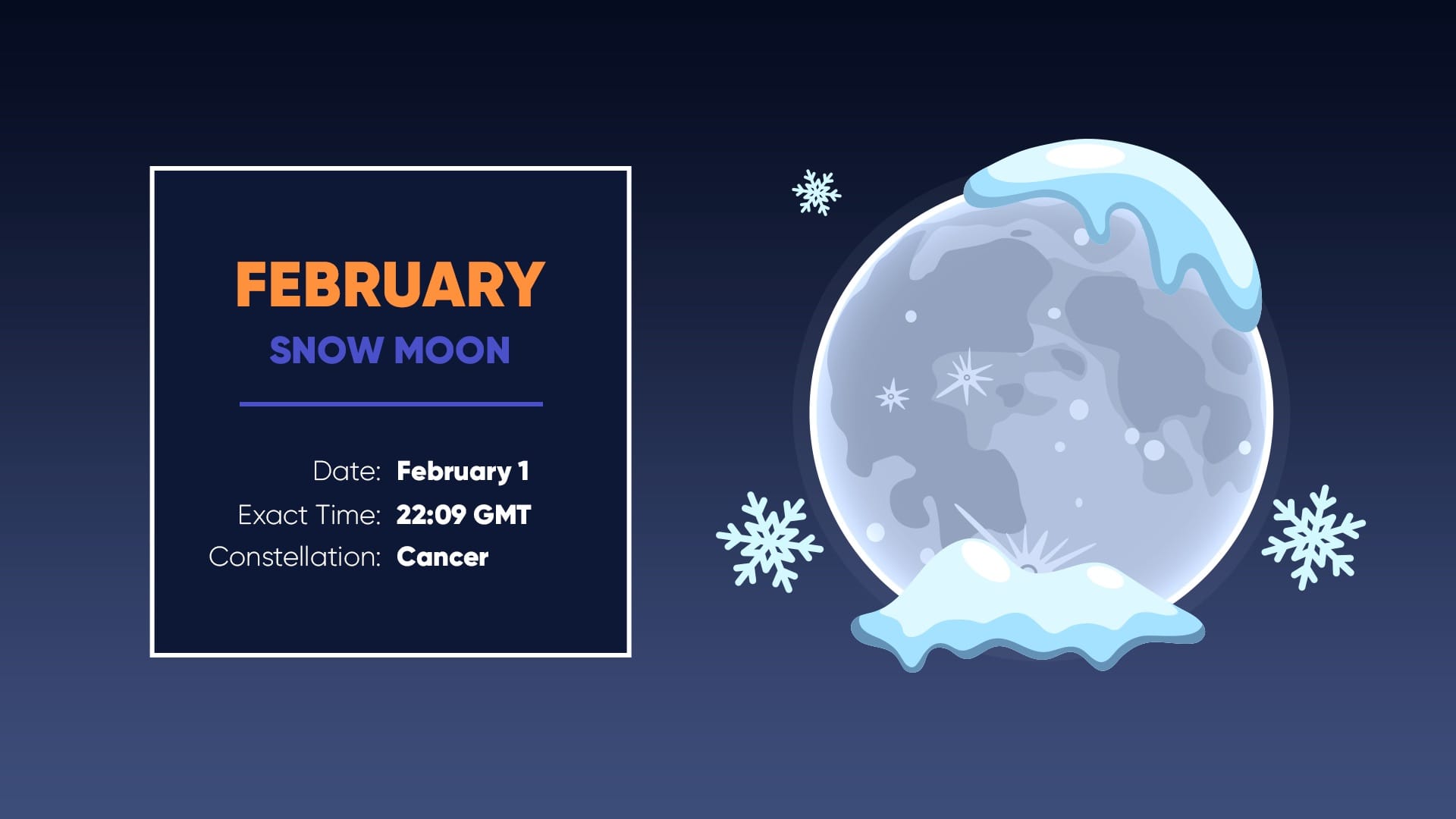
Let’s get straight to it. The Full Moon in February 2026, traditionally known as the Snow Moon, will reach its peak illumination on Sunday, February 1, 2026, at 10:09 PM UTC (Coordinated Universal Time). For those of us in the United States, this translates to late afternoon and early evening hours, making it an excellent opportunity for observation.
Here’s a precise breakdown for major US time zones:
| US Time Zone |
Date |
Peak Illumination Time |
| Eastern Standard Time (EST) |
Sunday, February 1, 2026 |
5:09 PM EST |
| Central Standard Time (CST) |
Sunday, February 1, 2026 |
4:09 PM CST |
| Mountain Standard Time (MST) |
Sunday, February 1, 2026 |
3:09 PM MST |
| Pacific Standard Time (PST) |
Sunday, February 1, 2026 |
2:09 PM PST |
| Alaska Standard Time (AKST) |
Sunday, February 1, 2026 |
1:09 PM AKST |
| Hawaii Standard Time (HST) |
Sunday, February 1, 2026 |
12:09 PM HST |
Remember, while the moon will be visibly full for a day or two around these times, these precise moments mark the exact peak illumination, when the sun’s rays directly hit the entire visible face of the moon from Earth’s perspective.
The Snow Moon: Unpacking February’s Full Lunar Spectacle
What Makes the February Full Moon Special?
Beyond its celestial glow, each full moon carries rich historical and cultural significance, often reflected in the names given to them by ancient civilizations and indigenous peoples. The February Full Moon is most commonly known as the Snow Moon. This name, popularized by Native American tribes, particularly in the northeastern United States, is a direct reflection of the harsh, snow-laden conditions typical of February. It was a time when heavy snowfall made hunting difficult, and survival depended on reserves.
Imagine living thousands of years ago, relying solely on the cycles of nature to navigate your world. The moon wasn’t just a pretty orb in the sky; it was a calendar, a clock, a guide. The Snow Moon served as a stark reminder of winter’s grip, a period of scarcity and endurance before the first hints of spring. Understanding this context helps us appreciate the deep connection our ancestors had with the natural world and how they wove their observations into their language and lore.
Other Traditional Names for February’s Full Moon
While ‘Snow Moon’ is the most prevalent, other cultures and tribes had their own evocative names, each painting a vivid picture of the season:
- Hunger Moon: Another common name, especially among Northern tribes, emphasizing the scarcity of food during the deepest part of winter.
- Bear Moon: Some Algonquin tribes referred to it this way, relating to the time when bear cubs are born in their dens, or when bears’ winter slumber is deepest.
- Trapper’s Moon: Reflecting the prime season for trapping animals for fur.
- Squash Moon: Used by some tribes in warmer regions, focusing on the last of the stored winter squash.
- Chaste Moon: In medieval Europe, this name symbolized purity and innocence, perhaps linked to the idea of new beginnings or the cleansing power of snow.
These diverse names remind us that while the celestial event is universal, its interpretation and meaning are deeply rooted in local environment and cultural experiences. Each name tells a story of survival, hope, and connection to the Earth’s rhythms.
The Exact Peak Illumination Times Across the USA
We’ve already provided the precise times, but it’s worth reiterating why these exact moments matter. While the moon appears full for approximately three days, the moment of peak illumination is when the Moon is precisely opposite the Sun in its orbit. This alignment ensures that 100% of the moon’s face visible from Earth is lit up.
For astronomers, astrologers, and even avid photographers, catching this exact moment can be crucial. For the casual observer, it simply means you’re seeing the Moon at its most glorious and radiant. Since the Earth rotates, the time of peak illumination varies by longitude, which is why converting from UTC (Coordinated Universal Time – the global standard) to your local US time zone is essential.
Understanding these conversions ensures you don’t miss the optimal viewing window. For example, if you’re on the East Coast, the Moon will hit peak fullness during the late afternoon, meaning it will be rising as it reaches its full glory. On the West Coast, it’ll be a bit earlier in the afternoon, potentially requiring a lookout earlier in the day if you want to catch it high in the sky, or waiting until sunset for a truly dramatic horizon view.
Astrological Insights: The Full Moon in Leo on February 1, 2026
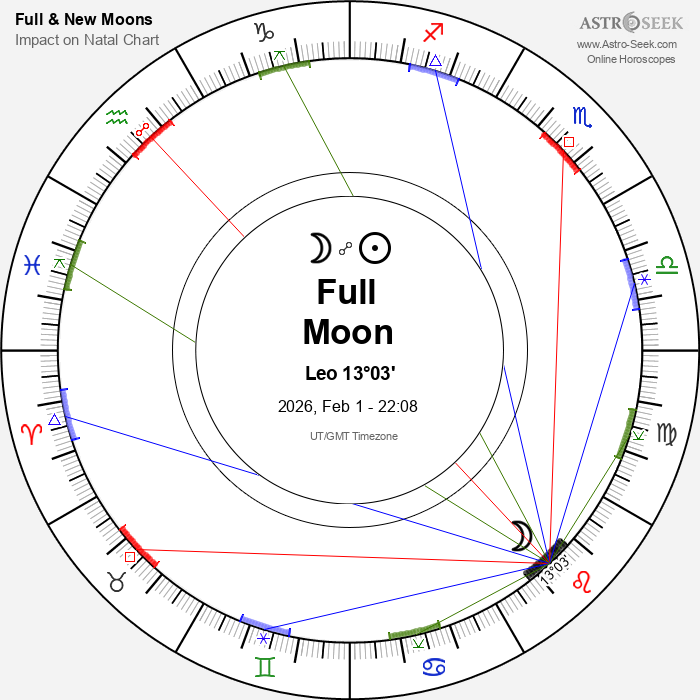
Beyond its astronomical marvel, the Full Moon often carries significant astrological weight, influencing our emotions, energy, and daily lives. The February 2026 Full Moon occurs in the fiery, passionate sign of Leo. Even if you’re not deeply steeped in astrology, understanding these energies can offer a fresh perspective on introspection and personal growth.
What Does a Full Moon in Leo Mean for You?
Leo is an enthusiastic, creative, and self-expressive sign ruled by the Sun. It’s associated with confidence, leadership, romance, and a flair for the dramatic. When the Full Moon graces Leo, it amplifies these qualities, bringing themes of self-expression, ego, and the heart to a head. Full Moons are always about culmination and release, shedding light on what needs to be acknowledged or let go.
Here’s how this particular lunar energy might manifest:
- Boost in Creativity and Passion: You might feel a surge of creative energy, inspiring you to pursue artistic projects, romantic endeavors, or anything that ignites your inner fire.
- Spotlight on Self-Expression: This is a powerful time to express your true self, perhaps through public speaking, performance, or simply being more open and authentic in your relationships.
- Ego Reflection: The Leo Full Moon can illuminate areas where your ego might be getting in the way, or where you’re seeking external validation. It’s a chance to release the need for constant approval and embrace genuine self-worth.
- Heart-Centered Matters: Themes around love, romance, children, and joy come into focus. You might experience a breakthrough in a relationship or find clarity on matters of the heart.
- Dramatic Tendencies: Be mindful of heightened emotions and dramatic reactions. While Leo loves attention, this Full Moon encourages a balanced expression, rather than over-the-top displays.
Think of this Full Moon as a cosmic spotlight shining on your inner lion. It’s a call to courageously embrace your unique sparkle, release self-doubt, and celebrate what makes you shine. It’s also an invitation to let go of any self-imposed limitations or the need to always be in control, trusting in your innate creativity and warmth.
Understanding Lunar Cycles and Your Personal Chart
Lunar cycles are fundamental in astrology, representing our emotional inner world, intuition, and subconscious. The Full Moon specifically marks a peak energy point in the monthly cycle, a time of illumination where things come to fruition or are revealed. It’s a powerful time for:
- Releasing: Identifying and letting go of habits, beliefs, or situations that no longer serve your highest good.
- Celebrating: Acknowledging achievements and progress made since the New Moon.
- Illumination: Gaining clarity on emotional issues or hidden truths.
While the general themes of a Full Moon in Leo apply to everyone, your individual experience will be uniquely colored by your personal astrological birth chart. Where Leo falls in your chart, and how this Full Moon interacts with your planetary placements, will determine the specific areas of your life most impacted. For a deeper dive, you’d look at which house Leo governs in your chart – this will indicate the life arena (e.g., career, relationships, home) where the Leo energies will culminate and demand your attention.
Regardless of your astrological beliefs, the Full Moon serves as a potent reminder to pause, reflect, and connect with your inner landscape, allowing its light to illuminate your path forward.
Beyond the Peak: Observing the Snow Moon in February 2026
Witnessing a full moon, especially one named after the very season it illuminates, is a magical experience. To make the most of your February 2026 Snow Moon viewing, here are some practical tips.
Essential Tips for Full Moon Viewing
- Timing is Key: While the peak illumination is precise, the moon will appear ‘full’ to the naked eye for about a day before and after. For a truly unique view, try observing around moonrise or moonset. When the moon is low on the horizon, it can appear larger due to the ‘Moon Illusion’ and often takes on beautiful hues of orange or red. Check local moonrise/moonset times for your specific location on February 1st and 2nd.
- Weather Watch: February weather can be unpredictable. Keep an eye on the forecast for clear skies. A clear, crisp winter night offers the best visibility.
- Find a Dark Spot: While the full moon is bright enough to cut through some light pollution, seeking out a location away from city lights will enhance your experience, allowing you to appreciate the subtle textures and surrounding stars (though the full moon will wash out many fainter objects).
- Binoculars are Your Friend: You don’t need an expensive telescope. A good pair of binoculars (7×50 or 10×50 are excellent choices) will reveal incredible details on the lunar surface – craters, maria (dark plains), and mountain ranges – transforming the experience.
- Photography Tips: If you’re hoping to capture the Snow Moon, use a tripod to prevent blur. A telephoto lens is ideal for detail. For phone photography, try a night mode setting or an external lens attachment. Experiment with exposure settings – the full moon is brighter than you think!
- Stay Warm: February nights are cold! Dress in layers, bring a hot beverage, and a comfortable chair if you plan to observe for an extended period.
Remember, the best way to enjoy the full moon is to simply step outside, look up, and let its serene beauty wash over you. It’s a moment to connect with the cosmos, our ancestors, and ourselves.
What Other Moon Phases Can You Expect in February 2026?
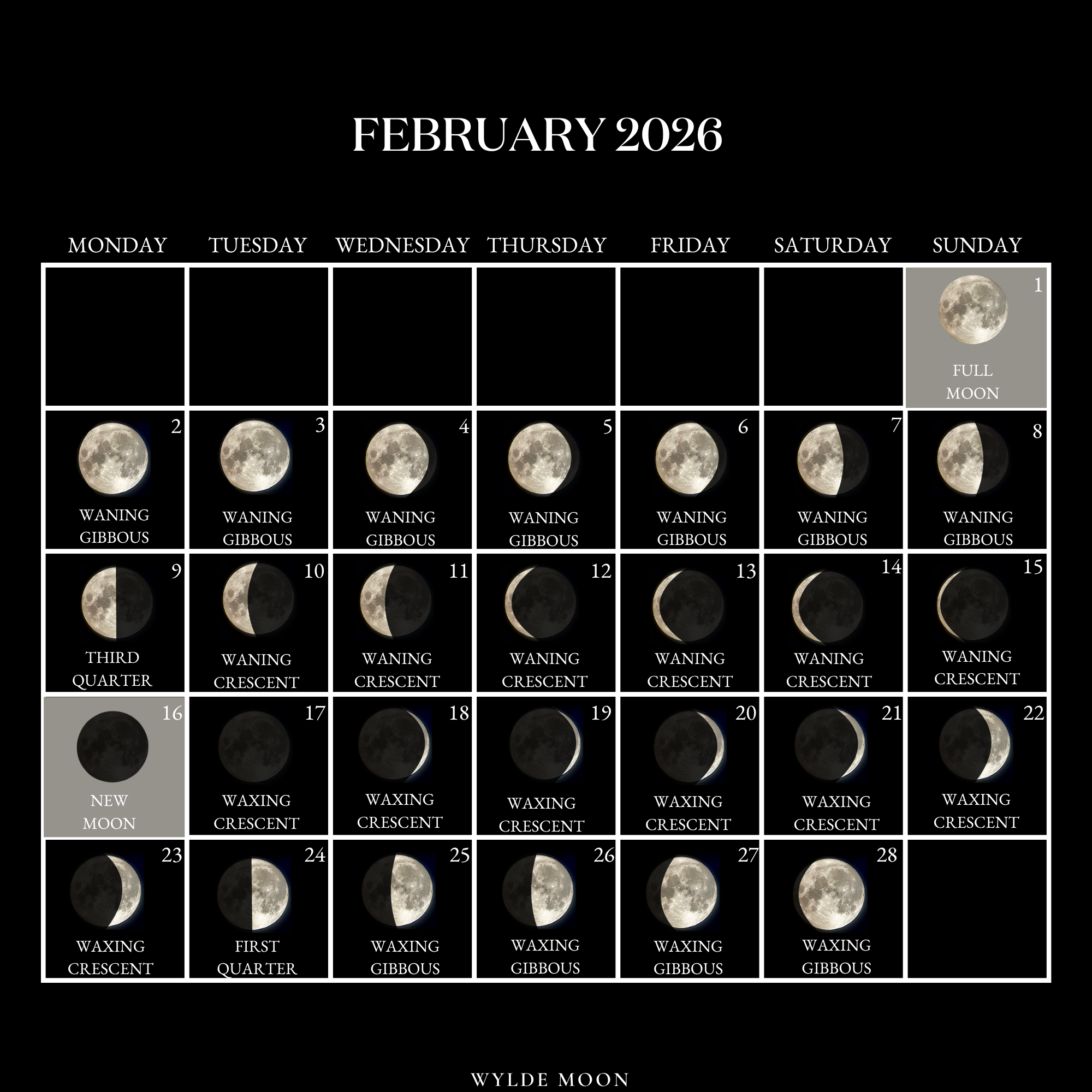
The lunar cycle is a continuous dance, and the Full Moon is just one of its many captivating stages. Here’s a quick look at the other significant moon phases occurring in February 2026:
| Moon Phase |
Date (Approximate) |
Time (UTC) |
| Full Moon (Snow Moon) |
Sunday, February 1 |
10:09 PM UTC |
| Last Quarter |
Monday, February 9 |
1:43 AM UTC |
| New Moon |
Tuesday, February 17 |
12:00 PM UTC |
| First Quarter |
Tuesday, February 24 |
6:48 PM UTC |
Each phase offers a different perspective on our celestial neighbor. The New Moon, for instance, is a time of new beginnings and setting intentions, as its darkness symbolizes a blank slate. Observing the moon throughout its cycle deepens your appreciation for its constant, subtle transformations.
The Science Behind the Full Moon: How We Predict Lunar Phases
The consistency and predictability of the moon’s phases are a testament to the elegant physics governing our solar system. While ancient cultures relied on observation and tradition, modern astronomy uses precise calculations to forecast lunar events centuries in advance.
The Dance of Earth, Moon, and Sun
The concept of a ‘full moon’ is fundamentally about geometry. The moon doesn’t actually change its shape; what we perceive as phases is simply the varying amount of its illuminated surface visible from Earth. This is determined by the moon’s position relative to the Earth and the Sun.
A Full Moon occurs when the Moon is directly opposite the Sun, with the Earth positioned roughly in between them. From our vantage point on Earth, the entire face of the Moon is illuminated by the Sun’s light, reflecting it back to us. Because the Moon’s orbit is slightly tilted relative to the Earth’s orbit around the Sun, a perfectly straight alignment (which would cause a lunar eclipse) doesn’t happen every month. However, the ‘full’ appearance is achieved when this opposition is close enough.
The term ‘peak illumination’ refers to the exact second when this opposition is strongest. This is why you’ll often see slightly varying times depending on the source – minor differences in calculation models or rounding can lead to a few minutes’ discrepancy. For most purposes, however, the consensus UTC time is reliable.
The 2026 Full Moon Calendar at a Glance (Beyond February)
February’s Snow Moon is just one of many opportunities to witness a full moon in 2026. This year promises 13 full moons, which means one month will host two (a ‘Blue Moon’). Here’s a brief look at some of the other notable full moons you can anticipate throughout the year:
| Date |
Traditional Name |
Astrological Sign |
| January 3, 2026 |
Wolf Moon |
Cancer |
| February 1, 2026 |
Snow Moon |
Leo |
| March 3, 2026 |
Worm Moon |
Virgo |
| April 1, 2026 |
Pink Moon |
Libra |
| May 1, 2026 |
Flower Moon |
Scorpio |
| May 31, 2026 |
Flower Moon (Blue Moon) |
Sagittarius |
| June 30, 2026 |
Strawberry Moon |
Capricorn |
| July 30, 2026 |
Buck Moon |
Aquarius |
| August 29, 2026 |
Sturgeon Moon |
Pisces |
| September 28, 2026 |
Harvest Moon |
Aries |
| October 27, 2026 |
Hunter’s Moon |
Taurus |
| November 26, 2026 |
Beaver Moon |
Gemini |
| December 26, 2026 |
Cold Moon |
Cancer |
Each of these full moons carries its own unique energy and traditional lore, inviting us to tune into the subtle shifts in nature and our own inner worlds throughout the year.
Your Personal Connection to the Cosmos
Whether you’re an ardent stargazer, an astrology enthusiast, or simply someone who appreciates the beauty of the night sky, the Full Moon in February 2026 offers a potent opportunity to connect. Mark your calendars for Sunday, February 1, 2026, and be ready to welcome the radiant Snow Moon into your awareness.
From its precise timing across US zones to its ancient cultural names and fiery Leo energy, this full moon invites us to embrace both the scientific wonder and the spiritual significance of our celestial companion. Take a moment to step outside, breathe in the crisp winter air, and appreciate this spectacular display. What revelations will its light bring to you?
Frequently Asked Questions
When is the Full Moon in February 2026 in the USA?
The Full Moon in February 2026 reaches peak illumination on Sunday, February 1, 2026, at 5:09 PM EST. This translates to 4:09 PM CST, 3:09 PM MST, and 2:09 PM PST. Please refer to the detailed table in the article for all major US time zones.
What is the traditional name for the February 2026 Full Moon?
The February 2026 Full Moon is traditionally known as the ‘Snow Moon.’ This name was given by Native American tribes due to the typically heavy snowfall and harsh winter conditions experienced during this month, making hunting difficult.
What is the astrological significance of the February 2026 Full Moon?
The February 2026 Full Moon occurs in the passionate and expressive sign of Leo. Astrologically, this emphasizes themes of creativity, self-expression, confidence, and matters of the heart. It’s a time for culmination and releasing anything that hinders your authentic self.
Will the February 2026 Full Moon be visible from my location?
Yes, the February 2026 Full Moon will be visible from all locations in the USA, provided there are clear skies. The exact time of peak illumination varies by time zone, but the moon will appear visibly full for a day or two around February 1st.
What are some tips for observing the Snow Moon?
To best observe the Snow Moon, find a spot away from city lights, check local moonrise/moonset times for optimal viewing (especially for horizon views), and consider using binoculars for enhanced detail. Dress warmly, as February nights can be very cold.
Are there any other moon phases in February 2026?
Yes, February 2026 will also feature a Last Quarter Moon around February 9th, a New Moon around February 17th, and a First Quarter Moon around February 24th, each offering unique viewing experiences and astrological energies.