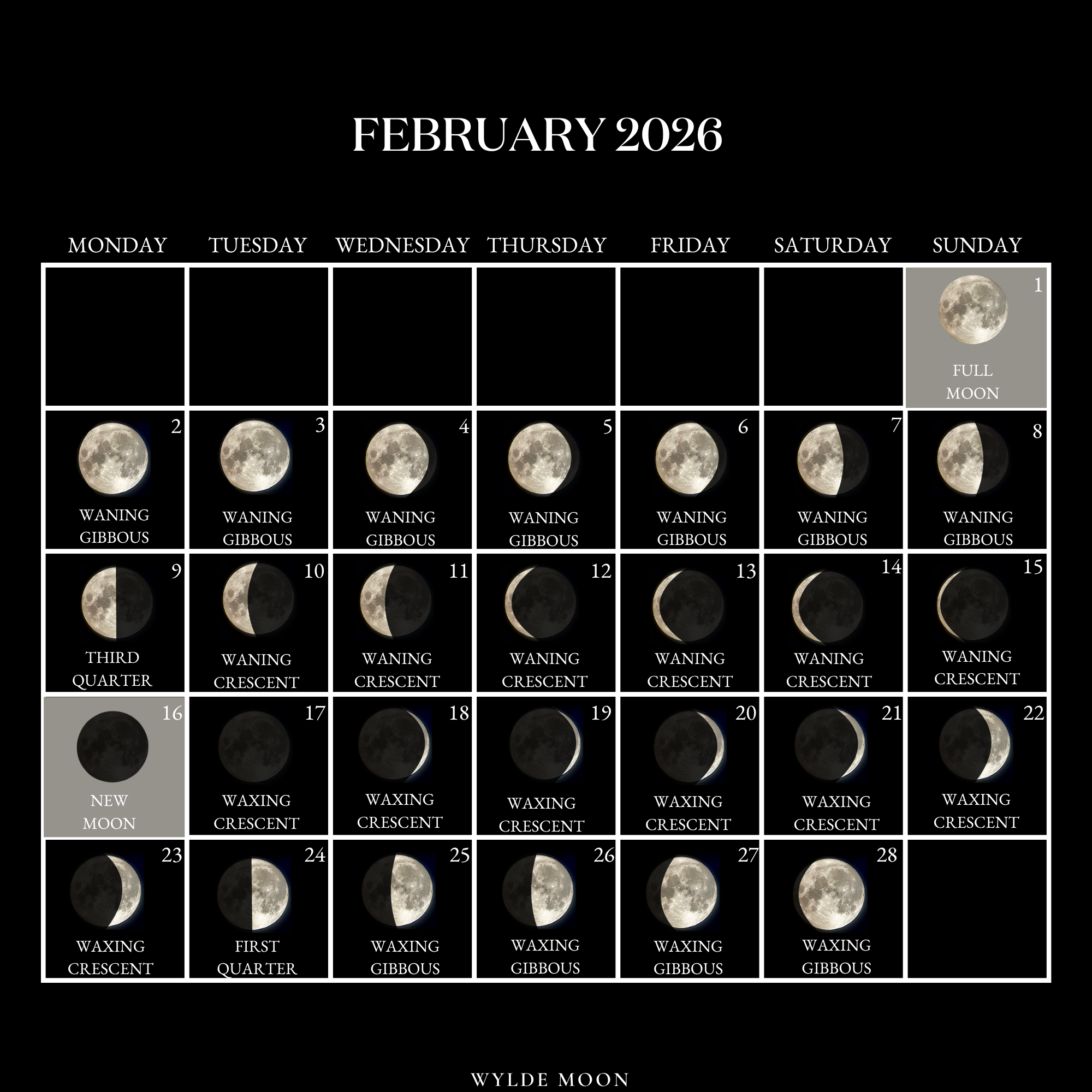
Your Ultimate Guide to the February 2026 Full Moon: The Snow Moon & Exact EST Times
Ever find yourself gazing up at the night sky, wondering exactly when that luminous orb will reach its peak? For February 2026, the cosmic spotlight shines on the much-anticipated Snow Moon. If you’re in the United States, or planning your lunar observations based on Eastern Standard Time, you’re in for a treat.
Let’s cut right to the chase: The Full Moon in February 2026, affectionately known as the Snow Moon, will reach its brightest moment, or peak illumination, on Sunday, February 1, 2026, at precisely 5:09 PM EST (Eastern Standard Time). This isn’t just a date and time; it’s an invitation to connect with ancient rhythms and witness a truly magnificent natural spectacle.
But what does 5:09 PM EST mean for those of us scattered across different time zones in the vast US landscape? And what’s the story behind the ‘Snow Moon’ anyway? Grab a warm drink, because we’re about to dive deep into everything you need to know to truly appreciate this winter lunar marvel.
When is the February 2026 Full Moon? The Exact Moment
For those eager to mark their calendars, here’s the definitive answer you’ve been searching for:
The February 2026 Full Moon will occur on:
Date: Sunday, February 1, 2026
Time of Peak Illumination (EST): 5:09 PM Eastern Standard Time (EST)
Traditional Name: The Snow Moon
This exact moment of peak illumination signifies when the Moon is directly opposite the Sun in its orbit, appearing completely full from Earth. While it will look full to the naked eye for a day or so on either side of this precise time, February 1st at 5:09 PM EST is the absolute peak for its majestic glow. You’ll want to step outside shortly after sunset on February 1st to catch it rising beautifully in the eastern sky.
Decoding the Time: Full Moon February 2026 Across US Time Zones
Understanding astronomical events often means grappling with time zones. Since the peak illumination is defined in Eastern Standard Time (EST), it’s crucial to know how this translates to other parts of the United States. A single moment in space translates differently on the clock face depending on your geographical location.
Keep in mind that February is typically a month without Daylight Saving Time in most of the US, so we’re dealing with standard time zones. Here’s a clear breakdown for the major US time zones:
| Time Zone |
Full Moon Peak Time (Local) |
UTC Offset |
| Eastern Standard Time (EST) |
Sunday, February 1, 2026, 5:09 PM |
UTC-5 |
| Central Standard Time (CST) |
Sunday, February 1, 2026, 4:09 PM |
UTC-6 |
| Mountain Standard Time (MST) |
Sunday, February 1, 2026, 3:09 PM |
UTC-7 |
| Pacific Standard Time (PST) |
Sunday, February 1, 2026, 2:09 PM |
UTC-8 |
| Alaska Standard Time (AKST) |
Sunday, February 1, 2026, 1:09 PM |
UTC-9 |
| Hawaii Standard Time (HST) |
Sunday, February 1, 2026, 12:09 PM |
UTC-10 |
Understanding Your Local Viewing Window
While the peak illumination time is fixed, the best time to observe the full moon will still be after sunset in your local area. For those in EST, the moon will already be high enough to appreciate the moment it reaches its fullest. For observers further west, say in PST, the moon will actually reach its peak illumination while the sun is still up. This means you’ll need to wait until after local sunset to see the ‘fullest’ moon possible, even if the precise peak has technically passed.
Don’t fret if you miss the exact minute! The moon will appear virtually full to the casual observer for about 24 hours before and after the peak. So, gazing up on the evening of January 31st or the evening of February 1st will still offer a breathtaking view.
The Snow Moon: Unpacking February’s Full Moon Name
Every full moon carries a traditional name, often rooted in the natural cycles and cultural histories of indigenous peoples. February’s full moon is famously known as the Snow Moon, and its name perfectly encapsulates the harsh, often snow-laden conditions of mid-winter in many parts of the Northern Hemisphere.
Origins of the Snow Moon Name
The name ‘Snow Moon’ is primarily attributed to Native American tribes, particularly those from the northeastern United States. February was historically the month of the heaviest snowfall, making hunting difficult and often leaving communities isolated. Thus, the moon became a natural marker of this challenging, snow-covered period.
- Abundance of Snow: The most direct and obvious reason. February sees some of the year’s deepest snows.
- Hunting Challenges: Deep snow made hunting and foraging incredibly difficult, leading to food scarcity for many tribes.
- Survival & Reflection: It was a time for inward focus, conservation of resources, and enduring the cold.
Alternative Names from Around the World
While ‘Snow Moon’ is widely recognized, other cultures have their own evocative names for the February full moon, reflecting their unique environments and experiences during this time of year:
| Culture / Origin |
Alternative Name |
Meaning / Context |
| Cherokee |
Bone Moon |
Signifying scarcity; people often chewed on bone marrow for sustenance. |
| Choctaw |
Hunger Moon |
Echoes the difficulty of finding food during winter. |
| Celtic |
Storm Moon / Chaste Moon |
Reflecting wild weather or a time of purification. |
| Medieval English |
Quickening Moon |
Perhaps referring to the first signs of life returning or the quickening of sap. |
| Hindu |
Magha Purnima |
A sacred day for purification, rituals, and bathing in holy rivers. |
| Chinese |
New Year Moon / Budding Moon |
Often coincides with Chinese New Year or the first whispers of spring. |
These names remind us that while the sky spectacle is universal, our human connection to it is deeply personal and cultural, shaped by our environment and history.
How to Best Experience the February 2026 Snow Moon
Witnessing a full moon is more than just glancing up; it can be an intentional, reflective experience. The Snow Moon, with its powerful symbolism of endurance and hope, offers a unique opportunity for contemplation.
Practical Viewing Tips
To maximize your enjoyment of the February 2026 Snow Moon:
- Check Local Sunset Time: The most dramatic views often occur shortly after sunset when the moon is low on the horizon, appearing larger and often tinted with warm hues due to atmospheric scattering (the ‘Moon Illusion’).
- Find an Unobstructed View: Seek out a location away from tall buildings or dense trees. A clear view to the east (where the moon will rise) is ideal for evening observation.
- Escape Light Pollution: While the full moon is bright enough to cut through some light pollution, a darker sky will enhance the experience, allowing you to see more stars around it.
- Bundle Up: It’s February! Dress warmly in layers, especially if you plan to spend more than a few minutes outside. A warm beverage can also enhance the experience.
- Bring Binoculars (Optional): While beautiful with the naked eye, binoculars will reveal the Moon’s craters and seas in stunning detail. You might be surprised at the textures you can see even on a full moon.
Capturing the Snow Moon: Photography Tips
Want to photograph the February 2026 Full Moon? It’s a rewarding challenge!
- Use a Tripod: Essential for sharp images, especially with longer exposures.
- Manual Settings: Put your camera in manual mode. Start with a relatively fast shutter speed (e.g., 1/125 to 1/250 sec), a low ISO (100-400), and a closed aperture (f/8 to f/11) to avoid overexposure.
- Telephoto Lens: A longer lens (200mm or more) will make the moon appear larger in your frame.
- Focus Manually: Autofocus can struggle with the moon. Switch to manual focus and zoom in on the moon via Live View to get sharp detail.
- Bracket Your Shots: Take multiple exposures at different settings to ensure you capture the details without blowing out the highlights.
- Include Foreground Interest: A lone tree, a silhouette of a building, or a distant landscape can add context and scale to your moon photos.
Beyond the Visual: Reflective Practices
The full moon has long been a symbol of completion, illumination, and release. Consider these practices:
- Moonlight Walk: A peaceful stroll under the moon’s glow can be meditative.
- Journaling: Reflect on what you’ve accomplished since the last new moon, or what you want to release and let go of.
- Set Intentions: While new moons are traditionally for setting new intentions, full moons are perfect for affirming progress and celebrating manifestation.
The Science Behind the Full Moon: What’s Happening Up There?
The full moon is a familiar sight, but the celestial mechanics behind it are fascinating. It’s not just a big, bright circle in the sky; it’s a precise alignment of Earth, Moon, and Sun.
Lunar Phases 101
The Moon doesn’t generate its own light; we see it because it reflects sunlight. As the Moon orbits Earth, the amount of its sunlit side that is visible to us changes, creating the different lunar phases:
- New Moon: The Moon is between the Earth and the Sun; its sunlit side faces away from us, making it invisible.
- Waxing Crescent, First Quarter, Waxing Gibbous: The illuminated portion we see grows larger.
- Full Moon: The Earth is between the Sun and the Moon, allowing the entire face of the Moon to be illuminated by the Sun from our perspective.
- Waning Gibbous, Last Quarter, Waning Crescent: The illuminated portion we see shrinks.
Why a ‘Peak Illumination’ Time?
You might wonder why we specify an exact minute for the full moon if it looks full for days. This ‘peak illumination’ refers to the precise instant when the ecliptic longitude of the Moon and the Sun differ by exactly 180 degrees. At this moment, the Moon’s face is 100% illuminated as seen from Earth (assuming no atmospheric obstruction). While our eyes can’t discern the subtle difference between 99.9% and 100% illumination, this astronomical alignment is a real, measurable point in time.
It’s also why a full moon often heralds a lunar eclipse if the alignment is perfect enough for the Earth’s shadow to fall on the Moon. However, the February 2026 Snow Moon is not expected to coincide with a lunar eclipse, offering a clear, bright view.
February 2026: A Month for Stargazers (Beyond the Moon)
While the Snow Moon will undoubtedly dominate the sky on February 1st, the rest of February 2026 still holds potential for stargazers. Winter nights, though cold, often boast crisp, clear skies, perfect for viewing distant stars and planets.
- Planetary Sightings: Keep an eye out for any bright planets visible in the morning or evening skies throughout February. Venus, Mars, Jupiter, and Saturn are often reliable targets, shifting their positions from month to month. Check reliable astronomy apps or websites closer to the date for precise conjunctions or visibility windows.
- Winter Constellations: February is prime time for viewing iconic winter constellations like Orion the Hunter, Canis Major (with Sirius, the brightest star in the night sky), Taurus the Bull, and Gemini the Twins. These are easily recognizable even from moderately light-polluted areas.
- Deep Sky Objects: If you have binoculars or a small telescope, the Orion Nebula (M42) is a stunning star-forming region visible beneath Orion’s belt, and the Pleiades star cluster (M45) in Taurus is a beautiful open cluster.
Remember, the full moon’s intense brightness can wash out fainter stars for a few nights around its peak. So, plan your deep-sky observations for the weeks surrounding the full moon, perhaps during the new moon phase (around February 15-16, 2026) when the sky is darkest.
Plan Your Lunar Calendar for 2026
The February 2026 Snow Moon is just one of many celestial events waiting for us throughout the year. Each full moon has its own unique character, name, and timing, reflecting the continuous dance of our solar system.
By understanding and appreciating these lunar cycles, we can cultivate a deeper connection to the natural world and the grand cosmic ballet unfolding above us every single night. So, mark down February 1, 2026, at 5:09 PM EST, but don’t stop there. Keep looking up, keep learning, and let the wonders of the night sky inspire you throughout 2026.
Whether you’re planning a photography session, a meditative moment, or simply want to know when to glance skyward, you’re now equipped with the precise information to make the most of the magnificent February 2026 Snow Moon. Clear skies!
Frequently Asked Questions
When is the Full Moon in February 2026?
The Full Moon in February 2026, known as the Snow Moon, will reach its peak illumination on Sunday, February 1, 2026, at precisely 5:09 PM EST (Eastern Standard Time).
What is the traditional name for the February Full Moon?
The traditional name for the February Full Moon is the ‘Snow Moon.’ This name originates from Native American traditions, reflecting the typically heavy snowfall and challenging hunting conditions of mid-winter.
Will the February 2026 Full Moon be visible across all US time zones?
Yes, the February 2026 Full Moon will be visible across all US time zones. While the peak illumination occurs at a single moment in time (5:09 PM EST), the local clock time will vary. For example, it will be 4:09 PM CST, 3:09 PM MST, and 2:09 PM PST on February 1st.
Is Daylight Saving Time a factor for the February 2026 Full Moon?
No, Daylight Saving Time (DST) will not be a factor for the February 2026 Full Moon. February is typically observed under Standard Time across the United States, meaning the times provided are based on EST, CST, MST, and PST, not EDT, CDT, etc.
How long will the February 2026 Full Moon appear ‘full’?
While the absolute peak illumination is a precise moment, the Moon will appear visually full to the casual observer for approximately 24 hours before and after February 1st, 5:09 PM EST. This gives you ample opportunity to enjoy its splendor.
Are there any specific tips for viewing the Snow Moon?
To best view the Snow Moon, check your local sunset time and head outside shortly after. Find a location with a clear view of the eastern horizon, away from excessive light pollution. Dress warmly, and consider using binoculars for enhanced detail. The ‘Moon Illusion’ often makes it appear larger when low on the horizon.