Malayalam Calendar 2026 February: Your Essential Guide to Tithi, Nakshatra & Auspicious Timings
Are you a Keralite in the USA striving to maintain a connection with your cultural roots? Or perhaps you’re simply fascinated by the intricate traditions of the Malayalam calendar? If you’re looking to understand February 2026, especially its critical Tithis, you’ve landed in the right place. This guide isn’t just a list of dates; it’s your decoder for navigating the cosmic rhythms and cultural nuances of the Malayalam calendar from wherever you are in the world.
Table of Contents
- Malayalam Calendar 2026 February: Your Essential Guide to Tithi, Nakshatra & Auspicious Timings
- Decoding the Malayalam Calendar: A Quick Overview
- What Exactly is a ‘Tithi’? Understanding Cosmic Rhythms
- The Rhythm of the Moon: Shukla Paksha and Krishna Paksha
- February 2026: Malayalam Dates, Tithis & Key Astrological Data
- Beyond Tithi: Important Nakshatras in February 2026
- Key Festivals and Auspicious Days in February 2026
- Navigating Auspicious Timings: Rahu Kalam and Gulika Kalam in February 2026
- How Location and Time Zones Impact Your Malayalam Calendar Calculations (Especially for the USA)
- Planning Your Month: Practical Applications of the Malayalam Calendar
Many calendars offer a glimpse, but few explain the ‘why’ and ‘how’. We’ll dive deep into Tithis, Nakshatras, and significant cultural events, empowering you to plan your month with purpose and spiritual awareness. Let’s make February 2026 more than just another month on the Gregorian calendar.
Decoding the Malayalam Calendar: A Quick Overview
The Malayalam calendar, also known as Kollavarsham, is a solar calendar predominantly used in Kerala, India. Unlike the Gregorian calendar, which is purely solar, or the many lunisolar Hindu calendars, Kollavarsham has a unique history, believed to have originated in 825 CE. Its months are named after the constellations through which the sun passes.
For February 2026, we’ll primarily be observing the transition from the Malayalam month of Makaram to Kumbham. Understanding this calendar isn’t just about dates; it’s about connecting with an ancient system that governs festivals, agricultural cycles, and daily spiritual practices for millions.

What Exactly is a ‘Tithi’? Understanding Cosmic Rhythms
If you’re delving into the Malayalam calendar, the concept of Tithi is fundamental. In Vedic astrology and traditional Indian calendars, a Tithi is a lunar day, defined by the time it takes for the longitudinal angle between the Sun and the Moon to increase by 12 degrees. Simple enough, right? Not quite, because unlike a fixed 24-hour Gregorian day, a Tithi can vary in length, sometimes shorter, sometimes longer.
The Rhythm of the Moon: Shukla Paksha and Krishna Paksha
There are 30 Tithis in a lunar month, divided into two fortnights:
- Shukla Paksha (Waxing Moon): The first 15 Tithis, from the New Moon (Amavasya) to the Full Moon (Purnima). This is considered the bright half, often seen as auspicious for new beginnings and growth.
- Krishna Paksha (Waning Moon): The next 15 Tithis, from the Full Moon to the New Moon. This is the dark half, often associated with introspection, letting go, and spiritual practices.
Each Tithi carries its own unique energy and significance, influencing everything from festival dates to ideal times for ceremonies. Knowing the Tithi on any given day can help you align your activities with the cosmos.
February 2026: Malayalam Dates, Tithis & Key Astrological Data
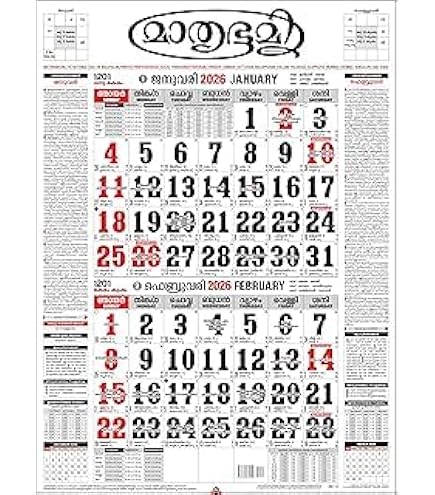
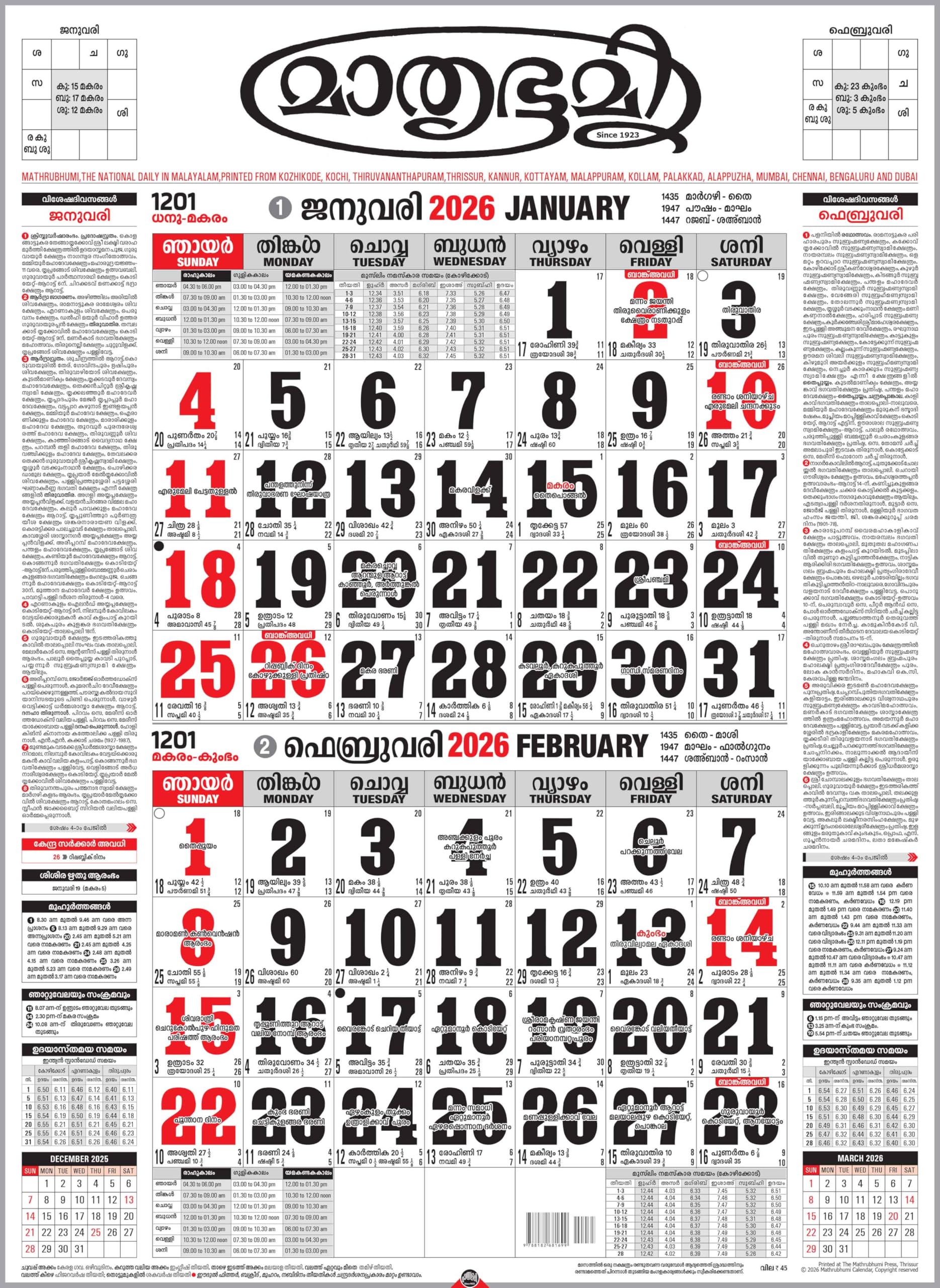
Here’s your comprehensive guide to February 2026, incorporating English dates, corresponding Malayalam dates (Kollavarsham), the dominant Tithi, Nakshatra, and important events. This table is designed to give you a detailed, day-by-day snapshot, crucial for planning and spiritual observance.
| English Date | Day | Malayalam Date (Kollavarsham) | Tithi (End Time IST) | Nakshatra (End Time IST) | Important Events/Notes |
|---|---|---|---|---|---|
| Feb 1 | Sunday | Makaram 18 | Trayodashi (18:30) | Purva Phalguni (23:15) | Pradosham Vrat |
| Feb 2 | Monday | Makaram 19 | Chaturdashi (14:45) | Uttara Phalguni (19:50) | |
| Feb 3 | Tuesday | Makaram 20 | Pournami (09:10) | Hasta (15:20) | Purnima / Full Moon |
| Feb 4 | Wednesday | Makaram 21 | Pratipada (03:55+) | Chitra (10:15) | |
| Feb 5 | Thursday | Makaram 22 | Dwitiya (23:15) | Swati (04:40+) | |
| Feb 6 | Friday | Makaram 23 | Tritiya (19:20) | Vishakha (22:50) | |
| Feb 7 | Saturday | Makaram 24 | Chaturthi (16:10) | Anuradha (19:55) | Sankashti Chaturthi |
| Feb 8 | Sunday | Makaram 25 | Panchami (13:50) | Jyeshta (17:50) | |
| Feb 9 | Monday | Makaram 26 | Shashthi (12:30) | Moola (17:00) | |
| Feb 10 | Tuesday | Makaram 27 | Saptami (12:00) | Purva Ashadha (16:45) | |
| Feb 11 | Wednesday | Makaram 28 | Ashtami (12:20) | Uttara Ashadha (17:05) | Kalashtami |
| Feb 12 | Thursday | Makaram 29 | Navami (13:25) | Shravana (17:50) | |
| Feb 13 | Friday | Makaram 30 | Dashami (15:00) | Dhanishta (18:55) | Kumbham Sankramam |
| Feb 14 | Saturday | Kumbham 1 | Ekadashi (17:00) | Shatabhisha (20:10) | Vijaya Ekadashi |
| Feb 15 | Sunday | Kumbham 2 | Dwadashi (19:25) | Purva Bhadrapada (21:30) | Pradosham Vrat |
| Feb 16 | Monday | Kumbham 3 | Trayodashi (21:40) | Uttara Bhadrapada (22:45) | |
| Feb 17 | Tuesday | Kumbham 4 | Chaturdashi (23:45) | Revati (23:40) | Maha Shivaratri Eve |
| Feb 18 | Wednesday | Kumbham 5 | Amavasya (25:20+) | Aswathi (24:20+) | Amavasya / New Moon |
| Feb 19 | Thursday | Kumbham 6 | Pratipada (26:15+) | Bharani (24:40+) | |
| Feb 20 | Friday | Kumbham 7 | Dwitiya (26:30+) | Karthika (24:45+) | |
| Feb 21 | Saturday | Kumbham 8 | Tritiya (26:15+) | Rohini (24:35+) | |
| Feb 22 | Sunday | Kumbham 9 | Chaturthi (25:35+) | Mrigashirsha (24:10+) | |
| Feb 23 | Monday | Kumbham 10 | Panchami (24:30+) | Ardra (23:35) | |
| Feb 24 | Tuesday | Kumbham 11 | Shashthi (23:10) | Punarvasu (22:50) | |
| Feb 25 | Wednesday | Kumbham 12 | Saptami (21:35) | Pushya (21:55) | |
| Feb 26 | Thursday | Kumbham 13 | Ashtami (19:50) | Ashlesha (20:50) | |
| Feb 27 | Friday | Kumbham 14 | Navami (17:55) | Magha (19:35) | |
| Feb 28 | Saturday | Kumbham 15 | Dashami (15:55) | Purva Phalguni (18:10) |
*All Tithi and Nakshatra end times are approximate and based on Indian Standard Time (IST) for a general reference. For precise local timings in the USA, consider consulting a localized Panchangam or an astrologer. The ‘+’ symbol indicates the Tithi/Nakshatra extends into the next calendar day.

Beyond Tithi: Important Nakshatras in February 2026
While Tithis are crucial, Nakshatras (lunar constellations) add another layer of depth to the Malayalam calendar. There are 27 Nakshatras, each spanning 13 degrees and 20 minutes of the zodiac, and each possessing unique characteristics, energies, and mythological significance. They are vital for determining auspicious timings for marriages, housewarmings, or starting new ventures.
In February 2026, you’ll observe a variety of Nakshatras cycling through. For instance, you’ll see Aswathi (signifying new beginnings), Bharani (associated with discipline), Karthika (linked to determination), and Mrigashirsha (symbolizing search and fulfillment). Knowing which Nakshatra prevails on a given day can provide insights into the day’s general energetic quality and guide your actions.
Astrologers often combine Tithi and Nakshatra information, along with other planetary positions, to provide highly personalized guidance. For those in the diaspora, understanding these elements allows for a deeper connection to traditional practices, even if local festivals aren’t celebrated.
Key Festivals and Auspicious Days in February 2026
February 2026 holds several important days within the Malayalam calendar tradition:
- Pradosham Vrat (Feb 1 & Feb 15): Observed by devotees of Lord Shiva. This auspicious fast and prayer occur on the 13th Tithi (Trayodashi) of both the Shukla and Krishna Paksha. It’s believed to be a potent time for seeking blessings and purification.
- Purnima / Full Moon (Feb 3): A day of heightened spiritual energy. Many observe fasts, perform pujas, and engage in charitable activities.
- Sankashti Chaturthi (Feb 7): Dedicated to Lord Ganesha, observed on the Chaturthi (4th Tithi) of the Krishna Paksha. Devotees fast and pray for the removal of obstacles.
- Kumbham Sankramam (Feb 13): This marks the sun’s transition from the zodiac sign of Makaram (Capricorn) to Kumbham (Aquarius), heralding the start of the Malayalam month of Kumbham. It’s an astrological shift with cultural significance.
- Vijaya Ekadashi (Feb 14): A significant fasting day dedicated to Lord Vishnu, observed on the 11th Tithi (Ekadashi) of the Krishna Paksha. The term ‘Vijaya’ means victory, and it’s believed that fasting on this day helps achieve success in endeavors.
- Amavasya / New Moon (Feb 18): A day often associated with ancestral rites (Pitru Tarpanam) and contemplation. It marks the beginning of the Shukla Paksha.
These dates are more than just calendar entries; they are invitations to participate in centuries-old traditions, to reflect, celebrate, and connect with a spiritual lineage.
Navigating Auspicious Timings: Rahu Kalam and Gulika Kalam in February 2026
For those who follow traditional timing principles, understanding Rahu Kalam and Gulika Kalam is essential. These are specific periods each day considered inauspicious for starting new ventures, travel, or important ceremonies. While the Tithis and Nakshatras guide auspiciousness, these periods are generally avoided regardless of the prevailing Tithi.
- Rahu Kalam: Associated with the shadow planet Rahu, this period is considered unfavorable. Its timing varies daily and depends on the sunrise and sunset times for a specific location.
- Gulika Kalam: Linked to Gulika, another sub-planet, this period is also deemed inauspicious for beginning new activities. Like Rahu Kalam, its timing is local and shifts daily.
While we can’t provide exact daily timings without a specific US location, the general rule of thumb is to be aware that these periods exist and, if planning something significant, to consult a local panchanga or astrology app that can calculate them for your specific time zone. Most traditional calendars will mark these periods daily.
How Location and Time Zones Impact Your Malayalam Calendar Calculations (Especially for the USA)
This is arguably the most crucial point for Keralites residing in the United States. While the underlying astrological principles of Tithi and Nakshatra are universal, their precise start and end times are entirely dependent on your geographical location and local time zone.
Here’s why:
- Sunrise/Sunset Dependent: Many calendar elements, including the exact start of a Tithi or Nakshatra, and especially the timings of Rahu Kalam and Gulika Kalam, are calculated based on the local sunrise and sunset. This means a Tithi might start or end at a different clock time in New York compared to Kerala, or even compared to Los Angeles.
- Observing Festivals: A festival that falls on a particular Tithi might be observed on a different Gregorian calendar day in the USA than in India, simply because the Tithi may span a different part of the local day. For instance, if a Tithi ends just after midnight in India, it might end much earlier or later in the US, shifting the observance day.
- Drik Ganitham vs. Vakya Panchangam: Traditionally, there are two main systems for calculating the Hindu calendar: Vakya Panchangam (rule-based, older) and Drik Ganitham (astronomically precise). Most modern online calendars and apps use Drik Ganitham, which offers more accuracy for specific locations.
My advice for the US audience: Always cross-reference. Use the table provided here as a general guide, but for precise observance of fasts, rituals, or auspicious timings, consult a reliable online panchanga service or app that allows you to input your specific US city and state. This will give you the most accurate local timings for Tithi, Nakshatra, and other planetary positions.
Planning Your Month: Practical Applications of the Malayalam Calendar
So, you have all this information – Tithis, Nakshatras, festivals. How do you put it to practical use?
- Spiritual Observances: Use the Tithi information to plan your fasts (like Ekadashi or Pradosham) or specific pujas. Knowing the Tithi allows you to prepare mentally and physically.
- Personal Events: If you’re planning significant life events like a wedding, housewarming, or even starting a new business venture, consulting the Tithi and Nakshatra can help you choose an auspicious day, in conjunction with a trusted astrologer.
- Cultural Connection: For Keralites in the diaspora, simply being aware of the Malayalam date and the ongoing Tithi can be a powerful way to stay connected to your heritage and the rhythms of your ancestral land.
- Daily Awareness: Even for daily tasks, understanding the general ‘mood’ of a Tithi or Nakshatra can offer a subtle guide. For example, a ‘fierce’ Nakshatra might not be ideal for sensitive negotiations, while a ‘gentle’ one might be perfect for learning.
The Malayalam Calendar is a living, breathing system. Embracing its wisdom can bring a deeper sense of rhythm and purpose to your life, whether you’re in the heart of Kerala or across continents in the United States.
February 2026 offers a rich tapestry of astrological and cultural markers. By understanding the Malayalam Calendar, its unique Tithis, and accompanying Nakshatras, you’re not just reading a schedule; you’re engaging with a profound system of time and tradition. May this guide empower you to navigate your month with greater insight and connection.
Frequently Asked Questions
What is a Tithi in the Malayalam Calendar?
A Tithi is a lunar day in the traditional Indian calendar systems, including the Malayalam calendar. It is calculated based on the angular distance between the Sun and the Moon. Unlike a fixed 24-hour Gregorian day, a Tithi’s duration varies, influencing the timing of festivals and auspicious events.
How do Tithis affect daily life or festivals?
Each Tithi carries unique energies and is considered more or less auspicious for certain activities. Festivals and Vratams (fasts) are traditionally observed on specific Tithis. For example, Ekadashi is a Tithi designated for fasting for Lord Vishnu, and Chaturthi is dedicated to Lord Ganesha.
What is the Kollavarsham and how does it relate to February 2026?
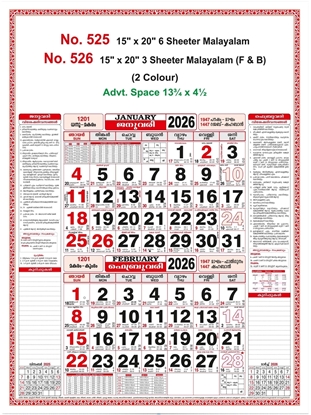
Kollavarsham is the traditional solar calendar used in Kerala. February 2026 will encompass parts of two Malayalam months: Makaram (mid-January to mid-February) and Kumbham (mid-February to mid-March). Knowing the Kollavarsham date provides cultural context and aligns with traditional observances.
Why are Tithi and Nakshatra end times given in IST (Indian Standard Time)?
Traditional calendar calculations are often rooted in Indian Standard Time (IST) as the primary reference. For accurate local timings in the USA, these IST times would need to be converted and adjusted based on your specific geographical location and time zone, as astrological phenomena are location-dependent.
Are there any major festivals in February 2026 according to the Malayalam Calendar?
Yes, February 2026 includes important observances such as Pradosham Vrat (twice), Purnima (Full Moon), Sankashti Chaturthi, Kumbham Sankramam (marking the new Malayalam month), and Vijaya Ekadashi. These dates are crucial for spiritual practices and cultural connection.
How can Keralites in the USA accurately follow the Malayalam Calendar?
To follow the Malayalam Calendar accurately in the USA, it’s recommended to use a reliable online panchanga service or a mobile application that allows you to input your specific US city and state. This will provide precise, localized timings for Tithi, Nakshatra, Rahu Kalam, and other important astrological data, adjusting for your local time zone and sunrise/sunset.