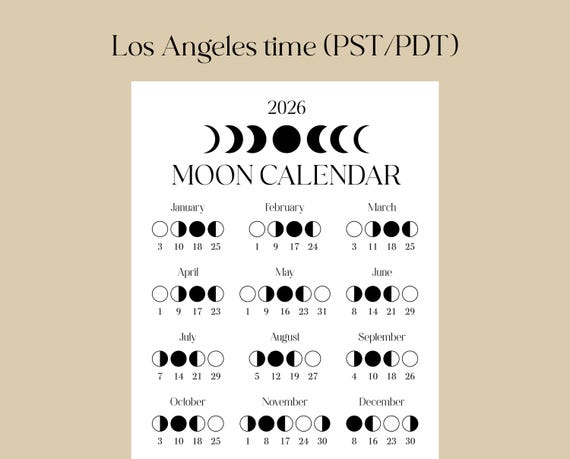
Your Definitive Guide to the New Moon in February 2026 (Pacific Time)
Are you looking for the exact moment the New Moon graces the sky (or, well, doesn’t grace the sky visually) in February 2026, specifically for those of us on Pacific Time? You’ve come to the right place.
Whether you’re an avid sky-watcher, a planner aligning with lunar cycles, or simply curious about celestial events, knowing the precise timing is key. And in February 2026, there’s an extra layer of cosmic drama: a rare Annular Solar Eclipse coinciding with the New Moon.
Forget generic calendars and confusing time conversions. We’re cutting straight to the chase to give you all the information you need, alongside a deeper dive into what this particular New Moon means for you, astronomically, astrologically, and spiritually.
Let’s pinpoint that moment.
The Exact Moment: New Moon February 2026 in Pacific Standard Time (PST)
Mark your calendars and set your alarms! The New Moon in February 2026 occurs at a precise moment for those observing in the Pacific Standard Time zone.
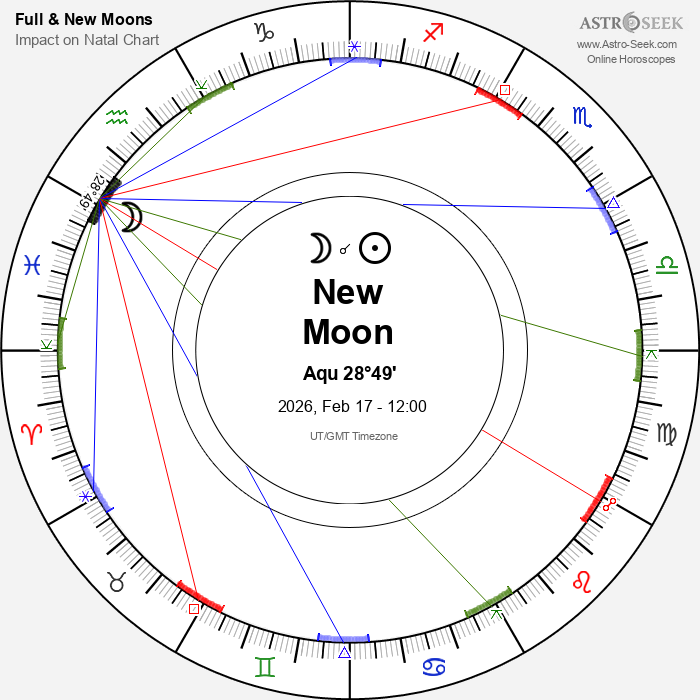
The New Moon will be on Tuesday, February 17, 2026, at 4:01 AM PST.
This is the exact instant when the Sun and Moon are conjunct in the sky, with the Moon appearing completely dark from Earth’s perspective. For our global friends, here’s how that translates to Coordinated Universal Time (UTC):
| Celestial Event |
Date (PST) |
Time (PST) |
Time (UTC) |
| New Moon |
February 17, 2026 |
4:01 AM PST |
12:01 PM UTC |
| Annular Solar Eclipse |
February 17, 2026 |
Approx. 4:13 AM PST |
Approx. 12:13 PM UTC |
Yes, you read that correctly! This New Moon is extra special because it coincides with an Annular Solar Eclipse. This means the Moon will be directly in front of the Sun, but not quite large enough to cover the Sun entirely, creating a dazzling "ring of fire" effect for those in the path of annularity.
What Exactly Is a New Moon? An Astronomical Perspective
Before we dive into the deeper meanings, let’s understand the science. A New Moon is more than just a date on a calendar; it’s a fundamental celestial alignment.
The Invisible Phase: Sun, Moon, and Earth Alignment
Astronomically, the New Moon marks the beginning of a new lunar cycle. It occurs when the Moon is positioned precisely between the Earth and the Sun. From our vantage point on Earth, the side of the Moon illuminated by the Sun is facing away from us, making the Moon appear completely dark or "new." It’s literally a fresh start in the lunar calendar.
Think of it as a cosmic hide-and-seek. The Moon is still there, moving through its orbit, but its sunlit face is turned away. Because it’s so close to the Sun in the sky, it rises and sets with the Sun, making it even harder to spot during daylight hours.
Why We Can’t See It (Usually)
During the New Moon phase, the Moon is essentially "lost" in the Sun’s glare. Even if it weren’t totally unilluminated from our perspective, the sheer brightness of the Sun during the day would make it impossible to see. At night, it’s just not reflecting any sunlight our way. This is why the New Moon is often called the "dark moon" or the "invisible moon."
However, there’s a fascinating exception: a solar eclipse. As mentioned, the February 2026 New Moon is one such rare occasion. When the alignment is perfect, the New Moon can briefly obscure the Sun, giving us an Annular Solar Eclipse. While we won’t see the Moon itself, its shadow falling on Earth will be a powerful testament to its presence.
Brief Mention of Its Gravitational Effects (Tides)
Even when invisible, the Moon’s gravitational pull is constantly at work. During the New Moon, the Sun and Moon are aligned, creating a combined gravitational force that results in the strongest tides of the month. These are known as "spring tides" (no, not related to the season, but derived from the German word "springen," meaning to spring forth or rise). So, while you might not see the New Moon, its influence is definitely felt in our oceans.
The Lunar Cycle in February 2026: A Full Month’s Overview
The New Moon is just one chapter in the Moon’s ongoing story. To fully appreciate February 17th, it helps to see it within the context of the entire lunar month. Here’s a look at the major moon phases for February 2026, all timed for Pacific Standard Time (PST).
Key Moon Phases for February 2026 (PST)
This table provides a comprehensive guide to all the significant lunar phases you can expect to observe throughout February 2026, helping you plan your month with celestial awareness.
| Date (PST) |
Moon Phase |
Time (PST) |
Description/Significance |
| February 2, 2026 |
Full Moon |
10:29 PM PST |
Illumination at its peak. Often a time for culmination, release, and celebration. |
| February 10, 2026 |
Last Quarter Moon |
10:48 AM PST |
Half of the Moon’s face is illuminated. A reflective phase for evaluation and letting go. |
| February 17, 2026 |
New Moon |
4:01 AM PST |
Moon is invisible, marking a fresh start. Ideal for setting intentions. Coincides with an Annular Solar Eclipse! |
| February 24, 2026 |
First Quarter Moon |
1:31 PM PST |
Half of the Moon’s face is illuminated, growing towards fullness. A time for action and overcoming challenges. |
The New Moon’s Deeper Meaning: More Than Just a Date
Beyond the scientific explanation, the New Moon carries significant weight in various spiritual, astrological, and cultural traditions. It’s not just an astronomical phenomenon; it’s a powerful symbol.
Astrological Significance: New Beginnings and Intentions
In astrology, the New Moon is universally recognized as a time of new beginnings, fresh starts, and planting seeds for the future. With the Sun and Moon aligned, their energies are unified, creating a potent moment for intention setting. It’s when you clarify what you want to manifest in the coming lunar cycle (the next 29.5 days).
- Reflection: A quiet period for inner thought and self-assessment.
- Vision Boarding: Ideal for creating or refining your vision for the future.
- Goal Setting: A prime time to establish new goals, habits, or projects.
- Release: Letting go of old patterns or energies that no longer serve you.
The specific zodiac sign the New Moon falls in (in February 2026, it will be in Pisces) will further color its astrological meaning, adding layers of intuition, compassion, and spiritual exploration to these themes of new beginnings.
Spiritual & Personal Reflection: A Time for Inner Work
Many spiritual traditions view the New Moon as a sacred period for introspection and renewal. Just as the Moon is dark and hidden, it invites us to turn inward, away from external distractions, and connect with our inner selves. It’s a time for:
- Meditation: Deepening your practice and finding clarity.
- Journaling: Documenting your desires, fears, and aspirations.
- Cleansing: Energetically clearing your space and mind.
- Quiet Contemplation: Allowing intuition to guide your next steps.
This New Moon, intensified by the solar eclipse, presents an even more profound opportunity for transformation and powerful shifts in perspective. Eclipses often act as cosmic wildcards, accelerating changes and revealing hidden truths.
Cultural Traditions: A Glimpse Across History
Across various cultures, the New Moon has held diverse significance:
- Islamic Calendar: The sighting of the thin crescent moon (the "new crescent" just after the astronomical New Moon) traditionally marks the beginning of each new month.
- Indigenous Cultures: Many indigenous communities across the globe observe and honor the New Moon with ceremonies, storytelling, and community gatherings, often linking it to agricultural cycles and spiritual renewal.
- Ancient Civilizations: From Babylonian to Egyptian cultures, lunar cycles were vital for calendrical systems, agricultural timing, and religious practices. The New Moon often symbolized rebirth and the cyclical nature of existence.
While modern life may have distanced many from direct lunar observation, the intrinsic connection to these rhythms remains a powerful thread in our collective human story.
Planning Around the New Moon: Practical Applications
Knowing when the New Moon occurs isn’t just for astronomers or astrologers. You can integrate this knowledge into your daily life in meaningful ways, especially with the unique energy of the February 2026 New Moon/Eclipse.
Setting Intentions and Goals
This is arguably the most popular practical application of the New Moon. Take advantage of the energy of new beginnings:
- Write it Down: Clearly articulate your goals and intentions for the coming month. Be specific and positive.
- Visualize: Spend time imagining yourself achieving these goals. Feel the emotions associated with success.
- Create a Ritual: Light a candle, meditate, or simply spend quiet time focusing on your intentions. This creates a powerful energetic anchor.
Given the Annular Solar Eclipse, this is an amplified moment for manifesting. The eclipse energy suggests that these intentions could lead to significant, perhaps unexpected, developments.
Gardening by the Moon (Biodynamic Principles)
For those with a green thumb, biodynamic gardening practices often align planting and harvesting with lunar phases. The New Moon is considered a favorable time for:
- Planting Root Crops: Carrots, potatoes, radishes, and other underground vegetables are believed to thrive when planted during the dark moon phase.
- Starting Seeds: Many gardeners choose the New Moon for germinating seeds, believing the burgeoning energy supports strong growth.
- Soil Preparation: It’s also a good time for turning soil, composting, and enriching your garden beds.
While scientific evidence for biodynamic gardening is still debated, many practitioners swear by its effectiveness, claiming healthier plants and more abundant yields.
Observing the Night Sky (or lack thereof)
Paradoxically, the New Moon, by its very nature, is the best time for observing everything *else* in the night sky! With no lunar glare, the skies are at their darkest, offering unparalleled views of:
- Distant Galaxies: The Milky Way, Andromeda, and other celestial marvels become clearer.
- Nebulae and Star Clusters: These faint, diffuse objects shine brighter without moonlight.
- Meteor Showers: If any are active around this time, a New Moon provides ideal viewing conditions.
So, while you won’t see the Moon, you’ll have a fantastic opportunity to see beyond it. However, for the February 2026 New Moon, the focus for observers will undoubtedly be on the Solar Eclipse itself, requiring proper eye protection and specific viewing techniques.
Understanding Time Zones: Pacific Standard Time (PST) vs. Other Zones
The keyword specifically asked for Pacific Time, and we’ve delivered that precise information. But it’s always helpful to understand why this distinction matters and how it relates to other time zones.
Why Pacific Time Matters for Your Planning
For anyone living in the Pacific Time Zone (PST), knowing the exact local time of the New Moon is crucial for personal planning, observation, and coordinating with others. Countries and regions observing PST include:
- Most of California, Oregon, and Washington in the USA.
- Parts of Nevada and Idaho in the USA.
- British Columbia and Yukon in Canada.
- Baja California in Mexico.
Since February 2026 falls within the period when Daylight Saving Time is not observed (it typically starts in March), the Pacific Time Zone will be on Pacific Standard Time (PST), which is 8 hours behind Coordinated Universal Time (UTC-8).
Quick Conversion Table for Major US Time Zones
To help you understand how the February 2026 New Moon time translates across the continental United States, here’s a quick conversion:
| Time Zone |
Offset from UTC |
New Moon Time (February 17, 2026) |
| Pacific Standard Time (PST) |
UTC-8 |
4:01 AM PST |
| Mountain Standard Time (MST) |
UTC-7 |
5:01 AM MST |
| Central Standard Time (CST) |
UTC-6 |
6:01 AM CST |
| Eastern Standard Time (EST) |
UTC-5 |
7:01 AM EST |
Beyond February 2026: Looking Ahead to Future New Moons
While our focus here is on the specific New Moon in February 2026, understanding lunar cycles is a continuous journey. Once you start paying attention, you’ll find yourself more attuned to these natural rhythms.
How to Track Moon Phases Yourself
Keeping track of moon phases is easier than ever:
- Online Calendars: Websites and apps dedicated to astronomy and timekeeping (like TimeAndDate.com, TheSkyLive.com, or Griffith Observatory’s resources) provide accurate lunar phase calendars for any year and location.
- Astrology Apps: Many astrology-focused applications offer moon phase tracking alongside their astrological insights.
- Your Own Observation: Simply looking up at the night sky (when the Moon is visible) and noting its shape is a wonderful way to connect directly with the lunar cycle.
The Annular Solar Eclipse of February 17, 2026
This particular New Moon is exceptionally significant due to the Annular Solar Eclipse. An annular eclipse occurs when the Moon is too far from Earth to completely obscure the Sun, leaving a visible "ring of fire" around the Moon’s silhouette. This phenomenon is a powerful reminder of the intricate dance of celestial bodies.
It’s crucial to remember that observing any solar eclipse requires specialized eye protection. Never look directly at the Sun, even when partially eclipsed, without certified solar filters, as it can cause permanent eye damage. Keep an eye on astronomical news sources closer to the date for detailed viewing paths and safety guidelines.
Embrace the Cosmic Rhythm
The New Moon in February 2026, occurring on Tuesday, February 17th, at 4:01 AM PST, is more than just a fleeting moment in time. It’s an astronomical marvel, a potent astrological alignment, and a profound opportunity for personal reflection and new beginnings, especially with the added intensity of an Annular Solar Eclipse.
By understanding its timing and significance, you can consciously align yourself with these natural rhythms, using this powerful energy to plant seeds for your future, set clear intentions, and deepen your connection to the cosmos. So, take a moment on that early February morning (or whenever it feels right for you), turn inward, and embrace the fresh start that the universe offers.
Frequently Asked Questions
What is the exact date and time of the New Moon in February 2026 for Pacific Time?
The New Moon in February 2026 occurs on Tuesday, February 17, 2026, at 4:01 AM Pacific Standard Time (PST). This also coincides with an Annular Solar Eclipse.
Can you see the New Moon in the sky?
Generally, no. The New Moon appears invisible because the side of the Moon illuminated by the Sun is facing away from Earth. It rises and sets with the Sun, making it even harder to spot. However, during a solar eclipse (like the one in February 2026), the Moon briefly obscures the Sun, allowing us to perceive its silhouette.
What is the astrological meaning of a New Moon?
In astrology, the New Moon symbolizes new beginnings, fresh starts, and planting seeds for the future. It’s considered a potent time for setting intentions, clarifying goals, and releasing old patterns to make way for new growth.
How does the New Moon affect tides?
During a New Moon, the Sun and Moon are aligned, combining their gravitational forces. This alignment creates stronger-than-average tides, known as ‘spring tides’ (derived from ‘spring forth’ or ‘rise’), leading to higher high tides and lower low tides.
What’s the difference between PST and PDT?
PST stands for Pacific Standard Time, which is UTC-8. PDT stands for Pacific Daylight Time, which is UTC-7 and is observed during Daylight Saving Time. Since February 2026 falls outside the Daylight Saving Time period, the New Moon will occur in PST.
Are there any eclipses during February 2026?
Yes, the New Moon on February 17, 2026, coincides with an Annular Solar Eclipse. This means the Moon will pass directly in front of the Sun, but will be too far away to completely cover it, creating a visible ‘ring of fire’ for observers in the path of annularity.
How long does the New Moon phase last?
The precise moment of the New Moon is instantaneous. However, the New Moon *phase*, during which the Moon appears very thin or invisible, typically lasts for about 1 to 3 days, leading into the Waxing Crescent phase.