Your Essential Guide to the Urdu Calendar 2026 February (PDF Ready)
Are you looking for the precise dates, important events, and cultural nuances of the Urdu calendar for February 2026? Whether you’re planning for religious observances, family gatherings, or simply staying connected to your heritage, an accurate Urdu calendar is invaluable. As someone navigating the complexities of different calendar systems, I understand the need for clarity and reliability, especially when it comes to critical dates like the start of Ramadan.
Table of Contents
- Your Essential Guide to the Urdu Calendar 2026 February (PDF Ready)
- February 2026: Gregorian and Hijri Dates at a Glance (Urdu Context)
- Navigating Important Islamic Dates in February 2026
- Sha’ban 1447 AH: A Month of Preparation
- The Anticipation of Ramadan 1447 AH
- The Unique Value of an Urdu Calendar for 2026
- Beyond Dates: Cultural and Linguistic Connection
- Seamless Integration with Daily Life
- Understanding the Islamic Calendar Systems: Why Dates Might Differ
- Ummul Qura vs. Global Crescent Moon vs. Local Sighting
- What This Means for February 2026 Dates
- Accessing and Utilizing Your Urdu Calendar 2026 February PDF
- Finding Reliable PDF Sources
- Best Practices for Using Your Digital Calendar
- Final Thoughts: Embracing the Rhythm of the Islamic Year
Many online resources offer fragments of information, but few provide a truly comprehensive guide tailored for those who prefer the Urdu context and are searching for a ready-to-use resource for February 2026. My goal here is to bridge that gap, giving you not just the dates, but also the understanding behind them, and how to confidently access a reliable PDF version.
You’re about to discover a detailed breakdown of February 2026, highlighting key Islamic events, explaining the various calendar systems, and guiding you on how to find and utilize your Urdu calendar effectively. Let’s dive in and ensure you’re fully prepared for the month ahead.
February 2026: Gregorian and Hijri Dates at a Glance (Urdu Context)
Let’s get straight to the heart of the matter. February 2026 is a significant month, primarily falling within the Islamic month of Sha’ban 1447 AH, with the highly anticipated start of Ramadan 1447 AH expected towards the end of the month. Below, you’ll find a clear, day-by-day mapping of the Gregorian dates to their corresponding Hijri dates, along with any notable Islamic observances.
This table is designed to be your quick reference for planning and understanding the flow of the month. Remember, while these dates are widely accepted, slight variations can occur based on moon sighting, which we’ll discuss in more detail shortly.

| Day | Gregorian Date | Hijri Date (1447 AH) | Key Islamic Event/Note |
|---|---|---|---|
| Sunday | February 1, 2026 | 13 Sha’ban | Ayyamul Bidh Fast (Day 1) |
| Monday | February 2, 2026 | 14 Sha’ban | Ayyamul Bidh Fast (Day 2) |
| Tuesday | February 3, 2026 | 15 Sha’ban | Ayyamul Bidh Fast (Day 3), Shab-e-Baraat (Lailatul Bara’at) |
| Wednesday | February 4, 2026 | 16 Sha’ban | |
| Thursday | February 5, 2026 | 17 Sha’ban | |
| Friday | February 6, 2026 | 18 Sha’ban | |
| Saturday | February 7, 2026 | 19 Sha’ban | |
| Sunday | February 8, 2026 | 20 Sha’ban | |
| Monday | February 9, 2026 | 21 Sha’ban | |
| Tuesday | February 10, 2026 | 22 Sha’ban | |
| Wednesday | February 11, 2026 | 23 Sha’ban | |
| Thursday | February 12, 2026 | 24 Sha’ban | |
| Friday | February 13, 2026 | 25 Sha’ban | |
| Saturday | February 14, 2026 | 26 Sha’ban | |
| Sunday | February 15, 2026 | 27 Sha’ban | |
| Monday | February 16, 2026 | 28 Sha’ban | |
| Tuesday | February 17, 2026 | 29 Sha’ban | Expected New Moon Sighting for Ramadan 1447 AH |
| Wednesday | February 18, 2026 | 30 Sha’ban / 1 Ramadan (evening) | Potential Start of Ramadan (evening of 18th) |
| Thursday | February 19, 2026 | 1 Ramadan | First Day of Fasting (Ramadan) |
| Friday | February 20, 2026 | 2 Ramadan | |
| Saturday | February 21, 2026 | 3 Ramadan | |
| Sunday | February 22, 2026 | 4 Ramadan | |
| Monday | February 23, 2026 | 5 Ramadan | |
| Tuesday | February 24, 2026 | 6 Ramadan | |
| Wednesday | February 25, 2026 | 7 Ramadan | |
| Thursday | February 26, 2026 | 8 Ramadan | |
| Friday | February 27, 2026 | 9 Ramadan | |
| Saturday | February 28, 2026 | 10 Ramadan |
As you can see, February 2026 holds immense spiritual significance, primarily due to the transition from Sha’ban to Ramadan. While the initial days of the month are fairly standard, the latter half becomes pivotal for millions worldwide.
Navigating Important Islamic Dates in February 2026
February 2026 marks a crucial period in the Islamic calendar, setting the stage for one of the most revered months of the year. Let’s break down the key observances and what they mean.
Sha’ban 1447 AH: A Month of Preparation
The first half of February 2026 falls within the month of Sha’ban (شعبان). This eighth month of the Islamic calendar is often considered a month of preparation for Ramadan. Prophet Muhammad (peace be upon him) was known to fast frequently during Sha’ban, encouraging Muslims to ready themselves spiritually and physically for the upcoming holy month.
- Ayyamul Bidh (The White Days): These are the 13th, 14th, and 15th days of every lunar month, when it is Sunnah (Prophetic tradition) to fast. For Sha’ban 1447 AH, these correspond to February 1st, 2nd, and 3rd, 2026. Observing these fasts is a beautiful way to purify oneself and gain blessings before Ramadan.
- Lailatul Bara’at (Shab-e-Baraat): This is arguably the most significant night in Sha’ban, occurring on the eve of the 15th of Sha’ban. In 2026, this falls on the evening of February 3rd, 2026 (meaning the night leading into February 3rd). For many, this is a night of intense prayer, seeking forgiveness, and reflection. It is believed that on this night, Allah decides the destinies of people for the coming year. While its specific observances might vary across different schools of thought, the general sentiment is one of repentance and supplication.
It’s a time for Muslims to reflect on their past actions, seek forgiveness, and renew their intentions for the year ahead, particularly in anticipation of Ramadan.
The Anticipation of Ramadan 1447 AH
The latter half of February 2026 is dominated by the profound spiritual shift that accompanies the arrival of Ramadan (رمضان). This ninth month of the Islamic calendar is obligatory for all adult Muslims to fast from dawn till sunset, commemorating the first revelation of the Quran to Prophet Muhammad (PBUH).
- Expected Start Date: Based on astronomical calculations, Ramadan 1447 AH is expected to begin on the evening of Wednesday, February 18th, 2026, with the first day of fasting on Thursday, February 19th, 2026. This date, however, is contingent upon the actual sighting of the crescent moon (hilal) on the 29th of Sha’ban (February 17th, 2026).
- Significance of Ramadan: Ramadan is a month of immense spiritual devotion, marked by fasting, increased prayer, charity, and self-reflection. It’s a time for Muslims to draw closer to Allah, purify their hearts, and practice patience and empathy.
The transition from Sha’ban to Ramadan makes February 2026 a month of heightened spirituality and preparation, reinforcing the cyclical nature of Islamic worship and life.

The Unique Value of an Urdu Calendar for 2026
You might be thinking, “Why an Urdu calendar specifically, when there are many Islamic calendars available?” It’s a valid question, and the answer lies in the deep cultural, linguistic, and historical connection that Urdu speakers have with this particular format.
Beyond Dates: Cultural and Linguistic Connection
For millions across the globe, especially in Pakistan, parts of India, and the vast Urdu-speaking diaspora in countries like the USA, Urdu isn’t just a language; it’s a profound part of their identity. An Urdu calendar does more than just display dates; it:
- Reinforces Cultural Heritage: It connects individuals to centuries-old traditions, poetry, and scholarly works that have been preserved in Urdu. Seeing month names, days, and special occasions written in Urdu script resonates deeply.
- Enhances Readability and Familiarity: For native Urdu speakers, reading dates, holidays, and religious notes in their mother tongue is simply more intuitive and comfortable. It reduces cognitive load and enhances understanding.
- Includes Local Observances: Many Urdu calendars often incorporate additional information relevant to specific regions, such as local holidays, death anniversaries of revered Sufi saints (Urs), or specific prayer times pertinent to the Subcontinent, which might not be found in generic Islamic calendars.
- Preserves Linguistic Purity: In an increasingly globalized world, using an Urdu calendar helps preserve the script and vocabulary for younger generations, linking them to their linguistic roots.
It’s about having a tool that speaks to you, in your language, and reflects your specific cultural landscape.
Seamless Integration with Daily Life
In a practical sense, an Urdu calendar for 2026 offers significant advantages for daily planning:
- Planning for Religious Holidays: Knowing the exact Gregorian equivalent of key Islamic dates (like Shab-e-Baraat or the start of Ramadan) in Urdu script helps in accurately scheduling work, school, and family activities around these important observances.
- Coordinating Family Events: For families that communicate and organize in Urdu, having a calendar in their preferred language simplifies the coordination of weddings, birthdays, or other social gatherings.
- Educational Tool: For children learning Urdu, a calendar serves as an excellent educational resource, helping them learn the names of months, days, and important cultural events in Urdu.
- Travel and Commemoration: If you plan to travel to Urdu-speaking regions or participate in commemorations important to the community, an Urdu calendar provides the specific dates and context you’ll need.
Ultimately, an Urdu calendar isn’t just a translation; it’s a culturally attuned instrument that enhances connectivity to faith, family, and heritage, making it an essential resource for many.
Understanding the Islamic Calendar Systems: Why Dates Might Differ
You might have noticed that sometimes different Islamic calendars show slightly varying dates for the start of a new month or a particular event. This isn’t an error; it’s a reflection of the various methods used to determine the beginning of each lunar month. Understanding these systems is key to appreciating why slight discrepancies can occur.

Ummul Qura vs. Global Crescent Moon vs. Local Sighting
The Islamic calendar (Hijri calendar) is lunar, meaning months begin with the sighting of the new crescent moon (hilal). However, how this sighting is determined can vary:
- Ummul Qura System (Saudi Arabia): This system relies on astronomical calculations rather than direct moon sighting. It dictates that if the moon sets after the sun in Makkah, and the moon’s age at sunset is at least 15 hours, then the next day is the first of the new month. It provides a fixed, predetermined calendar, which is very practical for administrative planning.
- Global Crescent Moon Sighting (International Calculation): Some organizations and communities advocate for a global sighting, meaning if the crescent moon is sighted anywhere in the world, the new month begins for all Muslims. This often relies on scientific calculations for visibility across major regions.
- Local Sighting (Ru’yat al-Hilal): This is the traditional method, where the beginning of a new month is declared only after the crescent moon has been physically sighted by authorized individuals in a specific locality or region. This can lead to variations between countries or even cities within the same country.
Each method has its proponents and rationale. The Ummul Qura system offers predictability, while local sighting emphasizes direct adherence to the Sunnah, though it can lead to uncertainty. The global sighting attempts to strike a balance.
Here’s a comparison to help you grasp the differences:
| Feature | Ummul Qura System | Global Crescent Moon Sighting | Local Sighting (Ru’yat al-Hilal) |
|---|---|---|---|
| Calculation Basis | Astronomical calculations for Makkah | Astronomical calculations for potential global visibility | Eyewitness accounts of moon sighting in specific region |
| Primary Users/Adherents | Saudi Arabia, some Gulf states | Various international Islamic organizations, some communities | Many Muslim countries (e.g., Pakistan, India, UK), religious bodies |
| Predictability | High (dates are known years in advance) | Moderate to High (based on scientific criteria) | Low (dates confirmed only after sighting) |
| Variations | Minimal, consistent across adopters | Less prone to regional variation, but can differ from Ummul Qura | High, dates can vary by a day between different countries/regions |
| Accuracy for Local Prayer Times | Relies on general calculations, not local sighting | Relies on general calculations, not local sighting | Directly informs the *start of the month, which impacts religious timings locally |
What This Means for February 2026 Dates
For February 2026, particularly concerning the start of Ramadan, these differences can mean a one-day variation. For instance, while the Ummul Qura system or global astronomical calculations might predict Ramadan to start on February 19th, a local moon sighting committee in Pakistan or North America might declare it on February 20th if the moon is not sighted on the preceding evening in their region.
My advice? For critical religious observances like the start of Ramadan, always consult your local mosque, Islamic center, or a reputable religious authority in your area (especially if you’re in the USA or any other diaspora community). They will announce the definitive start dates based on the method followed by your community.
The calendar I’ve provided earlier is based on widely accepted astronomical calculations which often align with a global crescent moon sighting approach. It’s an excellent planning tool, but for definitive religious practice, local guidance is paramount.
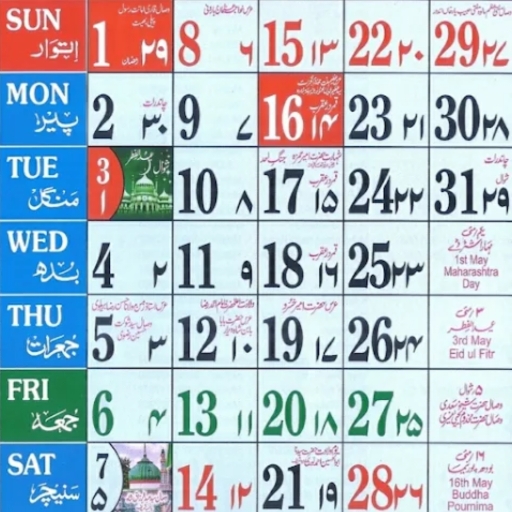
Accessing and Utilizing Your Urdu Calendar 2026 February PDF
The convenience of a PDF format for your Urdu Calendar 2026 February is undeniable. It’s easily shareable, printable, and preserves formatting beautifully. But where do you find a reliable one, and how do you make the most of it?
Finding Reliable PDF Sources
When searching for a downloadable Urdu Calendar 2026 February PDF, prioritize reputable sources. Here’s what to look for and where to typically find them:
- Islamic Organizations and Trusts: Many well-established Islamic organizations, both internationally and locally within the USA, produce annual calendars. These are often available on their official websites. Look for organizations known for their scholarly rigor and community service.
- Cultural Centers: Urdu cultural centers or Pakistani/Indian community associations often release calendars that cater specifically to the Urdu-speaking demographic, including specific regional holidays.
- Reputable Islamic Calendar Websites: There are dedicated websites that specialize in Islamic calendars, often offering various formats, including PDFs. Sites that provide explanations of their calculation methods (e.g., Ummul Qura, local sighting) are generally more trustworthy.
- University Islamic Societies: Some university Islamic societies or departments of Islamic studies may also provide resources or link to reliable calendars.
Tips for Verifying Accuracy:
- Check the Source: Is it an official body or a personal blog? Official sources are usually more reliable.
- Cross-Reference: Compare the dates for major events (like the potential start of Ramadan) with other known reputable sources or your local mosque’s announcements.
- Look for Method Clarity: A good calendar will often state the methodology used for date calculation (e.g., “Based on Ummul Qura” or “Following local moon sighting criteria”).
While I cannot provide a direct PDF link here, knowing where to look and what* to look for will empower you to find the best resource for your needs.
Best Practices for Using Your Digital Calendar
Once you have your Urdu Calendar 2026 February PDF, here’s how to integrate it seamlessly into your daily life:
- Print It Out: Sometimes, an old-fashioned printout is best. Pin it to your fridge, office board, or keep it in your prayer room. Annotate it with personal notes, reminders for fasts, or upcoming family events.
- Digital Annotation: Use PDF reader apps (like Adobe Acrobat Reader, Foxit Reader, or even your browser’s built-in PDF viewer) to highlight dates, add digital notes, or mark important events directly on the PDF.
- Screenshot Key Dates: For quick access on your phone, take screenshots of the February section and save them to your photo gallery or a dedicated album for easy reference.
- Set Digital Reminders: Manually transfer the key Islamic dates from your PDF into your digital calendar (Google Calendar, Outlook Calendar, Apple Calendar). Set reminders a day or two in advance for critical events like Shab-e-Baraat or the start of Ramadan. Use event descriptions to add details in Urdu if you prefer.
- Share with Family: Share the PDF with family members and friends, especially if you’re coordinating communal activities or simply want to keep everyone informed about important religious timings.
- Backup: Keep a backup of your downloaded PDF on cloud storage (Google Drive, Dropbox, OneDrive) so you never lose access.
By effectively using your Urdu Calendar 2026 February PDF, you can ensure you’re always informed, prepared, and connected to the spiritual and cultural rhythm of the month.

Final Thoughts: Embracing the Rhythm of the Islamic Year
Navigating an Islamic calendar, especially one in Urdu, is more than just keeping track of days; it’s about connecting with a rich spiritual tradition and cultural heritage. For February 2026, this connection deepens as we prepare for and step into the blessed month of Ramadan, a time of profound reflection and devotion.
I hope this comprehensive guide has not only provided you with the practical dates for February 2026 but also a deeper understanding of the significance of Sha’ban, the anticipation of Ramadan, and the unique value an Urdu calendar brings to your life. Remember to use the information wisely, cross-referencing with local authorities for the most accurate religious timings specific to your community.
Embrace the rhythm of the Islamic year. Let your Urdu Calendar for February 2026 be a guiding light, helping you plan, prepare, and participate fully in the spiritual journey ahead. May your month be filled with blessings and peace.
Frequently Asked Questions
What are the significant Islamic dates in February 2026?
February 2026 primarily covers the Islamic month of Sha’ban 1447 AH, transitioning into Ramadan 1447 AH. Key dates include Ayyamul Bidh fasts (Feb 1-3), Shab-e-Baraat (Lailatul Bara’at) on the evening of Feb 3rd, and the expected start of Ramadan around Feb 19th (contingent on moon sighting).
Why would I need an Urdu Calendar specifically?
An Urdu calendar provides dates and religious information in the Urdu language, which is preferred by millions globally. It strengthens cultural and linguistic connections, aids in planning for specific regional observances (common in Pakistan/India and diaspora communities), and offers a more intuitive experience for native Urdu speakers.
When is Ramadan expected to begin in 2026?
Based on astronomical calculations, Ramadan 1447 AH is expected to begin on the evening of Wednesday, February 18th, 2026, with the first day of fasting on Thursday, February 19th, 2026. However, this date is ultimately confirmed by the actual sighting of the crescent moon by local authorities.
What is Shab-e-Baraat, and when is it in 2026?
Shab-e-Baraat, also known as Lailatul Bara’at, is a significant night in Islam observed on the eve of the 15th of Sha’ban. It’s a time for prayer, seeking forgiveness, and reflection. In 2026, Shab-e-Baraat falls on the evening of February 3rd, 2026 (the night leading into February 3rd).
Why do Islamic calendar dates sometimes vary?
Islamic calendar dates can vary due to different methods of determining the start of a new lunar month. These methods include astronomical calculations (like the Ummul Qura system), global crescent moon sighting criteria, and traditional local moon sighting (Ru’yat al-Hilal). This can lead to a one-day difference between communities or countries.
Where can I find a reliable Urdu Calendar 2026 February PDF?
You can find reliable Urdu Calendar PDFs from reputable sources such as official websites of Islamic organizations, cultural centers, well-known Islamic calendar websites that clarify their calculation methods, or university Islamic societies. Always cross-reference dates with local religious authorities for critical observances.
How can I best use a digital Urdu Calendar PDF?
You can print it out for a physical copy, use PDF reader apps for digital annotation, take screenshots of key dates for quick mobile access, and transfer important dates to your digital calendar (like Google Calendar) with reminders. Sharing it with family also helps in coordinating plans.