February 2027 Full Moon: The Snow Moon Shines – Your Definitive Guide to Dates, Times, and Celestial Wonders
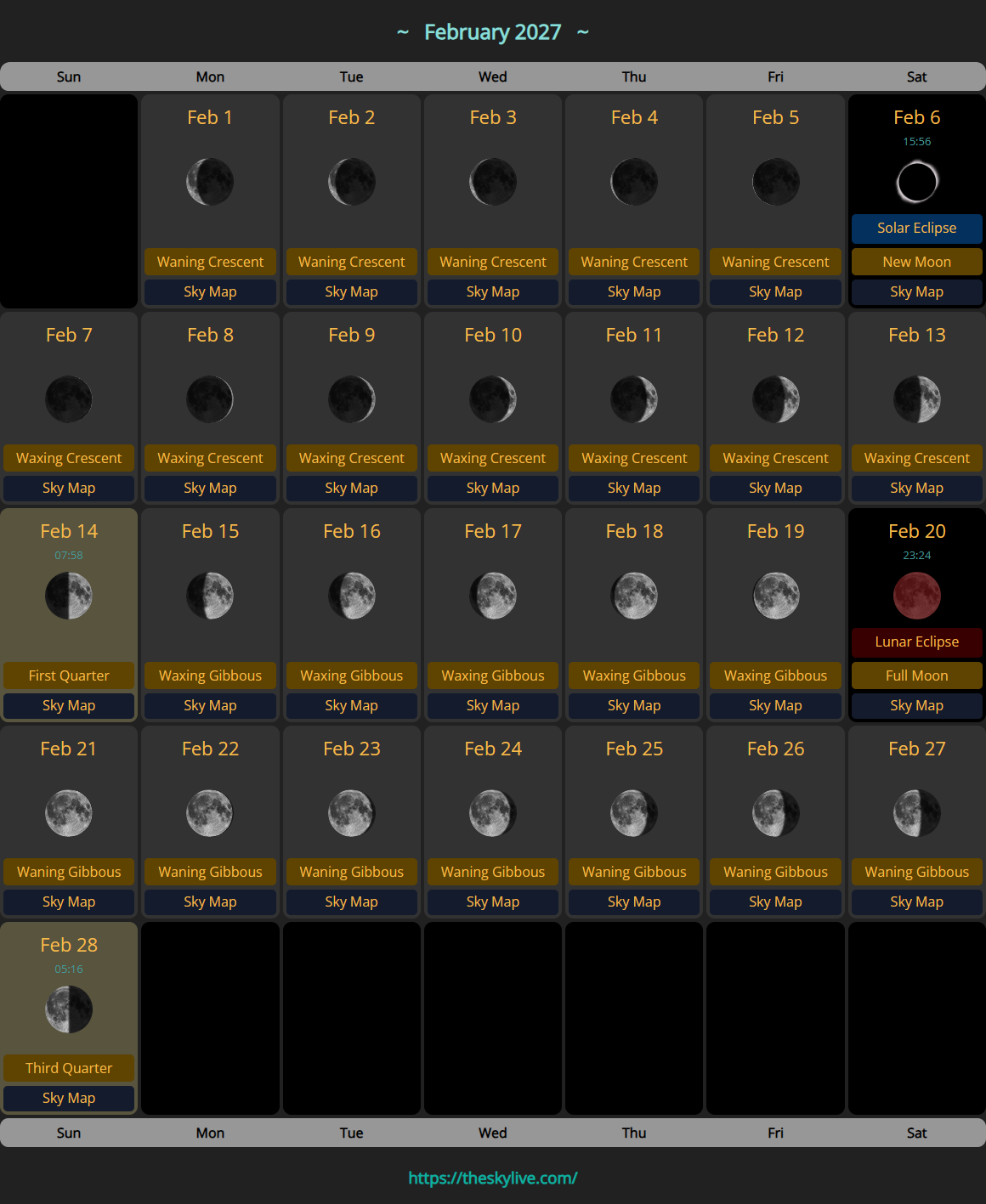
Mark your calendars, sky gazers! The February 2027 Full Moon, affectionately known as the Snow Moon, will grace our skies on Saturday, February 20, 2027. For those on the East Coast of the United States, the Moon will reach its peak illumination at 6:24 PM Eastern Standard Time (EST). But don’t worry, we’ve got you covered with precise times for all major US time zones, cultural insights, and practical viewing tips right here.
There’s something deeply primal about a full moon, isn’t there? It pulls at our imagination, lights up the night, and connects us to ancient rhythms. February’s full moon holds a special charm, often coinciding with some of the year’s heaviest snowfalls, hence its evocative name. Beyond just a celestial spectacle, understanding its timing and significance can enrich your appreciation of the cosmos and even offer a moment for personal reflection.
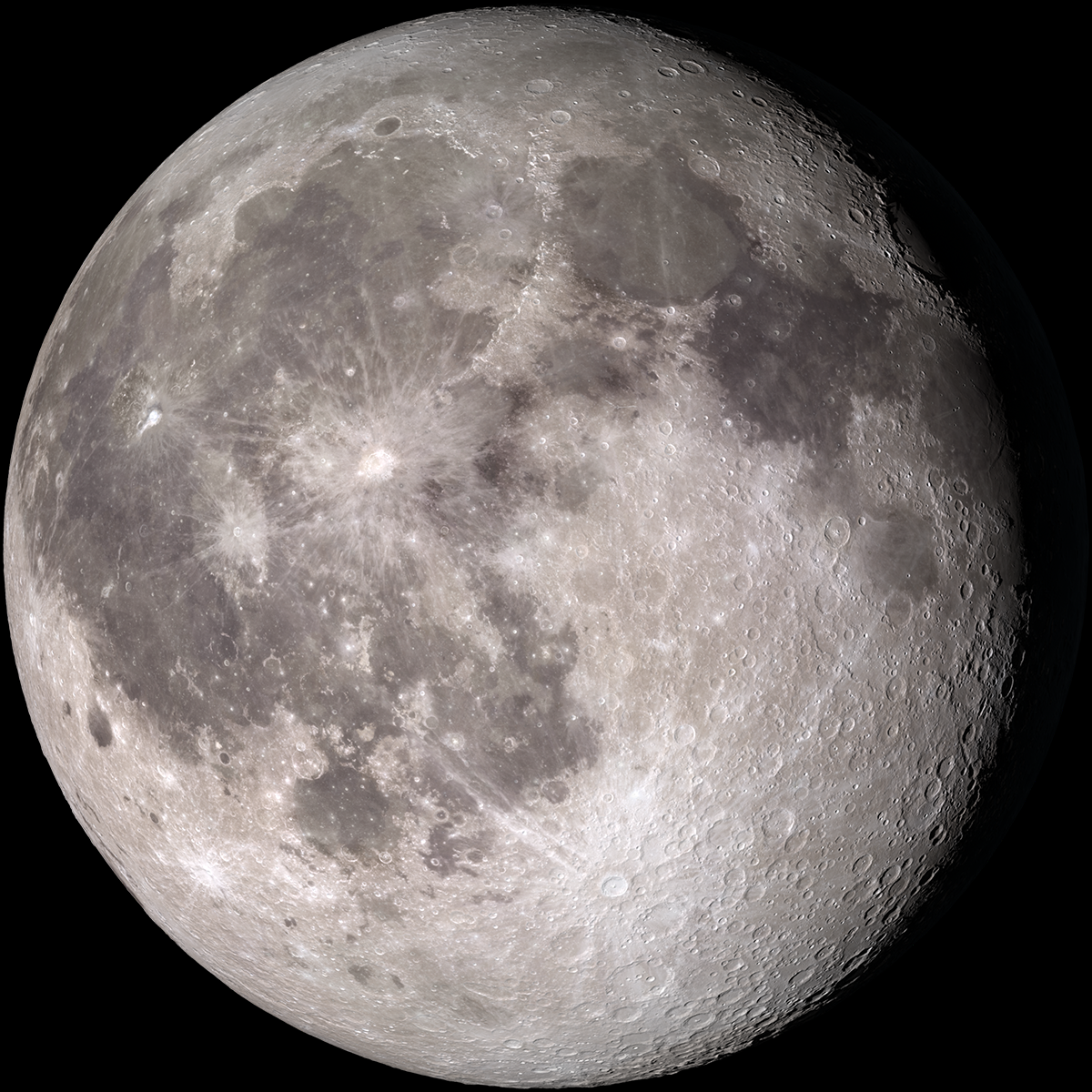
Forget sifting through multiple confusing calendars. This guide is your one-stop resource for everything you need to know about the February 2027 Full Moon, presented clearly and concisely for observers across the United States. Let’s illuminate the night sky together!
When is the Full Moon in February 2027?
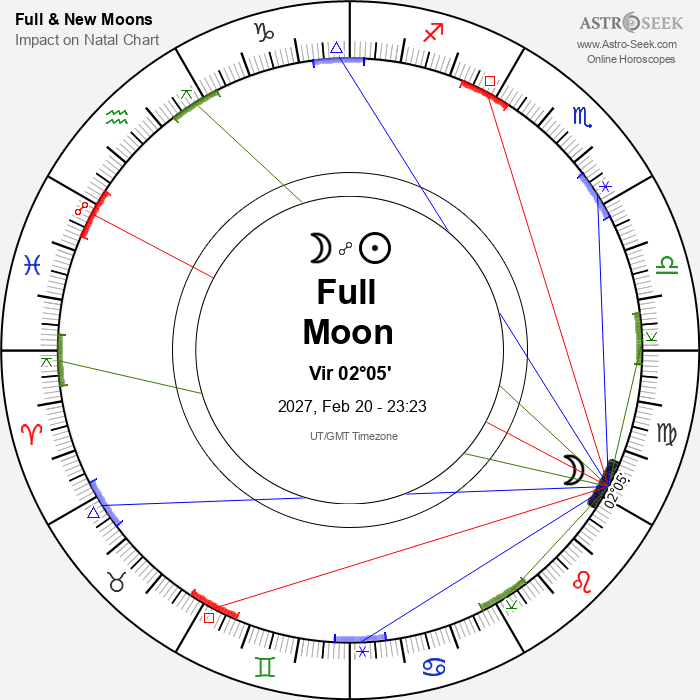
The exact moment of peak illumination for the Full Moon in February 2027 occurs on Saturday, February 20, 2027, at 23:24 Coordinated Universal Time (UTC). For observers across the contiguous United States, this translates to the evening of February 20th. Because of the vast expanse of the USA, the specific local time will vary depending on your time zone. Knowing this precise moment is key to experiencing the Moon at its most glorious and full.
Understanding these time zone differences ensures you don’t miss the moment the Moon is 100% illuminated from Earth’s perspective. While it will appear full for about a day before and after this peak, there’s a unique magic to observing it at its zenith.
February 2027 Full Moon Times Across Major USA Time Zones
To make it easy for you, here’s a breakdown of when the February 2027 Full Moon will occur in the major standard time zones across the United States. Remember, these times indicate the precise moment of peak illumination:
| Time Zone | Full Moon Peak Illumination (Date & Time) | Offset from UTC |
|---|---|---|
| Eastern Standard Time (EST) | Saturday, February 20, 2027, 6:24 PM | UTC-5 |
| Central Standard Time (CST) | Saturday, February 20, 2027, 5:24 PM | UTC-6 |
| Mountain Standard Time (MST) | Saturday, February 20, 2027, 4:24 PM | UTC-7 |
| Pacific Standard Time (PST) | Saturday, February 20, 2027, 3:24 PM | UTC-8 |
| Alaska Standard Time (AKST) | Saturday, February 20, 2027, 2:24 PM | UTC-9 |
| Hawaii Standard Time (HST) | Saturday, February 20, 2027, 1:24 PM | UTC-10 |
Decoding the Lunar Calendar: Why Times Differ by Location
Ever wondered why the exact time of the full moon isn’t the same everywhere? It all comes down to the Earth’s rotation and our established time zones. The Moon reaches its full phase at a single, universal moment in space, but because the Earth is constantly spinning, that moment occurs at different local clock times for people around the globe. This is why Greenwich Mean Time (GMT) or Coordinated Universal Time (UTC) are often used as benchmarks, and then adjusted for local zones.
The Moon’s orbit around Earth takes approximately 29.5 days to complete one full cycle, from new moon to new moon. During this period, we observe various phases as the angle of sunlight hitting the Moon changes relative to our perspective. The full moon occurs when the Moon is directly opposite the Sun in its orbit, meaning its entire face is illuminated from Earth.
Understanding the Snow Moon: Lore, Legend, and Lunar Significance
Beyond the scientific data, the February Full Moon carries a rich tapestry of cultural meanings and names. Known predominantly as the Snow Moon, its designation reflects the harsh, often snow-laden conditions of winter in many parts of the Northern Hemisphere.
The Origins of the “Snow Moon” Name
The name “Snow Moon” originates from Native American traditions, particularly those of tribes in the northeastern United States. February was historically the month when heavy snows typically fell, making hunting difficult and life challenging. These names weren’t just poetic; they served as practical markers for tracking seasons and understanding environmental conditions. The Farmer’s Almanac, a venerable institution for weather and astronomical folklore, frequently references these traditional names, helping to keep their history alive for modern audiences.
It’s a powerful reminder of how intimately connected ancient cultures were to the natural world and the celestial calendar. The Moon wasn’t just a distant light; it was a reliable guide for survival, planting, harvesting, and understanding the rhythms of life.
Other Names for February’s Full Moon
While “Snow Moon” is the most popular, February’s full moon has been known by several other evocative names across different cultures:
- Hunger Moon: Also from Native American traditions, this name highlights the scarcity of food during the bitter cold and heavy snows of late winter.
- Storm Moon: Reflecting the severe weather common in February.
- Ice Moon: Another straightforward descriptor of the month’s typical conditions.
- Purim Moon: In the Jewish calendar, the full moon of Adar (which often falls in February or March) is associated with the festival of Purim.
These names, though varied, largely echo the dominant theme of winter’s grip and the anticipation of spring’s arrival.
Astrological Insights: The Full Moon in Leo
For those interested in astrology, the February 2027 Full Moon will occur in the zodiac sign of Leo. Astrologically, a full moon always represents a culmination, a peak of energy, and a time for reflection and release. When it lands in Leo, a fire sign ruled by the Sun, these themes take on a specific flavor.
What it Means for You: A Time for Reflection and Passion
Leo is associated with:
- Creativity and Self-Expression: This full moon might illuminate areas where you need to express yourself more authentically or pursue creative passions.
- Confidence and Leadership: It can be a moment to reflect on your self-worth, step into your power, or take a leadership role in your life.
- Romance and Generosity: Leo is a sign of the heart. Relationships, generosity, and matters of the heart could come into focus.
- Dramatics and Recognition: Be mindful of ego battles or the need for external validation. This full moon encourages finding inner confidence rather than seeking applause.
A Full Moon in Leo often brings emotions and issues surrounding these themes to a head. It’s an excellent time for introspection: What have you been creating? Where do you need to shine more brightly? What needs to be released that is hindering your authentic self-expression?
Best Practices for Observing the February 2027 Full Moon
The full moon is one of the easiest celestial events to observe, requiring no special equipment. However, a little planning can greatly enhance your viewing experience, especially for the magnificent Snow Moon.
Choosing Your Viewing Spot
The key to a great moon-watching experience is minimizing light pollution. While a full moon is bright enough to cut through some city glow, a darker location will always offer a clearer, more dramatic view. Look for:
- Open Skies: Find a spot with an unobstructed view of the horizon, especially towards the east (at moonrise) and west (at moonset).
- Away from City Lights: Parks, rural areas, or even just your backyard (if you live outside a dense urban center) can work well. The further you are from streetlights and building lights, the better.
- Higher Ground: If possible, a slightly elevated spot can help you clear local obstacles like trees or buildings.
Don’t forget to dress warmly! February nights can be bitter, even in areas without heavy snow. A hot drink can also make the experience more enjoyable.
Photography Tips for Lunar Enthusiasts
Capturing the full moon can be challenging, but incredibly rewarding. Here are some tips:
- Use a Tripod: Essential for stability, especially with longer exposures or telephoto lenses.
- Manual Settings are Your Friend:
- ISO: Keep it low (e.g., ISO 100-400) to reduce noise.
- Aperture: Start around f/8 to f/11 for good sharpness.
- Shutter Speed: The moon is surprisingly bright. Start with a relatively fast shutter speed, like 1/125th or 1/250th of a second, and adjust as needed.
- Telephoto Lens: If you have one, this will bring out surface details. If not, even a standard lens can capture the moon as part of a wider landscape.
- Shoot During Moonrise/Moonset: The moon appears larger and takes on beautiful hues when it’s low on the horizon, thanks to atmospheric distortion and scattered light. This is also when you can capture it alongside terrestrial objects for a more interesting composition.
- Use a Remote Shutter Release: To avoid camera shake when pressing the shutter button.
Modern smartphone cameras are also getting quite good! Try their ‘Pro’ or ‘Manual’ modes to adjust exposure and focus. The National Aeronautics and Space Administration (NASA) offers fantastic resources on astrophotography for beginners, often emphasizing that the best camera is the one you have with you.
Simple Stargazing for Everyone
Even without photography ambitions, observing the full moon is a calming and beautiful activity. Grab a pair of binoculars if you have them – they’ll reveal stunning details on the lunar surface, like craters and maria (dark plains). Look for the subtle color variations and the texture of the moon’s face.
Use the bright moonlight to guide you to brighter stars and constellations nearby. While the full moon’s brilliance can wash out fainter objects, it makes familiar constellations like Orion or Ursa Major easier to spot for casual observers. Consider using a stargazing app on your phone (such as those recommended by publications like Sky & Telescope magazine) to identify constellations and planets visible alongside the Moon.
The Science Behind the Full Moon
A full moon is more than just a pretty sight; it’s a precise astronomical event governed by the intricate dance between the Earth, Moon, and Sun.
The Lunar Cycle Explained
The Moon doesn’t generate its own light; it reflects sunlight. The phases we see depend on the changing angles at which we view the Sun’s illuminated portion of the Moon as it orbits Earth. The full moon phase occurs when the Moon is on the opposite side of the Earth from the Sun. From our perspective, this means the entire side of the Moon facing us is lit up.
The complete lunar cycle, known as a synodic month, takes approximately 29.53 days. This cycle dictates not only the full moon but also the new moon, quarter moons, and all the waxing and waning crescent and gibbous phases in between.
Is a Lunar Eclipse Possible in February 2027?
A significant detail to address for the February 2027 Full Moon: some international sources mention a Lunar Eclipse occurring around this time. It’s true that there will be a Total Lunar Eclipse on February 20, 2027. However, this particular eclipse will NOT be visible from any part of North or South America, including the United States. It will primarily be visible over Europe, Africa, Asia, and Australia.
A lunar eclipse happens when the Earth passes directly between the Moon and the Sun, casting a shadow on the Moon. For us to see it, the full moon must align perfectly with Earth’s shadow, and the observer must be on the night side of Earth when this alignment occurs. In February 2027, the alignment and Earth’s rotation mean that viewers in the USA will simply see a normal (though beautiful!) full Snow Moon, not an eclipse. So, while it’s an interesting astronomical event globally, don’t expect to witness the Moon turn blood red in the US during this particular full moon.
Looking Ahead: The Next Full Moons in 2027
If you enjoy tracking the lunar calendar, here’s a brief look at the full moons immediately following the February Snow Moon in 2027:
- March 2027 Full Moon (Worm Moon): Expected around Monday, March 22, 2027.
- April 2027 Full Moon (Pink Moon): Expected around Wednesday, April 21, 2027.
Each full moon carries its own unique traditional name and astrological significance, offering continued opportunities for observation and connection with the celestial cycles. Keeping an eye on these dates can help you plan future stargazing events and deepen your appreciation for our planet’s natural satellite.
Embrace the Snow Moon
The February 2027 Full Moon, the majestic Snow Moon, offers a wonderful opportunity to pause, look up, and connect with the natural world. Whether you’re an avid astronomer, an aspiring photographer, or simply someone who appreciates a stunning night sky, mark Saturday, February 20, 2027, on your calendar. Enjoy the crisp winter air (or the warmth of your home, depending on your locale!) and marvel at the brilliance of our nearest celestial neighbor. Its glow reminds us of the enduring cycles of nature and the quiet wonder that exists just beyond our everyday hustle.
So, as the snow (or chill) blankets the landscape, step outside or peek through your window and let the radiant Snow Moon fill you with a sense of peace and wonder. Happy viewing!
Frequently Asked Questions
When is the Full Moon in February 2027?
The Full Moon in February 2027 will occur on Saturday, February 20, 2027. It will reach its peak illumination at 6:24 PM Eastern Standard Time (EST), with varying times across other US time zones.
What is the traditional name for the February Full Moon?
The traditional name for the February Full Moon is the Snow Moon. This name originates from Native American traditions, reflecting the typically heavy snowfalls and challenging hunting conditions prevalent during this month in the Northern Hemisphere.
Will there be a lunar eclipse during the February 2027 Full Moon visible from the USA?
No, while there will be a Total Lunar Eclipse on February 20, 2027, it will not be visible from any part of North or South America, including the United States. This eclipse will primarily be visible in Europe, Africa, Asia, and Australia.
In which astrological sign will the February 2027 Full Moon occur?
The February 2027 Full Moon will occur in the astrological sign of Leo. Astrologically, this signifies a period for reflection on themes of creativity, self-expression, confidence, and passion.
What are some tips for observing the February 2027 Snow Moon?
To best observe the Snow Moon, find a viewing spot with minimal light pollution and an unobstructed view. Consider using binoculars for enhanced detail. If you plan to photograph it, use a tripod and manual camera settings for optimal results. Dress warmly, as February nights can be cold.
Why do the full moon times differ across various US time zones?
The full moon reaches its peak illumination at a single, universal moment in space (e.g., 23:24 UTC). However, due to the Earth’s rotation and the different time zones across the United States, that universal moment translates to varying local clock times for observers in different regions.