New Moon February 2027: Your Definitive Guide to Dates, Times, and Celestial Significance
Ever feel like you’re chasing shadows trying to pin down exact celestial events? You’re not alone. When it comes to something as subtle and profound as a New Moon, especially one in the future like February 2027, clarity is key. Forget the guesswork and conflicting time zones. You’ve landed in the right place for the definitive answer.
The New Moon in February 2027 is more than just a date on a calendar; it’s a powerful astronomical alignment that also brings an exciting, albeit regionally specific, celestial event. For many, it’s a moment for fresh starts, setting intentions, and connecting with the rhythm of the cosmos.
So, let’s cut straight to it. When exactly does this elusive lunar phase occur, particularly for those of us in the United States?
When is the February 2027 New Moon? Exact Times for the USA
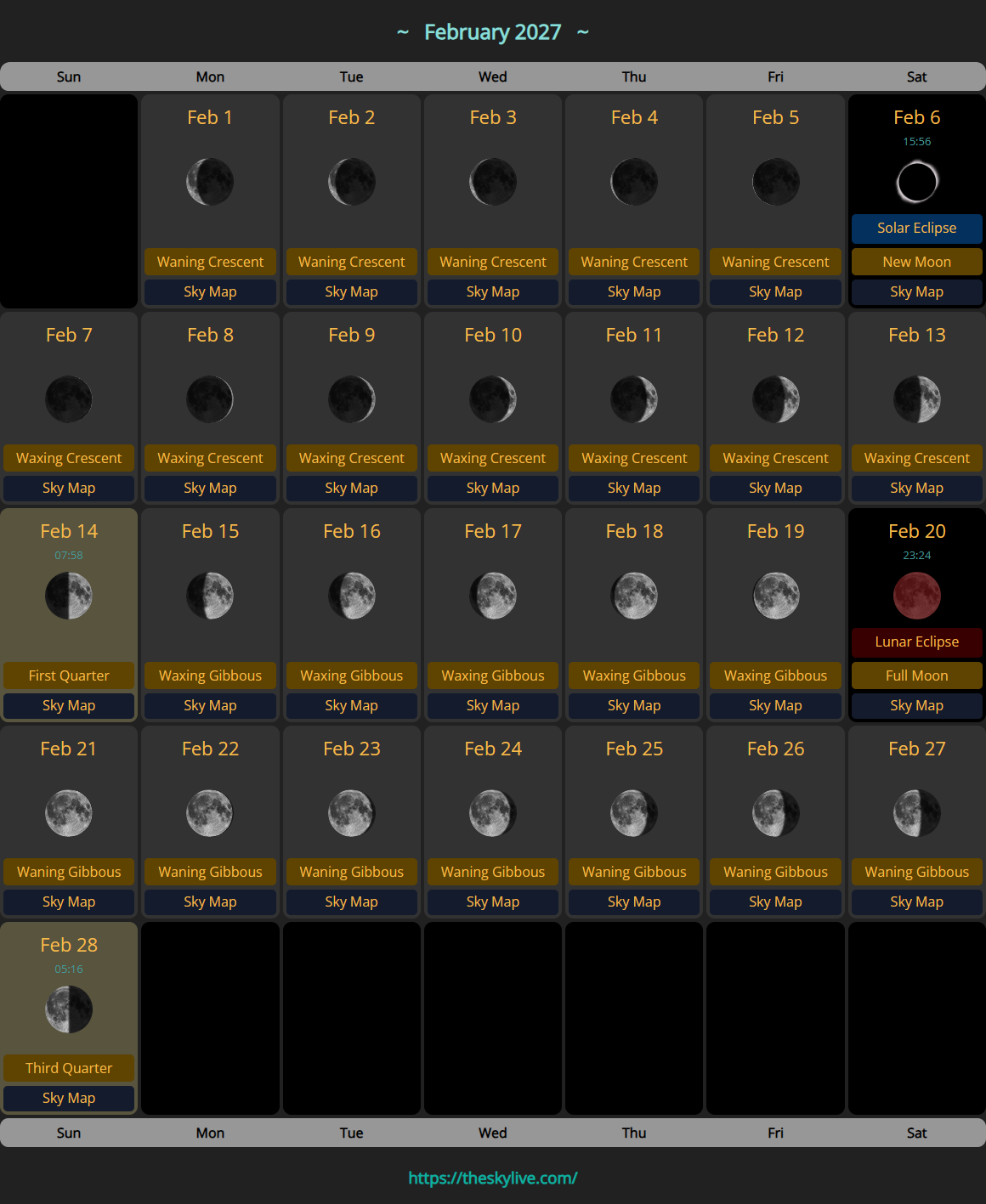
Mark your calendars: the New Moon in February 2027 falls on Saturday, February 6th. While the astronomical event is instantaneous, its precise timing varies dramatically depending on your location on Earth due to time zones. This is where most other resources fall short, leaving you to do the mental math.
For our readers across the United States, here are the exact times you can expect the New Moon to occur. This is the moment the Moon is precisely aligned between the Earth and the Sun, making it virtually invisible in our sky.
| Time Zone | New Moon Date | New Moon Time | Notes |
|---|---|---|---|
| Eastern Standard Time (EST) | Saturday, February 6, 2027 | 10:56 AM EST | For New York, Miami, etc. |
| Central Standard Time (CST) | Saturday, February 6, 2027 | 09:56 AM CST | For Chicago, Houston, etc. |
| Mountain Standard Time (MST) | Saturday, February 6, 2027 | 08:56 AM MST | For Denver, Phoenix, etc. |
| Pacific Standard Time (PST) | Saturday, February 6, 2027 | 07:56 AM PST | For Los Angeles, Seattle, etc. |
| Coordinated Universal Time (UTC) | Saturday, February 6, 2027 | 15:56 UTC | Global Reference Time |
Understanding the Moment: New Moon vs. Conjunction
It’s important to differentiate between the general ‘New Moon phase’ and the precise ‘New Moon moment’. The times listed above refer to the exact moment of astronomical conjunction, where the Sun and Moon share the same ecliptic longitude. This is the peak of the New Moon phase, making it the most potent time for those who follow lunar cycles.
Key Details at a Glance
For quick reference, here’s a summary of the February 2027 New Moon’s key attributes:
- Date: Saturday, February 6, 2027
- Primary Time (USA – EST): 10:56 AM EST
- Zodiac Sign: Aquarius
- Associated Celestial Event: Annular Solar Eclipse (visibility varies)
- Visibility: Invisible to the naked eye
What is a New Moon, Anyway? Back to Basics
Before we dive into the significance, let’s ensure we’re all on the same page about what a New Moon actually is. It’s not just a poetic phrase; it’s a fundamental astronomical event with profound implications for Earth’s cycles and our perception of time.
The Astronomical View: Sun, Moon, Earth Alignment
A New Moon occurs when the Moon is positioned precisely between the Earth and the Sun. From our vantage point on Earth, the side of the Moon illuminated by the Sun is facing away from us. Consequently, the side facing us receives no direct sunlight and appears dark. This alignment also means the Sun and Moon are in the same zodiac sign, marking a powerful astrological conjunction.
This phase is the beginning of a new lunar cycle, typically lasting about 29.5 days. It’s the moment of maximum darkness for the Moon, often symbolizing a blank slate or a fresh start in various cultural and spiritual traditions.
Why We Can’t See It: The Invisible Phase
Unlike the Full Moon, which brilliantly illuminates our night sky, the New Moon is largely invisible. There are a few reasons for this:
- No Direct Illumination: As mentioned, the sunlit side of the Moon faces away from us.
- Proximity to the Sun: The New Moon rises and sets with the Sun, meaning it’s primarily in the sky during daylight hours. Even if it were slightly visible, the Sun’s glare would completely overwhelm its faint light.
- Thin Crescent: Occasionally, a very thin crescent of the Moon might be glimpsed just after sunset or before sunrise a day or two after the exact New Moon, but the precise moment of the New Moon itself is unobservable without specialized equipment and conditions.
This invisibility is precisely what lends the New Moon its mystic and symbolic power, representing hidden potential and introspective energy.
The Annular Solar Eclipse of February 2027: A Rare Celestial Dance
Here’s where the February 2027 New Moon gets particularly interesting! This specific New Moon coincides with an annular solar eclipse. This is a special kind of eclipse that occurs when the Moon passes directly in front of the Sun, but is too far from Earth to completely cover the Sun’s disk. The result is a stunning ‘ring of fire’ effect in the sky.
For official data on celestial events like this, organizations like the National Aeronautics and Space Administration (NASA) provide comprehensive information, including eclipse paths and timings.
What is an Annular Solar Eclipse?
An annular solar eclipse happens when the Moon, at its furthest point from Earth (apogee), passes between the Sun and Earth. Because it’s further away, the Moon appears smaller in the sky and doesn’t completely block out the Sun. Instead, it leaves a bright ring of sunlight visible around its silhouette – the famous ‘ring of fire.’ This is distinct from a total solar eclipse, where the Moon fully covers the Sun.
Solar eclipses always occur during the New Moon phase because it’s the only time the Moon can align perfectly between the Sun and Earth. However, not every New Moon results in an eclipse, as the Moon’s orbit is slightly tilted relative to Earth’s orbit around the Sun.
Visibility: Will the USA See the February 2027 Eclipse?
While the New Moon itself is a global event, the visibility of its associated annular solar eclipse in February 2027 is geographically limited. Unfortunately for observers in the contiguous United States, this annular solar eclipse will NOT be visible. The path of annularity for the February 2027 eclipse primarily crosses parts of South America, specifically Chile and Argentina, and then continues across the Atlantic Ocean and into Africa.
So, while the astronomical alignment is happening, you won’t need your eclipse glasses for this one if you’re in the US. However, understanding its occurrence adds another layer of cosmic wonder to this particular New Moon.
Safety First: Eclipse Viewing Precautions (Even if Not Visible)
Even though the February 2027 eclipse won’t be visible in the USA, it’s crucial to always remember proper safety procedures for *any* solar eclipse. Staring directly at the Sun, even during an annular eclipse where a ring of the Sun is still visible, can cause permanent eye damage or blindness. Always use certified solar filters or indirect viewing methods if you ever observe a partial or annular solar eclipse.
Astrological Significance: New Moon in Aquarius
Beyond the scientific explanation, the New Moon carries significant weight in astrological practices. The February 2027 New Moon falls in the innovative and forward-thinking zodiac sign of Aquarius. This combination offers a unique energetic blueprint for reflection and intention setting.
Aquarius: The Water-Bearer’s Influence
Aquarius is an air sign ruled by Uranus (and traditionally Saturn), known for its association with:
- Innovation and Future-Thinking: Aquarians are visionaries, often ahead of their time, focused on progress and revolutionary ideas.
- Community and Humanitarianism: This sign emphasizes collective well-being, social justice, and working towards a better world for everyone.
- Independence and Unconventionality: Aquarians value freedom, individuality, and aren’t afraid to march to the beat of their own drum.
- Intellect and Objectivity: They approach situations with a rational, logical mind, often detaching emotionally to see the bigger picture.
When the New Moon aligns with Aquarius, these themes are amplified, creating fertile ground for initiating projects or intentions that embody these energies.
Themes for Intention Setting: Innovation, Community, Fresh Starts
A New Moon is traditionally considered a powerful time for new beginnings. With the February 2027 New Moon in Aquarius, consider focusing your intentions on:
- Embracing Innovation: What new ideas or unconventional approaches can you bring to your work or personal life? How can you break free from old patterns?
- Community Engagement: How can you contribute more to your community or larger humanitarian causes? Are there groups you want to join or lead that align with your values?
- Personal Freedom: What areas of your life need more independence? How can you express your unique self more authentically?
- Future Vision: What long-term goals do you have for humanity or your own future that feel truly progressive and beneficial?
This is a potent time to think big, beyond yourself, and consider your role in the collective evolution.
Harnessing the Aquarian Energy: Practices for the New Moon
To make the most of this Aquarian New Moon, consider these practices:
- Journaling: Write down your aspirations for the next lunar cycle, focusing on themes of innovation, community, and personal freedom.
- Meditation: Spend time in quiet contemplation, visualizing yourself as a catalyst for positive change in your life and surroundings.
- Brainstorming: Gather with like-minded individuals (virtually or in person) to share ideas for social projects or creative endeavors.
- Decluttering & Reorganizing: Clear out mental and physical space to make room for new ideas and energy.
- Learning: Research new technologies, scientific breakthroughs, or social movements that inspire you.
Beyond February 2027: Upcoming New Moons and Lunar Cycles
Understanding the February 2027 New Moon can be a springboard for tuning into the broader lunar rhythm. The Moon’s phases offer a consistent guide for planning, reflection, and setting intentions throughout the year. The US Naval Observatory (USNO) provides precise astronomical data for moon phases and other celestial phenomena, which can be invaluable for long-term planning.
March 2027 New Moon: A Quick Look
Following closely on the heels of February’s New Moon, the March 2027 New Moon will occur on Sunday, March 7th. While we won’t dive into its full astrological significance here, it’s good to know that the lunar cycle continues, offering regular opportunities for reset and renewal.
Planning with the Moon: Integrating Lunar Cycles into Your Life
Many people find that aligning their personal and professional goals with the lunar phases provides a powerful framework. The New Moon is for planting seeds, the Waxing Moon for growth and action, the Full Moon for culmination and release, and the Waning Moon for reflection and letting go. Integrating this ancient wisdom can add a deeper dimension to your planning and goal-setting process.
Debunking Common Myths About the New Moon
With any celestial event, myths and misconceptions often swirl around the facts. Let’s clear up some common misunderstandings about the New Moon, especially given its association with an eclipse in February 2027.
Myth 1: New Moons are Always Visible
False. As we discussed, the New Moon is the ‘invisible’ phase. It’s only after a day or two, when a tiny sliver of the Moon becomes illuminated by the Sun (the waxing crescent), that we might catch a glimpse of its return to the night sky.
Myth 2: New Moons Always Bring Bad Luck
False. While some traditions associate darkness with ill omens, the New Moon is overwhelmingly seen as a time of new beginnings, potential, and introspection. It’s a period for planting seeds, not reaping misfortune. Its energy is inward and preparatory, rather than outward and destructive.
Myth 3: New Moons and Solar Eclipses are the Same Thing
False. This is a subtle but important distinction. ALL solar eclipses occur during a New Moon. However, NOT all New Moons result in a solar eclipse. The Moon’s orbit around Earth is slightly tilted (about 5 degrees) relative to Earth’s orbit around the Sun. This means most New Moons pass slightly above or below the Sun from our perspective. An eclipse only happens when the alignment is precise enough for the Moon to actually block the Sun’s light.
Final Thoughts: Embracing the Cycle of Renewal
The New Moon of February 2027, occurring on Saturday, February 6th, with its backdrop of an annular solar eclipse (though not visible in the US) and its potent placement in Aquarius, offers a compelling moment for reflection and forward-thinking. Even if you’re not an avid astronomer or astrologer, simply being aware of these cosmic rhythms can bring a sense of connection to something larger than ourselves.
Use this time to plant new seeds of intention, embrace innovative ideas, and consider how you can contribute to your community and the world around you. The universe is always inviting us to begin anew, and February 2027 provides a distinct opportunity to do just that.
Frequently Asked Questions
What is the exact time of the New Moon in February 2027 in the USA?
The New Moon in February 2027 occurs on Saturday, February 6, 2027, at 10:56 AM Eastern Standard Time (EST). Times will vary by other US time zones: 09:56 AM CST, 08:56 AM MST, and 07:56 AM PST.
Will there be a solar eclipse during the February 2027 New Moon?
Yes, the February 2027 New Moon coincides with an annular solar eclipse. However, this particular eclipse will NOT be visible from the contiguous United States. Its path of annularity crosses parts of South America and Africa.
What zodiac sign is the February 2027 New Moon in?
The New Moon in February 2027 is in the innovative and community-oriented air sign of Aquarius. This astrological placement emphasizes themes of progress, humanitarianism, and breaking free from old patterns.
What is the significance of a New Moon in Aquarius?
A New Moon in Aquarius is considered a powerful time for setting intentions related to innovation, community engagement, personal freedom, and future-focused thinking. It encourages embracing unconventional ideas and working towards collective well-being.
Can you see the New Moon in the sky?
No, the New Moon is largely invisible to the naked eye. During this phase, the Moon is positioned between the Earth and the Sun, meaning the side facing us receives no direct sunlight. It also rises and sets with the Sun, making it obscured by daylight.
How often do New Moons occur?
New Moons occur approximately once every 29.5 days, marking the beginning of a new lunar cycle. This regular rhythm provides monthly opportunities for new beginnings and setting intentions.